
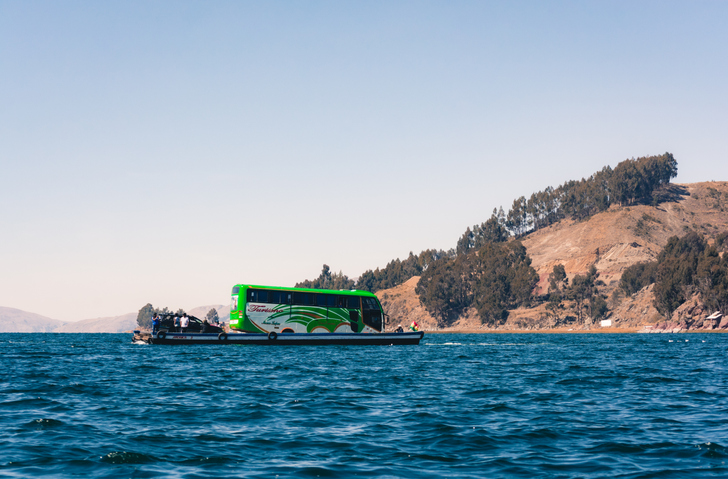
We arrived to La Paz by bus from Copacabana on Titicaca lake. Other reccomanded ways to get here: The drive from Copacabana takes ca 4 hours and there is a small stretch of water to cross. It is quite interesting as you have to get off the bus and cross it by a passenger ferry. While you are crossing the stretch among other tourists and the ladies who sell all kinds of goods, you can admire your bus being taken by the “bus ferry”. (Add picture)
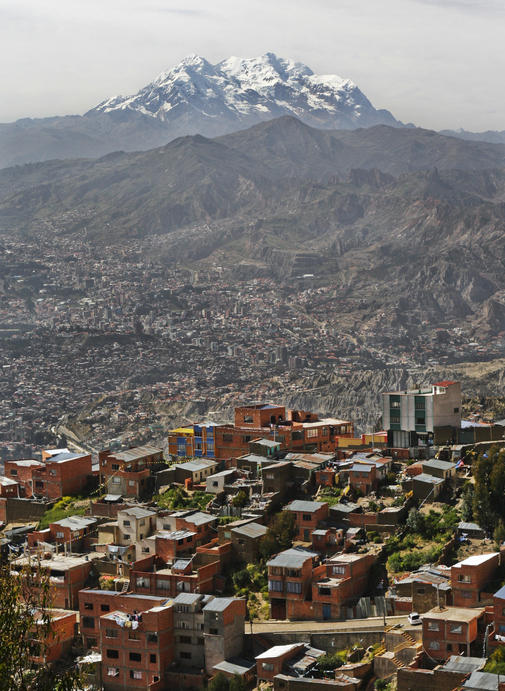
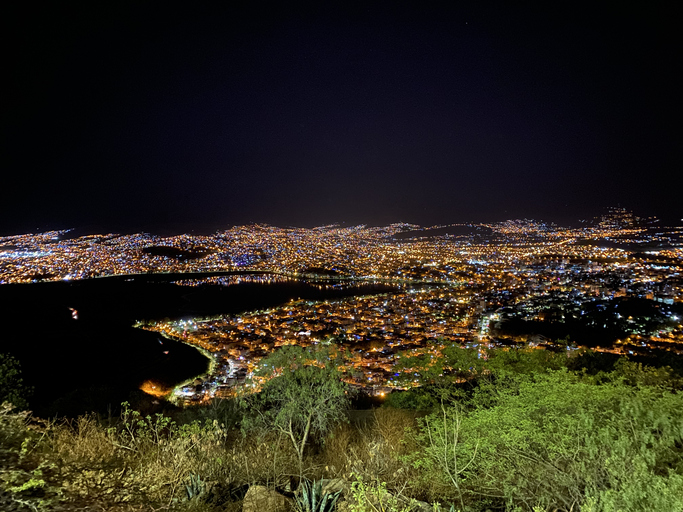
Finally we got there. Nuestra Señora de la Paz or quite simply La Paz – a multimillion person city inside the crater of major volcanic activity. La Paz is a jungle of precariously dangling electricity cables and crooked brick houses built upon the slopes of the cone of what looks like a gigantic volcano. It looks like someone played Jenga, the houses go higher and higher, floor upon floor and they look like they might topple over. At night the city lights up like a million fairies, if you hold your breath you might just think they are trying to make the wishes of all and every single inhabitant come true: to reach out of the concrete jungle cone. As you walk the steep hills with a blistering altitude sickness headache, you cannot help but think how on earth did people decide to settle at this altitude and how on earth did this become one of Bolivia’s largest cities? La Paz is humanity at its best and at its worst. It is authentic South America, it is past and future all at once.
If you visit Bolivia for a short period of time, one full day in La Paz is enough. If you love the country, its people and the way of living here, you can obviously stay here for ever. In order to feel the vibe of the city I advice to just stroll around, as we did. Dribbling street vendors, walking through a relatively peaceful protest and tasting fresh fruits at the market. The city center is built at the bottom of the slope, so if you get lost you just walk downhill, it is the uphill part that is not easy to deal with. A great way to see the city is hopping on and off the cable cars. The red line of La Paz Cable Car is definitely the most spectacular. It passes over the enormous General Cemetery of La Paz, crosses the colorful neighborhood of Chualluma and climbs up to El Alto to cross it. On Thursdays or Sundays you can enjoy the views of El Alto’s giant market. Here you can find more information about the lines and ticket prices: https://www.miteleferico.bo/nuestras-lineas
From la Paz we travelled to Cochabamba. I recommend an overnight bus. The city has a pleasant subtropical climate. Cochabamba is really a pretty city. The Plaza de Armas displays a classic Spanish layout with porched buildings surrounding a lovely shady square dotted with palm trees and neat flower beds. Some colonial architecture is still intact but the city is booming and new modern apartment blocks are popping up around the town. The urban center is surrounded by lush mountains and a statue of Christ embraces the inhabitants from a lone mountain to the South. We couldn’t leave the town without climbing up to the Christ. We climbed what seems like a kazillion steps and reached the top. We reached the top, welcomed by Jesus himself. It is indeed a great viewing spot. The entire valley below us has been covered in cement and the city is expanding by the minute, but it still feels really nice and liveable. Bolivia’s cities are considered amongst the most dangerous in the world, but we felt pretty safe here. However living here and just passing through are two very different things.
Sucre: the white city. It’s 12 hours trip from Cochabamba but no direct bus so stopping in Potosì is required. We travelled with bus company called el Dorado, the same company that got us to Cochabamba, on a brand new bus (pieces of plastic wrapping still covered the seats). We got off the bus in Potosì and took a beat up Mini to Sucre, the original capital of Bolivia. Sucre is a clean, organized and proud city. White colonial buildings give it an air of importance, whilst the university gives it a touch of youth. We visited the Casa de la libertad, the house of liberty, where we found out more about the liberation and creation of the Bolivian state. Simon Bolivar, el libertador, played a crucial role in the fight for independence from Spain in numerous South American countries. Many streets and squares throughout the continent bear his name. Bolivia went one step further and the country was named after him. He also happened to be the first president of Bolivia.


 Nomadlytics
Leave a comment