
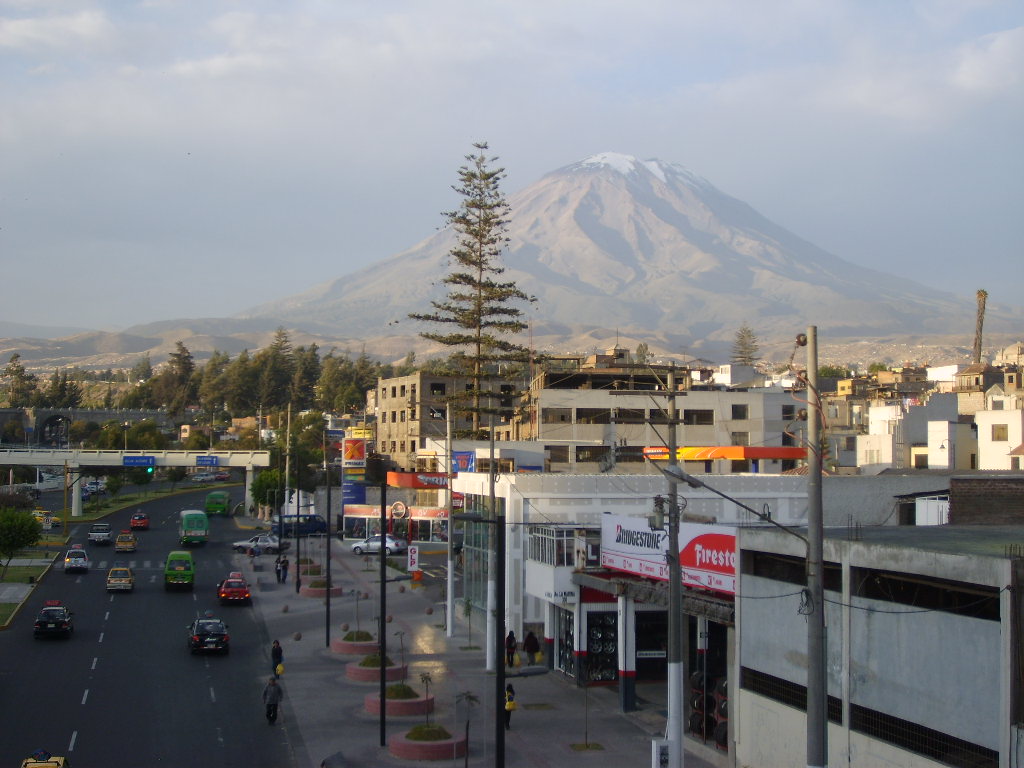
Arequipa is a beautiful town situated at 2400 meters above sea level. As we were walking through the city center we could feel the altitude which literally leaves you breathless. It’s good to stay here at least 3-4 nights in order to get used to this altitude, especially if you are planning to visit other places in Peru located even higher up. Yes, if you are planning to go to Machu Picchu, staying in Arequipa is mandatory to in order to avoid altitude sickness during your hikes.
Arequipa is also one of the most developed cities in Peru. You can tell that the mining industry brings lots of money. The city is well maintained and clean. The Spanish conquistadores did a great job with the architecture. Lots of vegetarian restaurants are available in town: you can easily find Peruvian traditional dishes made of tofu and saitan, accompanied by lots vegetables, cheese and rice! Arequipa is called “White City” for its colonial-era buildings constructed from sillar, a white volcanic stone, Arequipa boasts a rich cultural heritage, vibrant culinary scene, and stunning architecture. In fact Arequipa’s historic center is a UNESCO World Heritage Site. As you can see, the town is not only a great base for those starting their trip in the Andes but it also offers many cultural experiences. Let’s see what there is to visit.
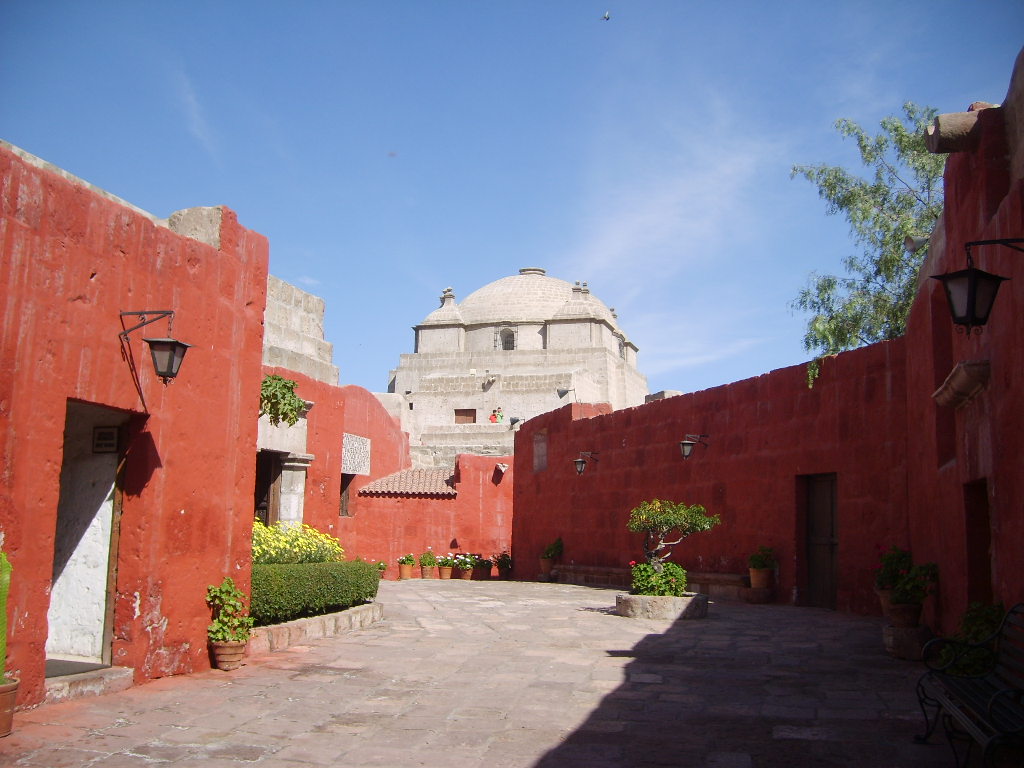
The most famous and the most touristy (but not crowded at all) place in town is Santa Catalina Monastery. It’s a must see in town. Dedicate half a day to explore this sprawling convent complex, a city within a city, featuring colorful colonial buildings, cobblestone streets, and beautiful courtyards. The monastery offers a fascinating glimpse into the daily life of nuns during the colonial era and boasts stunning architecture and artwork.
You cannot miss a small break at Plaza de Armas. Comfortable seated at one of the benches you will admire the architectural splendor of Arequipa’s main square, surrounded by elegant colonial buildings constructed from white volcanic stone. The plaza is a popular gathering spot for locals and visitors alike, offering scenic views of the Cathedral of Arequipa and the surrounding mountains. Last but not least, it’s a great place for people watching and a chat with some locals.
The Cathedral of Arequipa is another must see monument in town. Just like the entire history centre, the Cathedral is a UNESCO World Heritage Site. It is known for its impressive façade, ornate interiors, and Baroque architecture. If you would like to understand more about the history of the cathedral I advice you to take a guided tour. Obviously you can enter without a guide and still enjoy the beauty of paintings, sculptures, and religious artifacts inside.
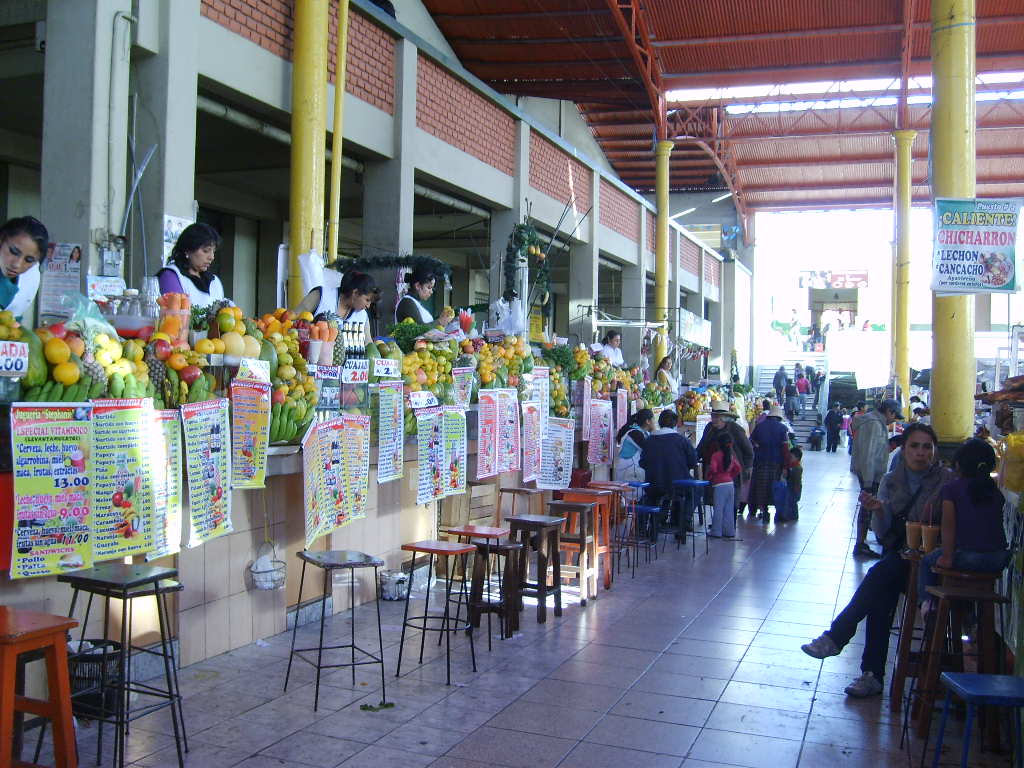
As said before, Arequipa is a great place for food lovers. There are plenty of good restaurants serving not only traditional Peruvian cousins but also some international specialities and a great range of vegetarian and vegan food. Still San Camilo Market is a great place if you want to tase local food. Immerse yourself in this vibrant culinary environment. It’s a bustling south american market, where vendors sell fresh fruits, vegetables, meats, cheeses, and local delicacies. You will be delighted by the traditional Peruvian dishes such as rocoto relleno and ceviche. If you are looking for some souvenirs to bring with you, that is also a great place to pick up some handicrafts from the artisan stalls.
To end your day you can visit Juanita Mummy Museum where you will learn about ancient Andean civilizations and Inca rituals. I. Must admit that it is quite unique place and it’s home to the well-preserved mummy of a young Inca girl known as “Juanita.” The museum offers insights into Inca culture, religion, and the practice of human sacrifice, providing a fascinating glimpse into Peru’s pre-Columbian past.
You need one or two days to visit the main attractions in town but it’s a pleasant and quite safe city so you may stay here longer and just wonder around. Once you got used to walking on these altitudes, I strongly advice you to see the surroundings of this town. Colca Canyon and Misti Vulcano are the most famous hikes but there are many others. Remember that the summit of El Misti is at 5800m a.s.l. and Colca Canyon above 4000m. El Misti requires some preparation and it’s a serious hike. You can read more about it here.
Colca Canyon is definitely a more accessible place even for people who don’t hike up regularly but still requires some acclimatisation because as said, altitude sickeness is not a joke and it’s really hard to predict how your body will react to it. In order to explore the breathtaking beauty of Colca Canyon you must book a tour with one of the local tour operators. Kondorpathtours https://www.kondorpathtours.com/arequipa-tours/colca-canyon-tour/ and Tours by locals https://www.toursbylocals.com/Colca-Canyon-Tours offers great solutions for one day or multiway trips to Colca Canyon and I reccomand them both.
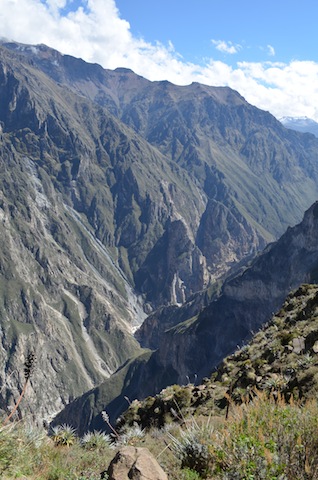
I went on a one day tour which meant alarm set at 2.30 and return at 5.00pm. It takes around 3 hours to get from Arequipa to Chivay: a small town at the beginning of the Colca national reserve at 4900m a.s.l. We arrived at the gates of Chivay at dawn and we could admire a stunning sunrise. The colours behind the snowy mountains were just fantastic. After a simple but good breakfast (including life saving mate de cocoa) we headed towards the canyon. The sun slowly started to heat our skin, the sky was clear without one cloud and we could fully admire the beauty of the green mountains around the canyon. The place is truly special although it is quite packed with tourists. Colca Canyon is one of the deepest canyons on Earth, plunging to depths of over 3,270 meters (10,725 feet) at its deepest point. It is twice as deep as the Grand Canyon in the United States, making it a remarkable testament to the forces of nature. The canyon’s sheer walls, carved by centuries of erosion, reveal layers of volcanic rock and sedimentary formations, providing a geological timeline of the region’s ancient history. Going to these kind of places in Peru allows us to recognize the organization and the efficiency of the Inca culture. Once again we could have admire fantastic terraces used for the agriculture in he Inca’s time and they are still in use nowadays. Isn’t it superb that the system used 500 years ago survived until today and is still one of the best ways to cultivate plants and vegetables? Moreover, it is also quite scenic. We drove and walked around the canyon and enjoyed tons of fantastic views of the valleys and of the mountains. We even managed to spot some Andean condors! Wildlife enthusiasts can spot also other native species such as giant hummingbirds, vicuñas, and even the elusive Andean fox.
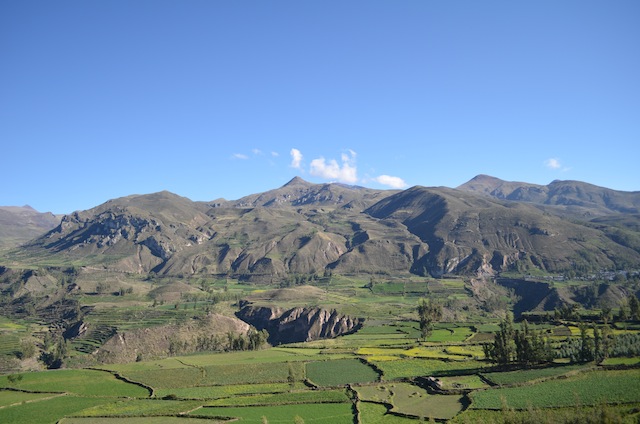
The Colca Canyon is one of the deepest Canyons in the world. The deepest canyons are both in China and the Peruvian Colca Canyon is third on the list. There is and always will be a dispute on how deep the canyons are. At the end it is not easy to measure. What is obvious and you can feel it on your skin while visiting, is the altitude of the area. The Colca Valley is at 3500 meters above the sea level. The road from Arequipa to the Canyon touches 4900 meters at its highest point. Take it seriously. Although I spent some days in Arequipa before this trip, I still could feel the sickness. Headache, nausea and lack of breath. If you visit these places, remember to be as rested as possible. Make sure you get lots of sleep the day before and drink lots of water! Chewing coca leafs and drinking mate de coca (coca leaf infusion) are the perfect natural remedy but there is really only slow acclimatisation can prevent the disease, no miracle drug. Take the all the necessary precautions against the altitude sickness but don’t discourage yourself from visiting this place. It will definitely make you live a remarkable experience.
 Nomadlytics
Leave a comment