

In the middle of the coastal desert of northern Peru, near the modern city of Trujillo, lies one of the most impressive archaeological wonders of pre-Columbian America: Chan Chan. This ancient adobe city, once the thriving capital of the Chimu Kingdom, stands as a testament to the ingenuity and artistic prowess of its builders. Spanning approximately 20 square kilometers, Chan Chan is recognized as the largest adobe city in the world and offers a fascinating glimpse into the life and culture of the Chimu civilization. Let’s discover its history, significance, and unique feature. A must visit if you are traveling through the region and a site for understanding ancient Peru.
Historical Background
Chan Chan was founded around 850 AD and flourished until its conquest by the Inca Empire in the late 15th century. At its peak, the city housed an estimated 60,000 inhabitants, including artisans, priests, and the ruling elite. The Chimu Kingdom, with Chan Chan as its political and cultural center, controlled a vast territory along the northern coast of Peru. This dominance was largely due to their advanced agricultural techniques, impressive engineering projects, and extensive trade networks.

Architectural Marvels
The Nine Palaces
Chan Chan is renowned for its unique urban layout, characterized by a series of rectangular enclosures known as “citadels” or “palaces.” There are nine of these grand structures, believed to be royal compounds built for different rulers. Each palace is a self-contained unit, featuring ceremonial plazas, burial platforms, storerooms, and residential areas. The intricate layout and design reflect the hierarchical nature of Chimu society, with each palace serving both administrative and residential functions for the elite.
Adobe Mastery
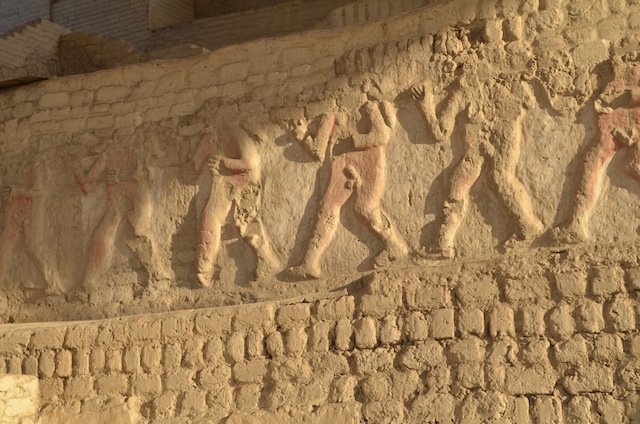
The most striking feature of Chan Chan is its extensive use of adobe (mud bricks) in construction. The Chimu craftsmen demonstrated remarkable skill in creating durable and aesthetically pleasing structures using this material. The walls of the citadels are adorned with intricate bas-reliefs depicting geometric patterns, mythological creatures, marine life, and scenes of daily life. These decorative elements not only served an artistic purpose but also conveyed symbolic meanings related to Chimu cosmology and social order.
Hydraulic Engineering
One of the keys to the prosperity of Chan Chan was its sophisticated hydraulic engineering. The Chimu developed an extensive network of canals, aqueducts, and reservoirs to manage the scarce water resources of the coastal desert. These systems allowed them to support agriculture on a large scale, cultivating crops such as maize, beans, and cotton. The ability to efficiently manage water resources was crucial for sustaining the large population of the city and ensuring its economic stability.
Cultural and Religious Significance
Chan Chan was not only a political and economic hub but also a center of religious activity. The Chimu worshipped a pantheon of gods, with the moon deity, Si, holding a particularly important place in their belief system. Rituals and ceremonies were integral to Chimu life, often conducted in the grand plazas of the citadels. The burial practices at Chan Chan also reflect the culture’s complexity, with elite individuals buried in elaborate tombs accompanied by a wealth of grave goods, indicating their high status and the belief in an afterlife.
Modern-Day Significance
In 1986, UNESCO designated Chan Chan as a World Heritage Site, recognizing its outstanding universal value and the need for preservation. Despite the challenges posed by environmental factors, such as heavy rains and erosion, significant efforts have been made to protect and conserve this ancient city. Archaeological research continues to uncover new insights into the Chimu civilization, enhancing our understanding of their social structure, economy, and cultural achievements.

Visiting Chan Chan
For modern visitors, Chan Chan offers a unique opportunity to step back in time and explore the remnants of a once-great civilization. The site includes a well-maintained museum that provides context and interpretation for the ruins, making it easier to appreciate the historical significance of what you are seeing. Walking through the maze-like corridors of the citadels, admiring the detailed bas-reliefs, and contemplating the scale of the ancient engineering projects, one can truly appreciate the ingenuity and artistic vision of the Chimu people.
Chan Chan is a monumental achievement of ancient Peruvian civilization, offering invaluable insights into the Chimu culture. Its architectural splendor, sophisticated urban planning, and artistic legacy make it one of the most significant archaeological sites in South America. As efforts to preserve and study Chan Chan continue, this remarkable adobe city remains a powerful symbol of human creativity and resilience. A visit to Chan Chan is not just a journey through history but a profound experience that connects us to the enduring legacy of the Chimu civilization.

 Nomadlytics
Leave a comment