
Peru, a land steeped in rich cultural heritage and ancient civilizations, is home to many remarkable cultures that predate the Inca Empire. Among these, the Chimu culture stands out for its impressive achievements in architecture, art, and social organization. Flourishing on the northern coast of Peru between 900 and 1470 AD, the Chimu civilization left a lasting legacy that continues to fascinate archaeologists and visitors alike. In this post, we delve into the fascinating world of the Chimu culture, exploring their history, societal structure, achievements, and enduring influence.
Origins and Expansion
The Chimu culture emerged around the 10th century AD, succeeding the Moche civilization. It developed in the Moche Valley, with its capital at Chan Chan, near present-day Trujillo. The Chimu expanded their territory through both conquest and the integration of neighboring cultures, eventually controlling a vast area along the northern coast of Peru. At its peak, the Chimu Empire stretched from the modern-day border of Ecuador to the central coast of Peru.
Chan Chan: The Heart of the Chimu Empire
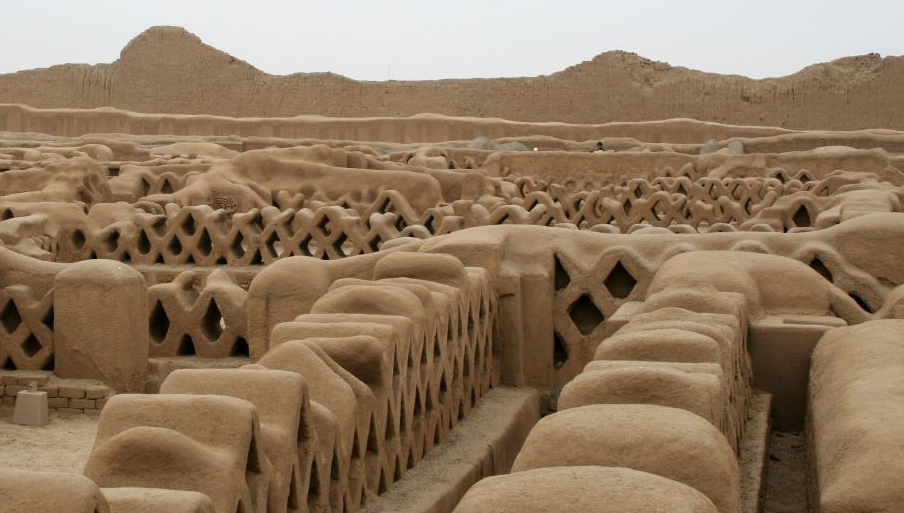
Chan Chan, the capital city of the Chimu Empire, is one of the most significant archaeological sites in Peru and the largest adobe city in the world. Spanning over 20 square kilometers, Chan Chan was a marvel of urban planning and engineering, reflecting the Chimu’s sophisticated understanding of architecture and hydraulics.

The city was divided into nine large rectangular compounds, each serving different functions, such as administrative, residential, and ceremonial purposes. The walls of these compounds were adorned with intricate reliefs depicting marine life, geometric patterns, and mythological creatures, showcasing the Chimu’s artistic prowess.
One of the most notable features of Chan Chan is its elaborate system of canals and reservoirs, which supplied water to the city’s inhabitants and agricultural fields. This advanced irrigation system allowed the Chimu to sustain a large urban population and thrive in the arid coastal environment.
Social Structure and Governance
The Chimu society was highly stratified, with a rigid hierarchical structure. At the top of this hierarchy was the ruler, known as the Chimucapac, who wielded absolute power and was considered semi-divine. The Chimucapac was supported by an elite class of nobles and priests, who oversaw the administration, religious ceremonies, and military affairs.
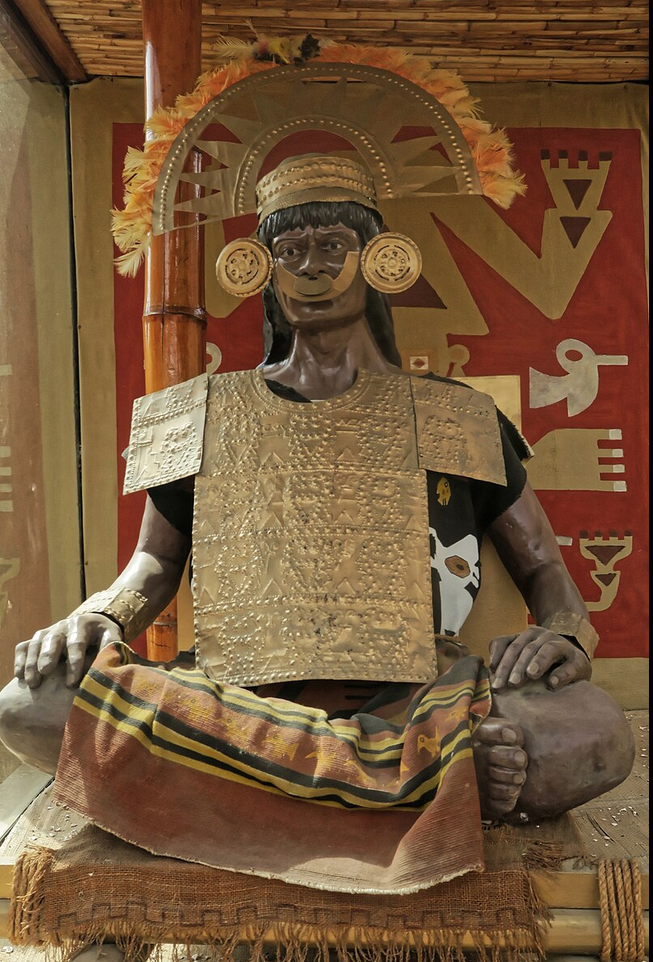
Below the nobility were the artisans and craftsmen, who were highly valued for their skills in metalworking, pottery, and textile production. The commoners, who formed the majority of the population, were primarily engaged in agriculture, fishing, and construction.
The Chimu were known for their efficient administrative system, which included a network of regional governors and officials who managed the various provinces of the empire. This system allowed them to maintain control over their vast territory and ensure the smooth functioning of their society.
Art and Craftsmanship
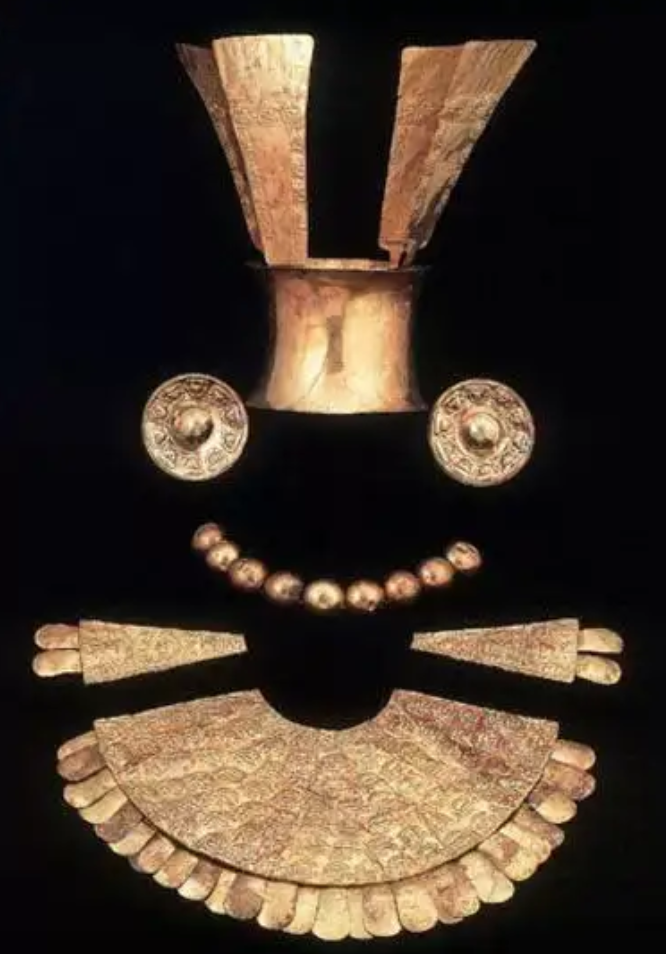
The Chimu culture is renowned for its exceptional art and craftsmanship, particularly in metalwork, pottery, and textiles. They were master metalworkers, producing exquisite objects from gold, silver, and copper. These items included jewelry, ceremonial vessels, and religious artifacts, often adorned with intricate designs and motifs.
Chimu pottery is characterized by its blackware ceramics, created using a reduction firing technique that gives the pottery its distinctive dark color. The ceramics often depicted scenes from daily life, religious rituals, and marine life, reflecting the Chimu’s deep connection to the sea.
Textiles were another important aspect of Chimu culture, with weavers producing elaborate garments and tapestries using cotton and wool. These textiles were often decorated with vibrant colors and complex patterns, showcasing the weavers’ artistic skills and creativity.
Religion and Beliefs
Religion played a central role in Chimu society, influencing every aspect of their daily life. The Chimu worshipped a pantheon of gods, with the moon god Si being the most important deity. Si was considered more powerful than the sun god because the moon could be seen both day and night. Other significant deities included the sea god Ni and various agricultural gods.
The Chimu believed in an afterlife and practiced elaborate burial rituals to ensure the deceased’s safe passage to the next world. High-ranking individuals were often buried with a wealth of grave goods, including jewelry, pottery, and textiles, to accompany them in the afterlife.
Human sacrifice was also a part of Chimu religious practices, particularly during times of crisis or in preparation for major construction projects. These sacrifices were believed to appease the gods and ensure the well-being of the community.
Achievements in Engineering and Agriculture
The Chimu civilization is noted for its impressive achievements in engineering and agriculture, which allowed them to thrive in the challenging coastal environment. Their advanced irrigation systems, including canals, reservoirs, and aqueducts, enabled them to cultivate crops in the arid landscape and support a large population.
The Chimu were skilled engineers, constructing massive adobe structures that have withstood the test of time. Their architectural techniques, such as the use of trapezoidal doorways and sloped walls, helped to mitigate the impact of earthquakes and ensure the stability of their buildings.
In addition to their engineering prowess, the Chimu developed sophisticated agricultural techniques, such as terracing and crop rotation, to maximize their food production. They cultivated a variety of crops, including maize, beans, squash, and cotton, which were essential for their sustenance and economic prosperity.
The Fall of the Chimu Empire
The Chimu Empire’s downfall came in the late 15th century when they were conquered by the expanding Inca Empire under the leadership of Emperor Tupac Inca Yupanqui. Despite their advanced society and formidable defenses, the Chimu were unable to withstand the military might of the Incas. Following their conquest, many aspects of Chimu culture were absorbed into the Inca Empire, including their administrative practices, irrigation systems, and artistic traditions.
Legacy and Influence
Although the Chimu Empire fell to the Incas, its cultural legacy endures in modern-day Peru. The remarkable city of Chan Chan, now a UNESCO World Heritage Site, stands as a testament to the Chimu’s architectural and engineering achievements. Ongoing archaeological excavations and research continue to shed light on this fascinating civilization, revealing new insights into their way of life and contributions to Andean culture.
The influence of Chimu art and craftsmanship can still be seen in contemporary Peruvian culture, particularly in the work of local artisans who draw inspiration from ancient techniques and motifs. The Chimu’s advanced agricultural practices, including their sophisticated irrigation systems, have also had a lasting impact on the region’s farming methods.
Visiting Chimu Sites Today
For those interested in exploring the rich heritage of the Chimu culture, several sites in northern Peru offer a glimpse into their remarkable civilization. The most notable of these is Chan Chan, located near the city of Trujillo. Visitors to Chan Chan can explore the vast ruins of this ancient city, including its impressive adobe walls, ceremonial plazas, and intricate reliefs.

In addition to Chan Chan, the Huaca del Sol and Huaca de la Luna, two large Moche pyramids near Trujillo, provide further insights into the pre-Inca cultures of the region. Although primarily associated with the Moche civilization, these sites were also used by the Chimu and offer a fascinating glimpse into the continuity and interaction between these ancient cultures.
The Museo de Sitio Chan Chan, located near the entrance to the Chan Chan archaeological site, houses a collection of artifacts and exhibits that provide context and understanding of the Chimu civilization. The museum’s displays include pottery, metalwork, textiles, and other artifacts recovered from the site, offering a comprehensive overview of Chimu culture and history.

The Chimu culture represents a remarkable chapter in the history of ancient Peru, showcasing the ingenuity, creativity, and resilience of its people. From the impressive adobe city of Chan Chan to their advanced agricultural and engineering techniques, the Chimu made significant contributions to the cultural and technological landscape of the Andean region. Although their empire ultimately fell to the Incas, the legacy of the Chimu endures, inspiring awe and admiration in all who explore their enduring achievements.
 Nomadlytics
Leave a comment