

Santa Marta, located on the northern coast of Colombia, is a charming little town that offers a mix of natural beauty, cultural vibrancy, and rich history. It’s the perfect starting point for those wanting to explore the Caribbean coastline of Colombia, and serves as a gateway to the famous Tayrona National Park. Santa Marta is known for its cozy promenade along the ocean, where locals and tourists alike enjoy leisurely strolls by the waterfront, often accompanied by the soft breeze from the Caribbean Sea. On the other end of town, you’ll find the bustling, colorful market. This lively area teems with local vendors selling everything from fresh produce to artisanal crafts. The market bursts with energy, full of people bartering and chatting, with bright displays of fruits and vegetables adding to the vivid atmosphere.
By day, Santa Marta is a noisy, fast-paced town. The streets are crowded with scooters, which seem to be the favored mode of transportation. The whirring of engines fills the air as locals zip through the narrow streets. It’s a town that never seems to sleep, with vendors calling out to potential customers at every corner. The vendors in Santa Marta are known to be among the most persistent in South America. You cannot take more than a few steps without hearing a chorus of “a la orden, a la orden” (which translates to “at your orders”). Even before you show any real interest in their products, they will eagerly approach you, offering an assortment of goods, from fresh fruits to handmade jewelry. It’s all part of the local charm, and while it can be a bit overwhelming at times, it’s also a testament to the hustle and lively spirit of the town.

At night, the town undergoes a transformation. The streets are filled with music, giving life to the town’s nightlife. Local bars and restaurants come alive with the sounds of salsa, vallenato, and cumbia, as people spill out onto the streets to dance and enjoy the warm Caribbean nights. There’s an undeniable rhythm to Santa Marta after dark, a place where music seems to flow through the veins of the city. The atmosphere is one of celebration, making it a fun place for tourists to explore, experience the local culture, and enjoy the music and nightlife.
However, one cannot ignore the fact that Colombia, and Santa Marta in particular, is a place where traditional gender roles still heavily influence interactions. The famous South American concept of “machismo” is very present here. A woman walking alone on the streets of Santa Marta is almost guaranteed to attract the attention of local men. Catcalls, whistles, and other forms of unsolicited attention are common, and while it’s largely harmless, it can be uncomfortable for those unaccustomed to it. It’s an aspect of Colombian culture that is still evolving, but it’s something that visitors, especially women, should be aware of when traveling to this part of the world.
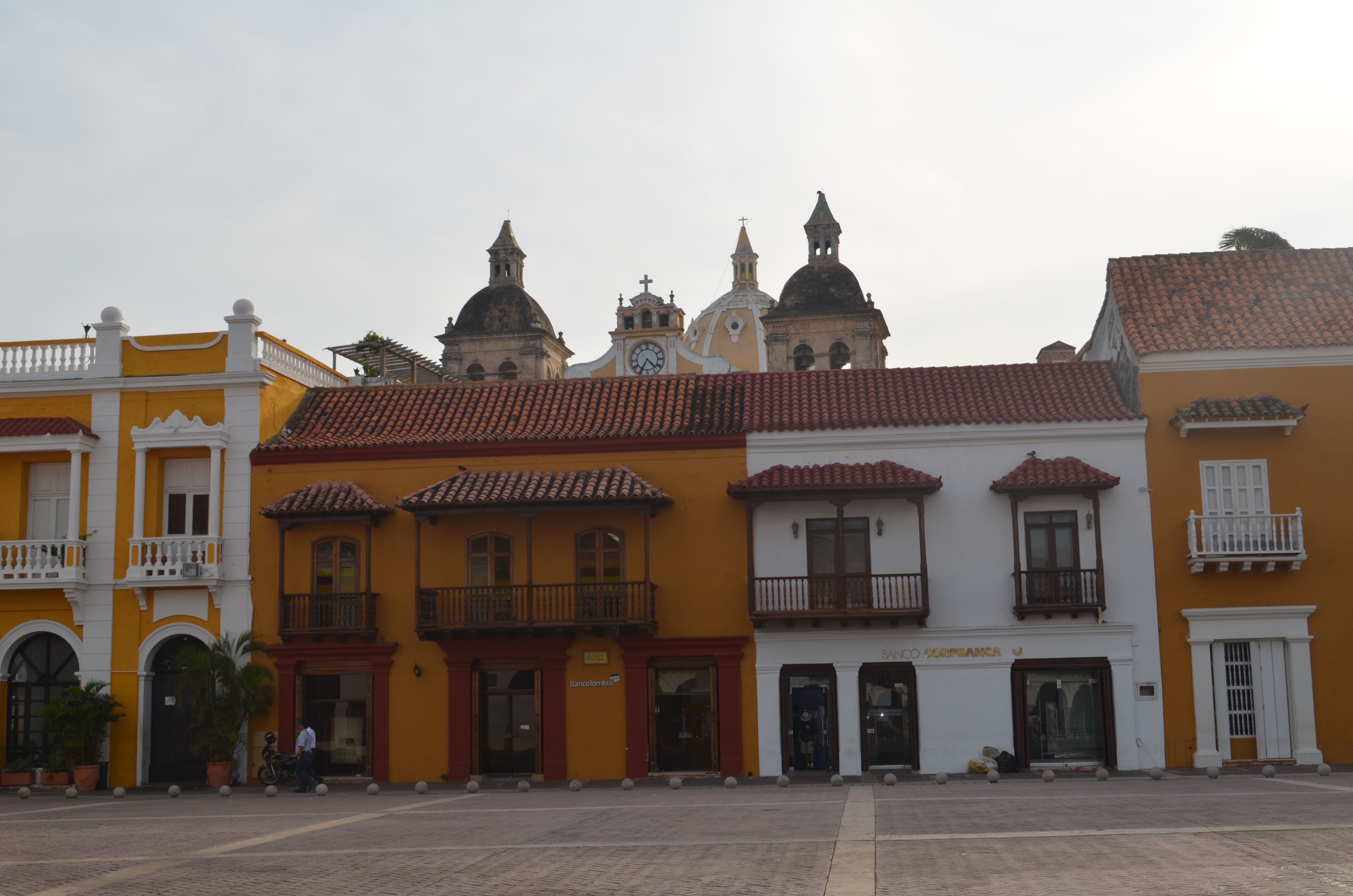
During our stay in Santa Marta, we spent a night in a family-run hotel called Casa Familiar. The place was a good value for money, with clean rooms and a super friendly and welcoming staff. This is why I advice you to stay there if you like a family run, clean places. For us it was the perfect place for a short stopover before heading out on our next adventure, and the reason why we where here: Tayrona National Park, one of the highlights of any trip to the Caribbean coast of Colombia.
To get to Tayrona, we took a microbus from Santa Marta station, which took about 50 minutes to reach the entrance of the park. From there, we hopped onto a mini-van for a short 10-minute ride to the starting point of the hiking trails. The anticipation of entering the park was palpable, as we knew that Tayrona was home to some of the most stunning beaches and landscapes in Colombia. The park’s natural beauty is legendary, and it didn’t take long for us to see why.

The trail from the entrance led us through lush jungle terrain, a beautiful combination of tropical forest and ocean views. The hike to our chosen campsite, Don Pedro, took about an hour, and it was a journey that we will never forget. The jungle was alive with the sounds of birds and insects, and the path wound through dense vegetation, with occasional glimpses of the sparkling Caribbean Sea in the distance.
Don Pedro campsite was a hidden gem. Tucked away in the middle of the forest, it offered a peaceful retreat far from the crowds of tourists. The campsite was close to a mango plantation, and the smell of ripe fruit filled the air. We spent two nights and three days at Don Pedro, enjoying the simple pleasures of nature. The campsite had a rustic charm, with basic amenities and a communal kitchen where we could cook our meals over a wood fire. There was a sense of camaraderie among the campers, as everyone shared the experience of being immersed in such a beautiful, remote environment.

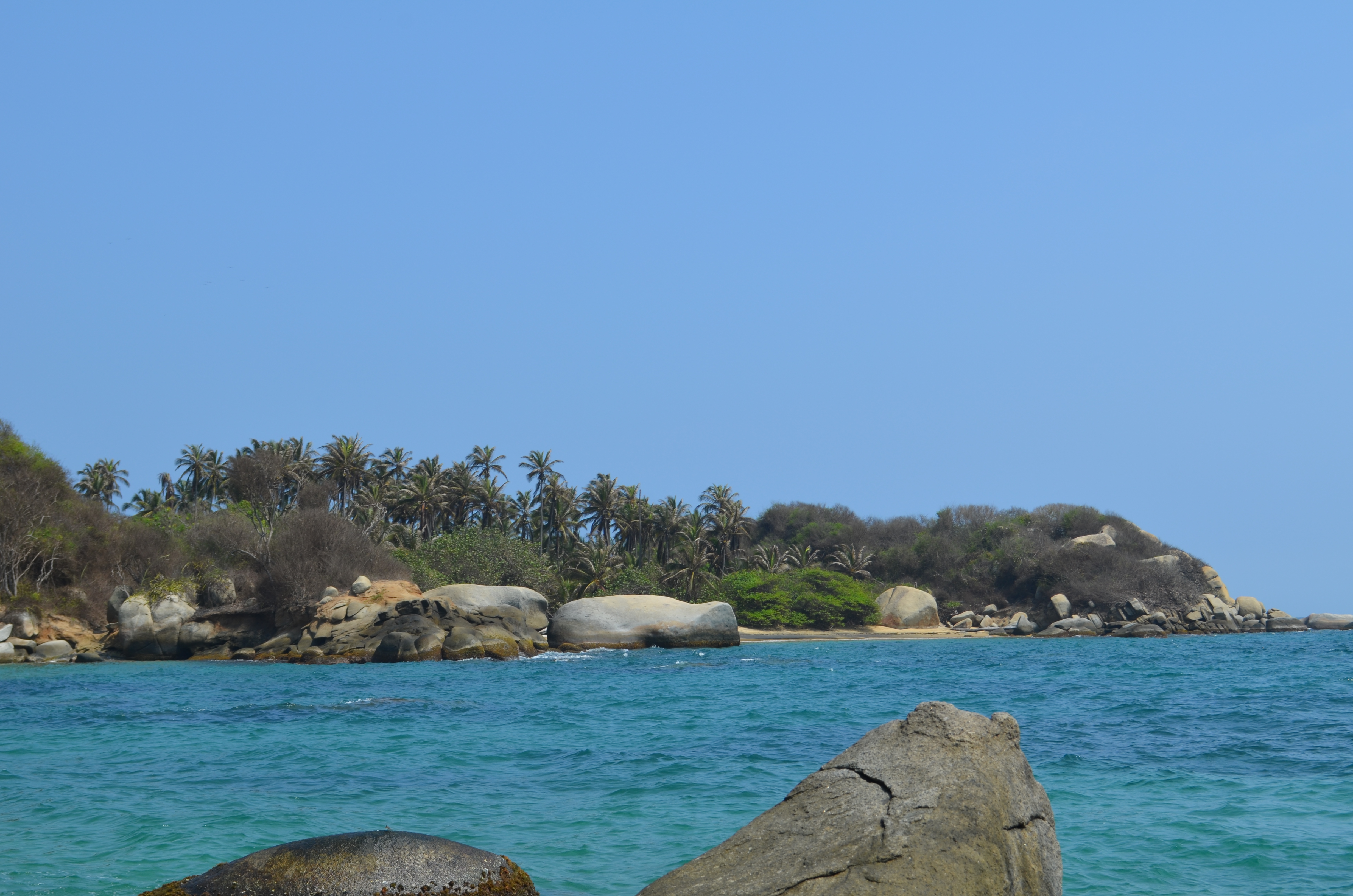
One of the highlights of our time in Tayrona was the stunning beaches. Las Piscinas was particularly breathtaking. This beach, with its natural rock formations that created a massive natural pool, was like nothing we had ever seen before. The water was calm and clear, perfect for swimming, and the surrounding scenery was straight out of a postcard. Cabo San Juan was another favorite, with its picturesque combination of palm trees, white sand, and massive boulders scattered along the shore. The views were magical, and it was easy to see why the Tayrona people, who once inhabited this area, considered the boulders sacred. They truly add to the mystical atmosphere of the park.
We also visited Recife beach, a secluded spot that wasn’t safe for swimming due to strong currents but was still worth the visit for its untouched beauty. The hikes along the coast were relatively easy and pleasant, offering stunning views of the ocean at every turn. However, the hike to Pueblito, an ancient village in the mountains, was much more challenging. The trail was steep and rocky, winding its way up through dense forest. The tropical heat and humidity made the climb even more difficult, but the effort was worth it. Pueblito was a peaceful, quiet place, with remnants of traditional Tayrona stone structures and terraces. Although we didn’t see many people on our visit, the sense of history and culture was palpable.
After a few days of hiking and exploring, we also enjoyed some downtime at the campsite. Cooking over the wood fire in the communal kitchen was a memorable experience, and we loved the simplicity of preparing our own meals in such a beautiful setting.
One culinary highlight was the chocolate bread from a nearby bakery, run by the grandmother of a Swiss-Colombian football player, Johnathan Vonlanten. The bread was delicious, and it was a small but special treat after long days of hiking.

Three days was enough time to see most of what Tayrona has to offer, but we could have easily spent a week there, soaking in the beauty of the park and exploring more of its hidden corners. The combination of stunning beaches, lush jungle, and rich cultural history makes Tayrona a truly unique destination that we will never forget.
Practical info:
Accomodation:
There is plenty of all sorts of accommodation in Santa Marta. Hostels, luxurious hotels, apartments, posadas. You will find most of them on the usual booking and airbnb platforms but you can also arrive without a reservation and if you don’t mind walking around the town in a search of the accommodation, you definitely will find a room.
When it comes to Tayrona Park, we stayed in the campsite Don Pedro, and we liked it. The campsite is very basic (tents only) and offers a rental service of the tents if you don’t have your own.
If you are not a campsite person, don’t worry, you can still count on a great accommodation inside the park. Bungalows and cabanas are there for you. Check them out on the Tayrona Park website and make sure to book in advance.
How to get there?
We arrived to Santa Marta by bus from Venezuela and the journey was really fast and easy. No issues in crossing the border but maybe we were just lucky. If you are planning on crossing from Venezuela to Colombia, just make sure to follow the local news and check if your border crossing is open.
Getting to Santa Marta by Bus
Several bus companies operate services from other Colombian cities to Santa Marta. The bus station (Terminal de Transporte de Santa Marta) is located a few kilometers outside the city center.
From Cartagena
Cartagena is just 230 km (143 miles) from Santa Marta, and the bus ride takes approximately 4–5 hours. Several reputable companies, such as Expreso Brasilia, and Berlinas del Fonce, operate buses and minivans between the two cities. Fares range from 40,000 to 60,000 COP (10-15 USD) depending on the service.
From Barranquilla
Barranquilla is the closest major city to Santa Marta, located only 104 km (65 miles) away. The bus journey is relatively short, taking about 2 hours. Tickets cost around 20,000-30,000 COP (5-8 USD).
From Bogotá
Traveling from Bogotá to Santa Marta by bus is an adventure, as it covers a distance of over 950 km (590 miles) and can take 16–20 hours depending on road conditions. Buses are generally very comfortable and equipped with reclining seats, air conditioning, and entertainment. Fares typically range from 80,000 to 130,000 COP (20-35 USD).
From Medellín
Buses from Medellín to Santa Marta take 13–15 hours and cover around 730 km (450 miles). Ticket prices are in the range of 80,000 to 120,000 COP (20-30 USD). Popular companies include Expreso Brasilia and Rapido Ochoa.
Getting to Santa Marta by Plane
The most common and convenient way to reach Santa Marta is by flying into Simón Bolívar International Airport (SMR), which is located approximately 16 km (10 miles) from the city center. While the airport primarily handles domestic flights, there are limited international connections to cities like Panama City (via Copa Airlines). Still, most international travelers will need to fly into one of Colombia’s major airports—Bogotá (El Dorado International Airport – BOG), Medellín (José María Córdova International Airport – MDE), or Cartagena (Rafael Núñez International Airport – CTG)—before catching a connecting flight to Santa Marta.
From Bogotá: The flight takes about 1 hour and 30 minutes. Airlines such as Avianca, LATAM, and Viva Air offer several flights daily.
From Medellín: Direct flights take about 1 hour and 15 minutes.
From Cartagena: There are no direct flights between Cartagena and Santa Marta because the cities are very close, so land travel is recommended instead.
Transportation from the Airport
Taxi: Taxis are readily available at the airport and the ride to the city center takes about 20–30 minutes. Expect to pay around 40,000-50,000 COP (10-13 USD).
Shuttle Services: Some hotels offer private shuttle services, which can be booked in advance.
Bus: Local buses, known as “colectivos,” run along the main highway and offer a much cheaper alternative (around 2,000 COP or 0.50 USD), but they can be slower and less convenient.
Getting to Santa Marta by Car
Driving to Santa Marta can be a scenic option if you’re looking to explore the Colombian countryside.
From Cartagena
The drive from Cartagena to Santa Marta takes about 4 hours along Route 90, which follows the coast. The road is mostly in good condition, but you may encounter some potholes and occasional heavy traffic.
From Bogotá
If you’re driving from Bogotá, be prepared for a long journey of around 18 hours. You will pass through cities like Honda, Ocaña, and Ciénaga before reaching Santa Marta. The roads are generally well-paved, but mountainous regions may have more challenging driving conditions.
Car Rentals
Car rental agencies like Localiza, Hertz, and Avis are available in major cities, and you can rent a vehicle in Cartagena or Barranquilla and drive to Santa Marta. Make sure to have your international driver’s license if required and be aware of local driving rules.
Moving Around Santa Marta
Once you arrive in Santa Marta, getting around the city is fairly easy.
Taxis: Taxis are widely available, but they often don’t have meters. It’s essential to agree on the fare before starting the trip. Expect to pay around 5,000-10,000 COP (1-3 USD) for short rides within the city.
Buses: Local buses and minibuses (colectivos) operate throughout the city and to nearby attractions, such as Taganga and Tayrona National Park. Fares are very affordable, usually around 2,000-3,000 COP.
Motorbike Taxis: Motorbike taxis, called “moto-taxis,” are another popular way to get around, especially for short distances.
Getting to Tayrona National Park
Minibuses to Tayrona National Park leave regularly from the Santa Marta market area, taking about an hour to reach the entrance. The fare is around 8,000-10,000 COP (2-3 USD).
Best Time to Visit: Santa Marta enjoys warm weather year-round, but the dry season (December to March) is the best time to visit. The rainy season (September to November) can bring heavy downpours.
 Nomadlytics
Leave a comment