
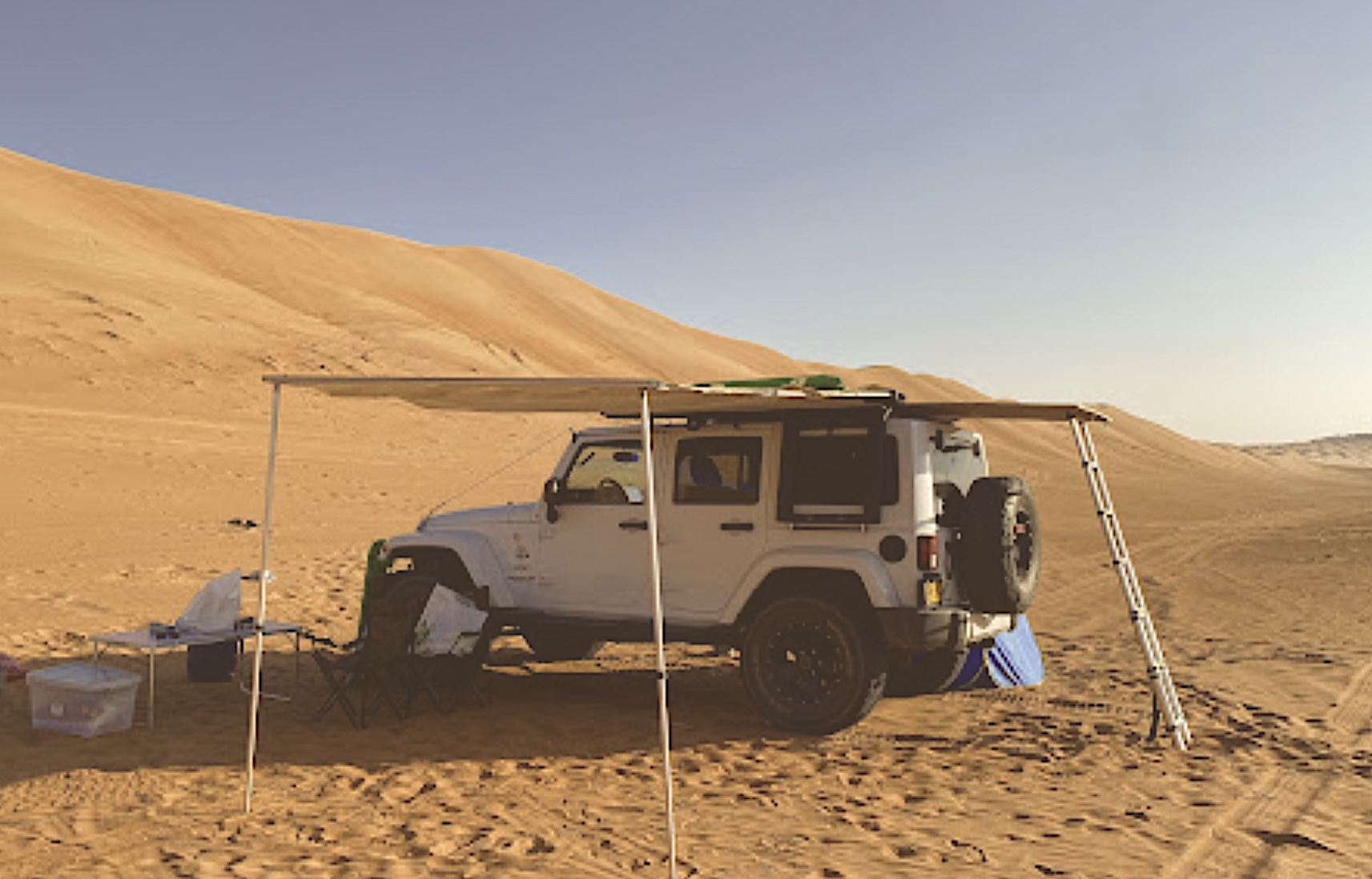
Exploring Oman’s vast deserts, such as the Wahiba Sands (Sharqiya Sands), is a thrilling adventure. Spending a night under the starlit desert sky is an extraordinary experience. This guide provides step-by-step instructions and practical advice to make your trip safe and enjoyable.
Preparation: Choosing Your Route
- Research Your Destination
Wahiba Sands and Empty Quarter (Rub’ al Khali) are both popular desert regions. Choose an accessible entry point (e.g., Al Mintrib for Wahiba Sands) and identify landmarks or the nearest camping spots. You are not obliged to sleep in the camping grounds but it’s good to know where they are just in case you need an extra help. If this is your very first time, I advice you to camp not further than 2km from the nearest campsite. You still will avoid the touristy camping place but if you get stuck in the sand or you need help for anything else, you will have more chances to receive the assistance on time. - Check the Weather
Avoid extreme heat by visiting between November and February. Check the weather app for sandstorms, as they can make navigation difficult.
Essential Equipment

It goes without saying that you have to hire a 4X4 vehicle for that trip. Several car rental companies like Active Oman, offer vehicles with a roof top tent and the full gear to camp in the desert. It is more expansive than a normal vehicle but absolutely needed if you are planning to sleep in the middle of the Wahiba Sands.
For Navigation you will need:
- GPS Device: A reliable off-road GPS system (e.g., Garmin Overlander). Do not solely rely on your smartphone.
- Offline Maps: Download offline maps of the area via apps like Google Maps or Maps.me.
- Compass: A basic compass as a backup.
For Vehicle Recovery:
- Shovel: To dig out sand around the wheels.
- Sand Tracks/Traction Boards: Use to gain traction if stuck.
- Tow Rope/Straps: In case you need assistance from another vehicle.
- Tire Pressure Gauge: To reduce tire pressure for better traction on sand.
- Air Compressor: To reinflate tires once you’re back on firm ground.
For Camping:
- Tent: A desert-ready, windproof tent with ventilation.
- Sleeping Gear: Lightweight sleeping bags and a ground mat.
- Lighting: Portable LED lamps, headlamps, and spare batteries.
- Water Supply: At least 10 liters per person, per day, for drinking and cooking.
- Food: Non-perishable items and a portable stove or gas burner.
- First Aid Kit: Include bandages, antiseptic, and necessary medications.
- Sun Protection: Sunglasses, sunscreen, and a wide-brimmed hat.
For Emergencies:
- Satellite Phone: For areas with no cell coverage (most of the desert).
- Power Banks: To keep electronics charged.
- Spare Fuel Canister: For long distances in remote areas.
General Supplies:
- Trash bags (leave no trace).
- Multi-tool or Swiss Army Knife.
- Extra clothing layers for cooler temperatures during night.
Driving in the Sand: Pro Tips

Tire Pressure:
Lower your tire pressure to 15–20 psi to increase surface contact and prevent sinking. Reinflate tires when returning to paved roads using your air compressor.
Driving Technique:
Use a 4WD (four-wheel drive) with the differential lock engaged. Drive steadily at moderate speeds. Avoid abrupt braking or turning. Follow existing tracks when possible but stay alert for soft sand patches.
Avoid Getting Stuck:
Avoid stopping in soft sand or at the bottom of dunes. Always stop on firm, level ground. Use momentum to climb dunes rather than accelerating suddenly.
What to Do If You Get Stuck
Assess the Situation:
Get out of the car and check the depth of sand around the wheels. Ensure the area behind the vehicle is free of obstructions.
Recover the Vehicle:
First of all clear sand from around the tires using a shovel and place sand tracks or branches under the tires for traction. Reverse gently to gain momentum, then drive forward slowly. Lower tire pressure further if needed, but avoid going below 10 psi.
Seek Help:
Use your satellite phone if stranded. Stay within your vehicle for better visibility and protection.
Camping in the Desert

Set up camp in a sheltered area, or on the rooftop of your car (if enabled). In any case set your tent away from dune edges to avoid wind. Secure your tent and belongings to prevent them from being blown away. Watch for desert wildlife like scorpions and snakes; shake out shoes and gear before use. If it is your first time, stay close to one of many organized desert camps so you can easily reach for help in case of emergency.
GPS and Internet Connection
GPS:
- Use a dedicated GPS device for navigation.
- Apps like Gaia GPS or ViewRanger (with offline maps) are helpful on smartphones.
Internet:
- Mobile coverage may be available near towns or villages but is unreliable in remote deserts.
- Oman’s major providers (Omantel, Ooredoo) offer SIM cards with data plans. Purchase one before your trip if needed.
Safety Tips
- Inform Someone: Share your route and estimated return time with a trusted contact.
- Monitor Fuel Levels: Always have a backup plan for refueling.
- Leave No Trace: Pack out all waste and respect the environment.
With proper preparation and caution, your overnight desert camping experience in Oman will be both safe and unforgettable. Enjoy the stunning views, golden dunes, and serene starlit nights!
 Nomadlytics
Leave a comment