
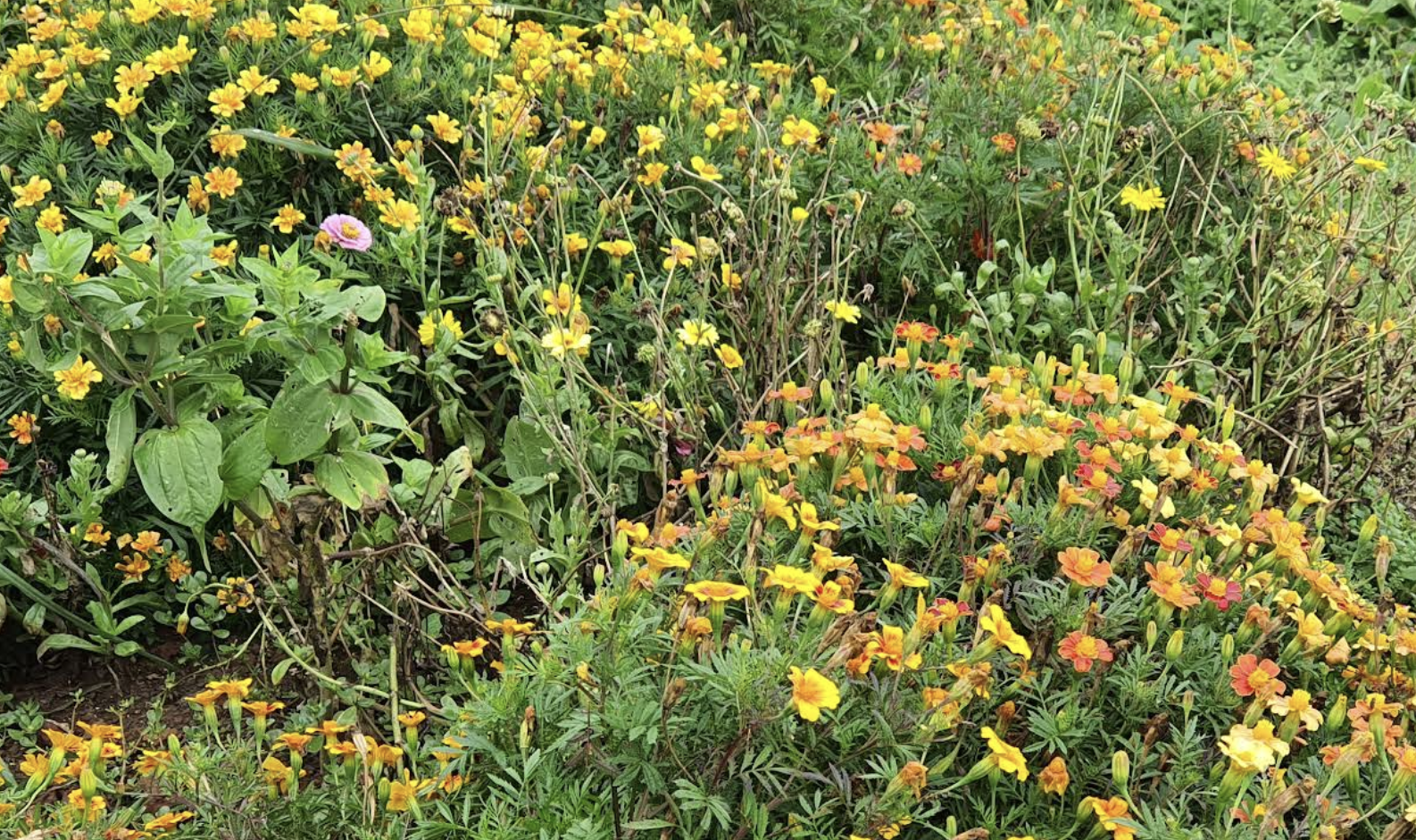
Flores and Corvo are two Azorean Islands located on the North American Continental Plate. Some people are deeply convinced that these two small islands are the most magical in the Azores archipelago. Part of the western group of islands, these remote outposts are a paradise for nature lovers, hikers, and anyone looking for a deep connection with the raw beauty of the Atlantic. Today I will guide you. through the most fascinating places and the best hikes on Flores Island. Stay tuned because I am preparing a dedicated post about the Corvo Island and it will be published soon.
Named for the abundance of wildflowers that bloom across its landscape, Flores feels like a place untouched by time. The island’s rugged terrain, rocky cliffs, and green valleys create a breathtaking picture of green, blue, and volcanic black. Every corner of Flores invites exploration — from misty highland lakes to coastal trails that end in jaw-dropping ocean views.
Natural Wonders You Can’t Miss
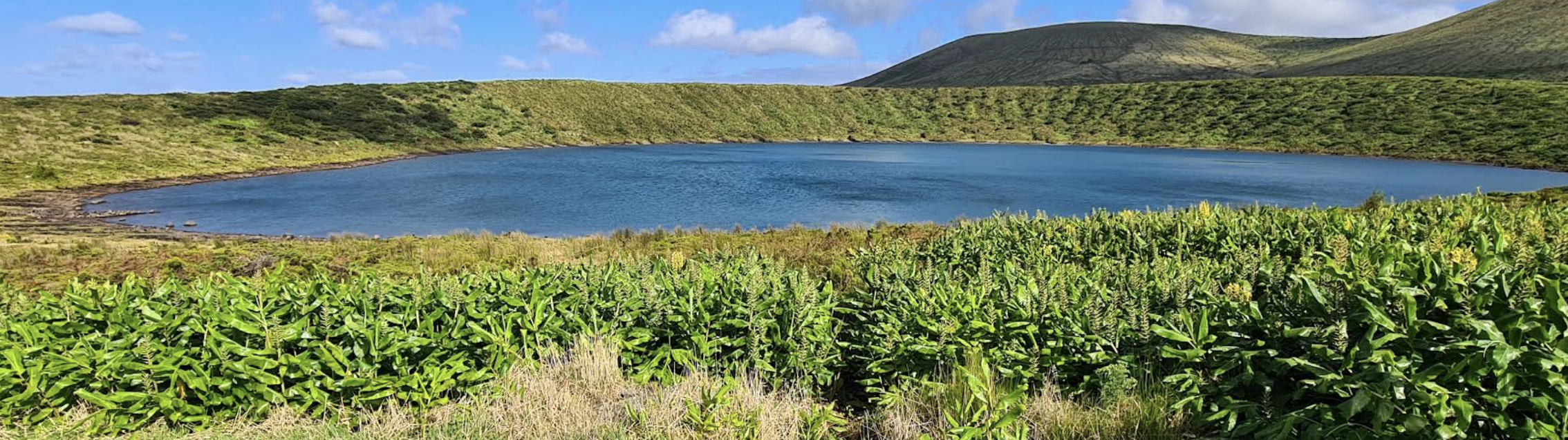
Lagoa Funda and Lagoa Rasa
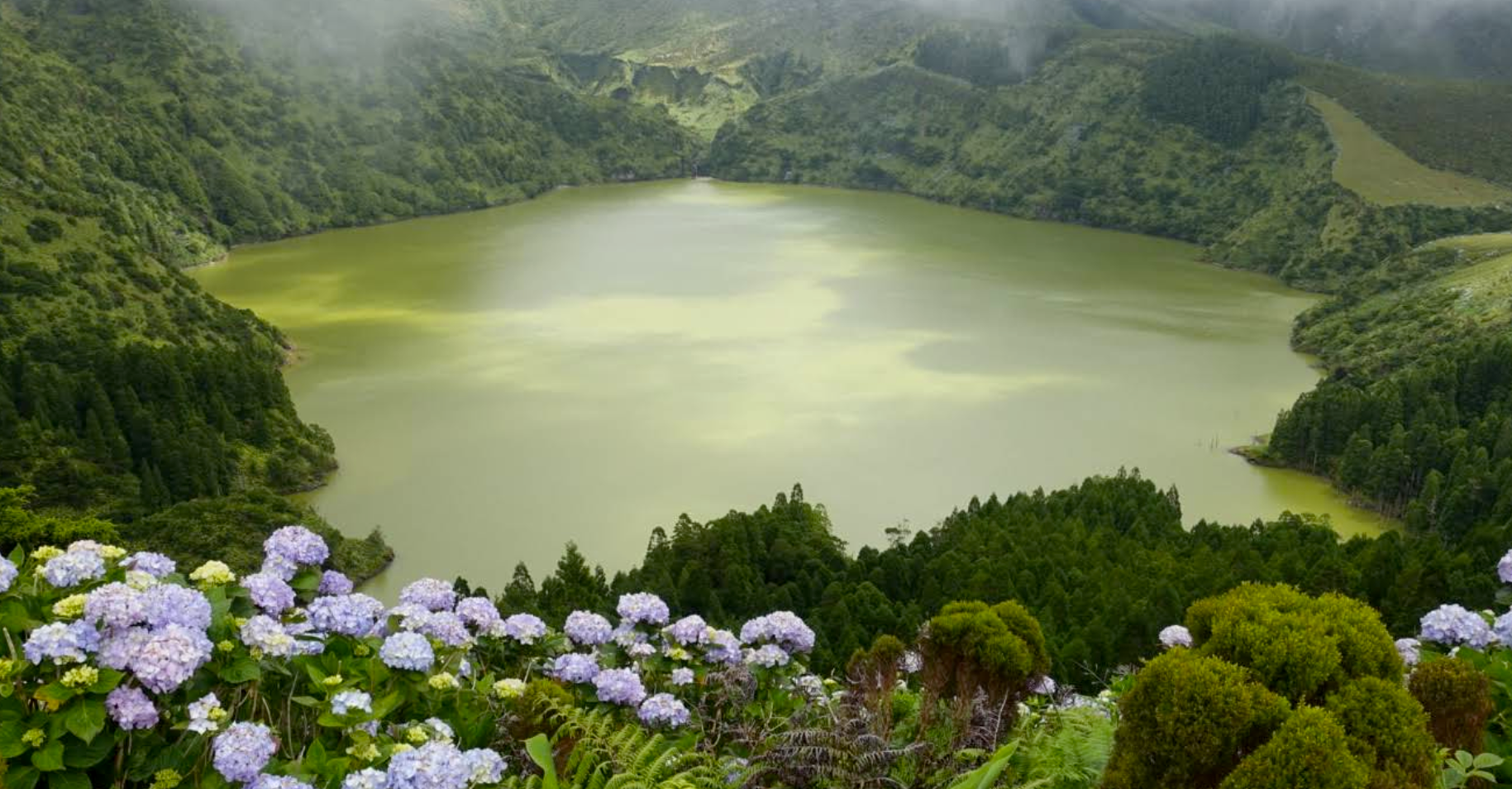
Tucked away in the heart of Flores Island’s Central Plateau, Lagoa Funda and Lagoa Rasa are twin crater lakes that will fascinate you with their beauty and contrast. Although they are close in proximity, each of this lake has its own character—Lagoa Funda is deeper and darker, often appearing as a glassy obsidian pool, while Lagoa Rasa, as its name suggests, is shallower, with clearer waters that shift hues depending on the sunlight and sky.
Encircled by thick forests, fern-covered slopes, and mossy volcanic ridges, these lakes are a haven of stillness. The air is crisp, filled with the scent of wet earth and wild hydrangeas. It’s a place where nature is completely unspoiled—deer or rare birds may be spotted in the undergrowth, and if you come early in the morning, the mist that rises off the water gives the whole area a mystical, dreamlike quality.
Hiking trails in the area range from leisurely loops around the lakes to more challenging routes that offer panoramic viewpoints over the volcanic caldera. The serenity of Lagoa Funda and Lagoa Rasa provides a moment of deep connection with nature, far from the noise of the modern world.
Fajã Grande Waterfalls
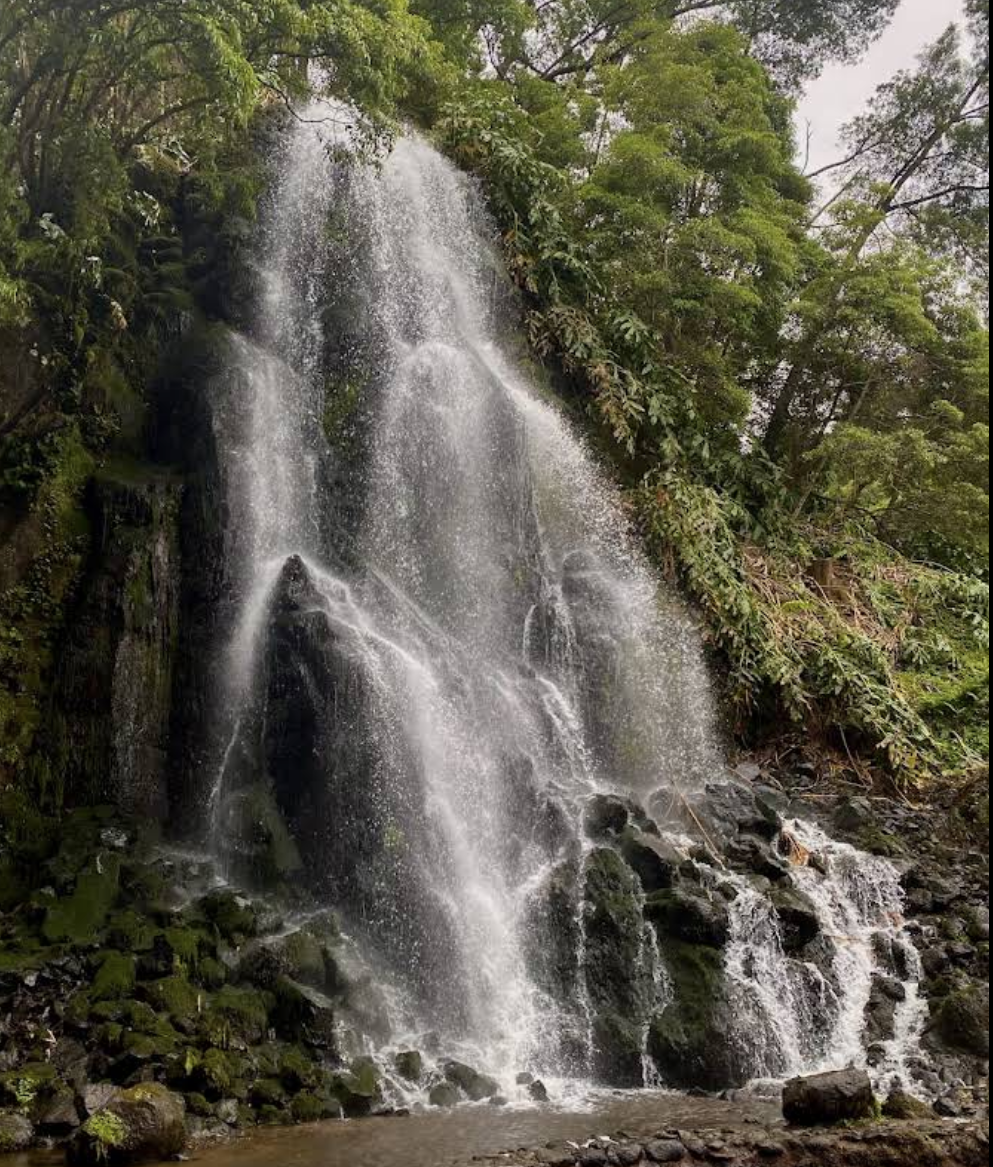
If there is one place that defines the wild, unrestrained beauty of Flores Island, it’s Fajã Grande. This small coastal village, often cited as the westernmost settlement in Europe, is surrounded by cliffs that seem to weep with waterfalls after every rainfall. Dozens of streams cascade down these green walls, creating a symphony of rushing water that resonates through the valley.
The most incredible sight is undoubtedly the Ribeira do Ferreiro Waterfall, also known as Poço da Alagoinha. This hidden gem is reached by a short, easy hike through a forested trail where you’ll hear the sound of water long before you see the waterfall itself. As you emerge from the trees, you’re greeted by an amphitheater of sheer cliffs from which multiple waterfalls pour like silver ribbons into a lagoon dotted with lily pads and ringed by ferns.
The entire scene has a surreal, untouched quality—as if you’ve stumbled into a secret Eden. It’s no wonder the site is sometimes compared to something from a Studio Ghibli film or a Tolkien novel. Photographers, nature lovers, and daydreamers will find it hard to leave this enchanting place. Nearby, other waterfalls such as Cascata do Poço do Bacalhau offer even more opportunities for discovery and they are less crowded.
Rocha dos Bordões
Rising like a cathedral from the rolling green hills of Flores, Rocha dos Bordões is one of the island’s most iconic geological wonders. This towering formation consists of vertical basalt columns that were formed millions of years ago through the slow cooling and contraction of lava. The result is a natural sculpture that looks like a set of monumental organ pipes—hence the name, which loosely translates to “Staff Rock” or “Stick Rock.”
What makes Rocha dos Bordões especially interesting is how it seems to change personality with the light and weather. Under a clear sky at sunset, the basalt glows with a soft golden hue, casting long shadows across the moorland. On misty days, the formation takes on a haunting, otherworldly appearance, its outlines blurred in fog.
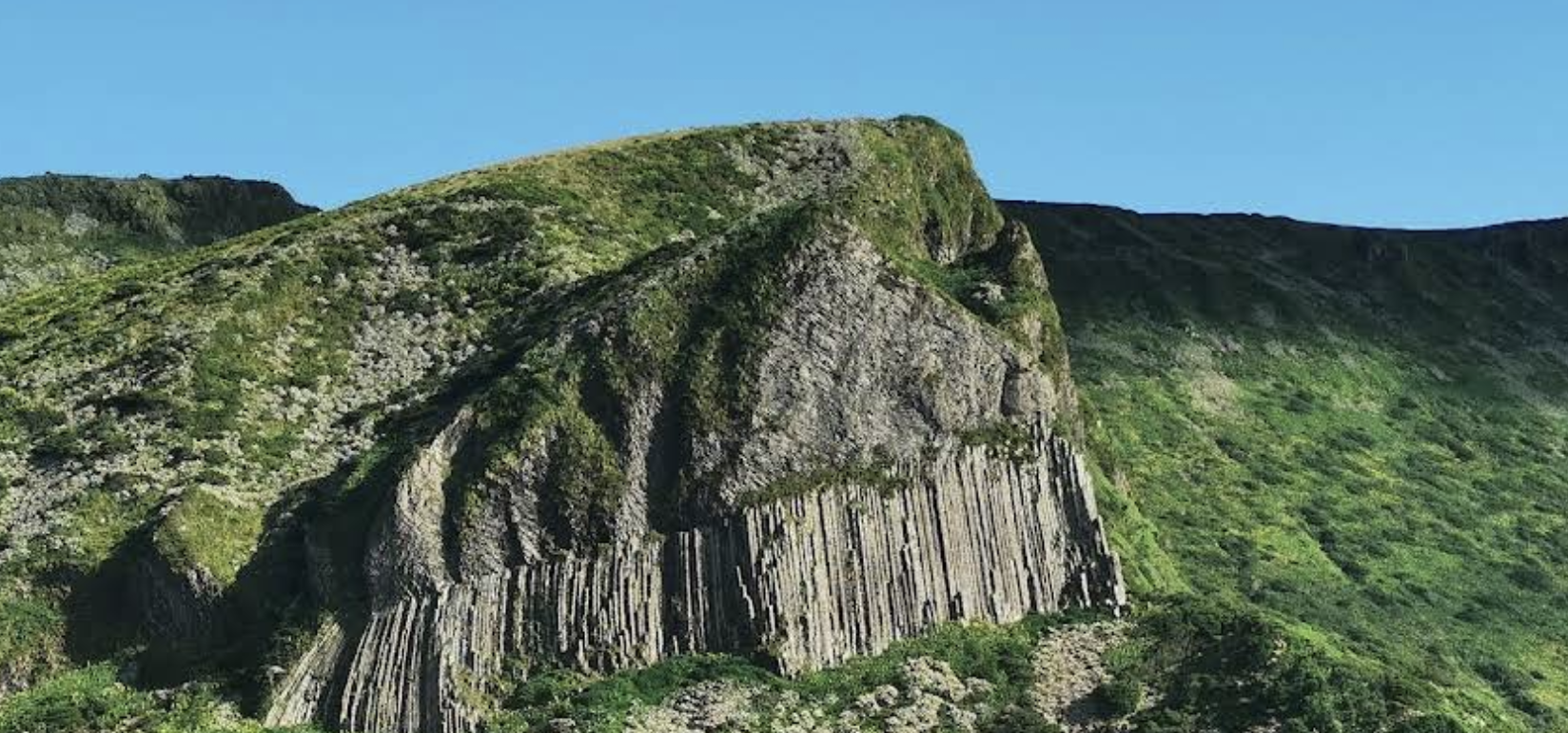
The site is easily accessible and marked by a small viewpoint that allows to admire both the formation and the sweeping landscapes that surround it. It’s a must-visit for geology enthusiasts, photographers, and anyone interested in the island’s volcanic past. Interpretive panels at the viewpoint provide context about the rock’s formation, adding a layer of educational value to the visual experience.
Biodiversity at its Best
Flores is a sanctuary for endemic plants and rare wildlife. Picture hills blanketed in blue hydrangeas, orchids nestled in mossy nooks, and native Azorean blueberries thriving in the wild. Bird watchers will find plenty to admire too — especially sightings of Cory’s Shearwater and the elusive Azores Bullfinch, which flits through the island’s dense foliage.
Hiking Trails
Flores has trails for every level: from a casual walker to advanced hiker. Let’s discover some of the best trails on the island. For the complete list check the Visit Azores website here.
1. PR1 FLO – Fajã Grande to Ponta Delgada Coastal Trail
- Length: ~13.2 km (8.2 miles)
- Duration: 4.5 to 6 hours
- Difficulty: Moderate
- Type: Linear (point-to-point)
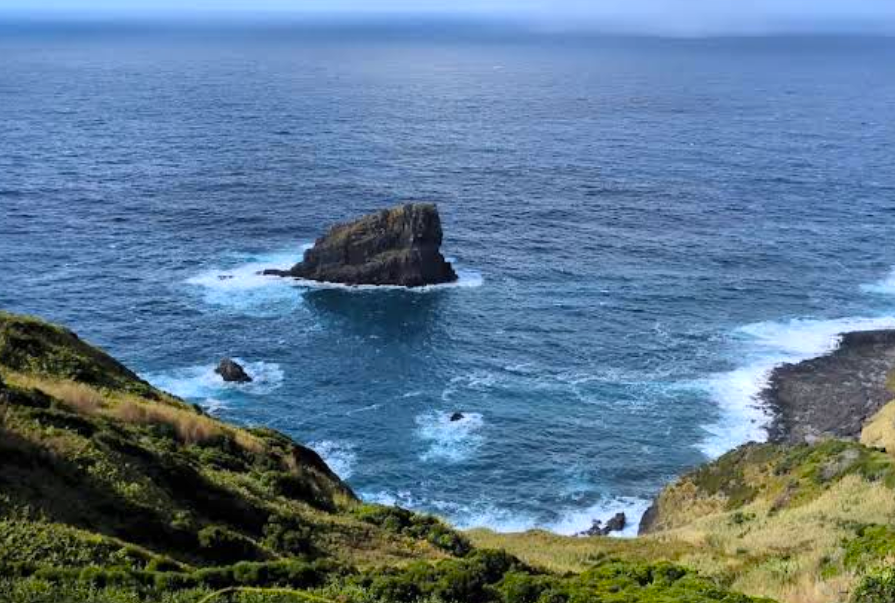
This is probably the most iconic trail on Flores. It takes you along the island’s rugged northwest coast from the picturesque village of Fajã Grande to Ponta Delgada. You’ll pass by towering cliffs, secluded valleys, waterfalls, and breathtaking ocean views the entire way.
Highlights:
- Several waterfalls cascading down the cliffs into the Atlantic Ocean, including the famous Ribeira do Ferreiro.
- The tiny village of Fajãzinha, a peaceful midway stop.
- Clifftop views over the ocean and wildflower-covered meadows.
- Ancient paths and stone-paved segments used historically for island crossings.
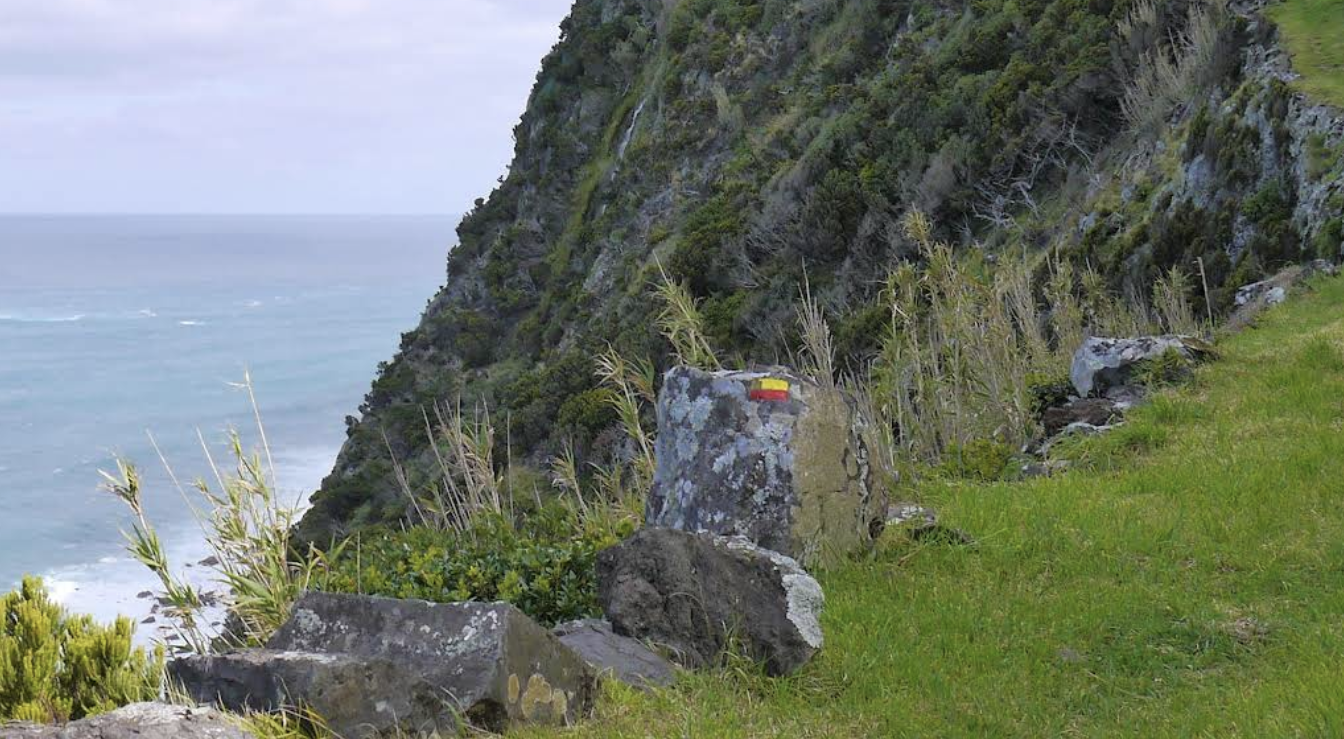
This trail involves elevation changes and some narrow paths, especially near cliff edges, so a good level of fitness is recommended. You may want to arrange transportation at both ends or hike only a section if you have a limited time.
2. PR2 FLO – Miradouro das Lagoas to Poço do Bacalhau
- Length: ~11 km (6.8 miles)
- Duration: 4 to 5 hours
- Difficulty: Moderate
- Type: Linear
This inland route begins near Miradouro das Lagoas, an observation point overlooking the crater lakes of the central plateau, and descends to the coastal village of Fajã Grande, ending near the Poço do Bacalhau waterfall.
Highlights:
- Views over Lagoa Funda and Lagoa Rasa, two serene volcanic lakes.
- Dense, mossy forests and stretches of endemic Azorean flora.
- Finishes at the Poço do Bacalhau waterfall, where you can even swim in the natural pool at the base (weather permitting).
- Opportunities for birdwatching in the central plateau region.
While the trail is not particularly technical, the descent toward Fajã Grande can be slippery after rain. This route gives a wonderful mix of highland and coastal terrain and showcases Flores’ diverse ecosystems.
3. PR3 FLO – Lajedo to Fajã Grande
- Length: ~7 km (4.3 miles)
- Duration: 2.5 to 3 hours
- Difficulty: Moderate
- Type: Linear
This historical trail connects the village of Lajedo in the southwest to Fajã Grande, passing through traditional Azorean landscapes, forested areas, and old cobbled paths. It was once used by locals to move between villages before modern roads were built.
Highlights:
- Traditional stone walls and pastures dotted with cows and local agriculture.
- Forested trails through endemic laurel and heather groves.
- Ocean vistas and deep ravines carved by streams.
- A real sense of walking through the cultural and natural history of Flores.
This is a great trail for those who enjoy cultural elements alongside natural beauty. It can be combined with other nearby trails to form a longer itinerary or a loop. It’s perfect for families with younger kids.
How to get there?
The easiest way to get to Flores is by taking a domestic flight from São Miguel (Ponta Delgada) or Terceira (Lajes), both of which offer regular connections via Azores Airlines (SATA). Flight times typically range from 1.5 to 2 hours. In the summer months, ferry services from nearby Corvo Island are also available, making it possible to explore both islands in a single trip. Terceira and São Miguel have regular connections with the main land Portugal, mainly Lisbon. SATA airlines offer all year round flights while companies like Ryan Air and Easy Jet serve Azores Island during the spring and summer months. At the moment there is no direct flight between Flores and mainland Portugal.
Accommodation
Just like all the other Azorean islands, also Flores offers all types of accommodation. However, the island is small so the choice is limited. That is why you should book your place far in advance.
For a truly unforgettable stay immersed in nature, I advice you to boo a few nights at Aldeia da Cuada. This charming hotel is located near Fajã Grande and it offers stone cottages surrounded by green meadows, cliffs, and waterfalls. With panoramic ocean views, absolute tranquility, and sustainable design, it will definitely be your favorite place to stay on the island.
 Nomadlytics
Leave a comment