

Peniche is a sun-drenched fishing village situated on the Silver Coast in Portugal. Just 100 km North of Lisbon. I said fishing village but those who are chasing the waves, know that the little town of Peniche became famous thanks to a regular surf contest happening every year. More and more tourists and digital nomads started to visiting the town. Many moved here recently and the village exploded with tones of real estate developments. It still maintain its historical charm and it is a great place to live at a slow pace. Seaside vibe, decent restaurants, historic fort and international surfing culture. Lisbon is just one hour away – what else? Well, the climate maybe not as good as in the capital city or Southern Portugal but great waves compensate for that. If you want to discover more about Peniche, read my dedicated post here.
Today I will write about perfect weekend escapes that can be done while living in Peniche. I did not include Berlengas islands, which are a must either if you live in Peniche or just visiting. I have already written a dedicated post about those marvelous islands and you can read it here.
In fact, Peniche’s central location on the western coast makes it an ideal springboard for short adventures. Within just a few hours’ drive (or train ride), you can find yourself immersed in cosmopolitan charm, historic grandeur, or riverside elegance. The stylish seaside town of Cascais, the university-laden cultural hub of Coimbra, and the northern jewel of Portugal, Porto. Let’s start exploring!
Cascais: Where Sophistication Meets the Sea

Distance from Peniche: ~120 km
Travel Time: 1.5 to 2 hours by car or 2.5 hours via train/bus combo
Cascais is an energetic mix of Lisbon’s chic lifestyle and the Algarve’s beach life. Once a fishing village, now it is a true royal retreat with upscale real estate investments. The town boasts stylish boutiques, artistic flair, and golden beaches. It’s the opposite to Peniche’s rugged coastline and surfing crowd—a more polished kind of coastal charm. Very popular also among the inhabitants of Lisbon for a day trip.
What can you do in Cascais?
1. Stroll the Historic Old Town
Cascais’s pedestrian-friendly center is packed with narrow cobbled lanes, whitewashed buildings with colorful tiles, and a cosmopolitan feel. Drop into independent shops and art galleries, and grab a coffee in one of the lively squares.
2. Walk or Bike to Boca do Inferno
Just outside the town center, Boca do Inferno (Hell’s Mouth) is a cliff formation carved by the Atlantic. It’s best visited during rough seas, when the waves crash into the rocks with explosive force. I advice you to rent a bike near the marina and ride along the coastal path to Boca do Inferno and on to Guincho Beach.
3. Museum Hop
If you like art galleries or if oyu are an artist yourself don’t miss Casa das Histórias Paula Rego. It is a museum dedicated to one of Portugal’s most celebrated contemporary artists. Also Museu Condes de Castro Guimarães is worth a visit. It is a beautiful mansion-turned-museum near the marina showcasing a mix of art and antique collections.
4. Hit the Beach
Even if you live in Peniche and you see the ocean every day, it is still worth to soak up the sun on one of the Cascais beaches. The water is warmer than in Penische and usually also the weather is more sunny. Cascais is dotted with small beaches among which you will find the tiny Praia da Rainha and Praia da Conceição – bigger and perfect for sunbathing and swimming during the weekend.
Where to Eat in Cascais?
Mar do Inferno
Just like most of the restaurants in Cascais, this is a very elegant place. Still, the prices are acceptable: try the delicious golden plate for two people. It’s one of the most favorite places of Lisbonians and the cliff side view is incredible.
If you are looking for a more down to Earth option, go to Taberna Clandestina. Here you will enjoy delicious tapas-style dishes and excellent wines. Last but not least, here you will always find good vibes.
Accommodation
In winter season you will not have a problem finding a room in Cascais. In summer, you’d better book in advance. If you are a planning on riding a bike, check Cascais Boutique Hostel. This central and charming hostels offers great deals for the guests. Plus, the staff is super friendly and if your budget is limited, this is a perfect place for you. Book directly on their official website.
On the contrary, if you are looking for a fancy and exclusive option, check the Albatroz Hotel. This 5 star boutique hotel is perched on a cliff and full of old-world glamour. The piano concerts with the spectacular ocean view are surely a highlight. Get the best price and book online here.
2. Coimbra: A Cultural Time Machine
Distance from Peniche: ~150 km
Travel Time: ~2 hours by car, or 2.5–3 hours by train
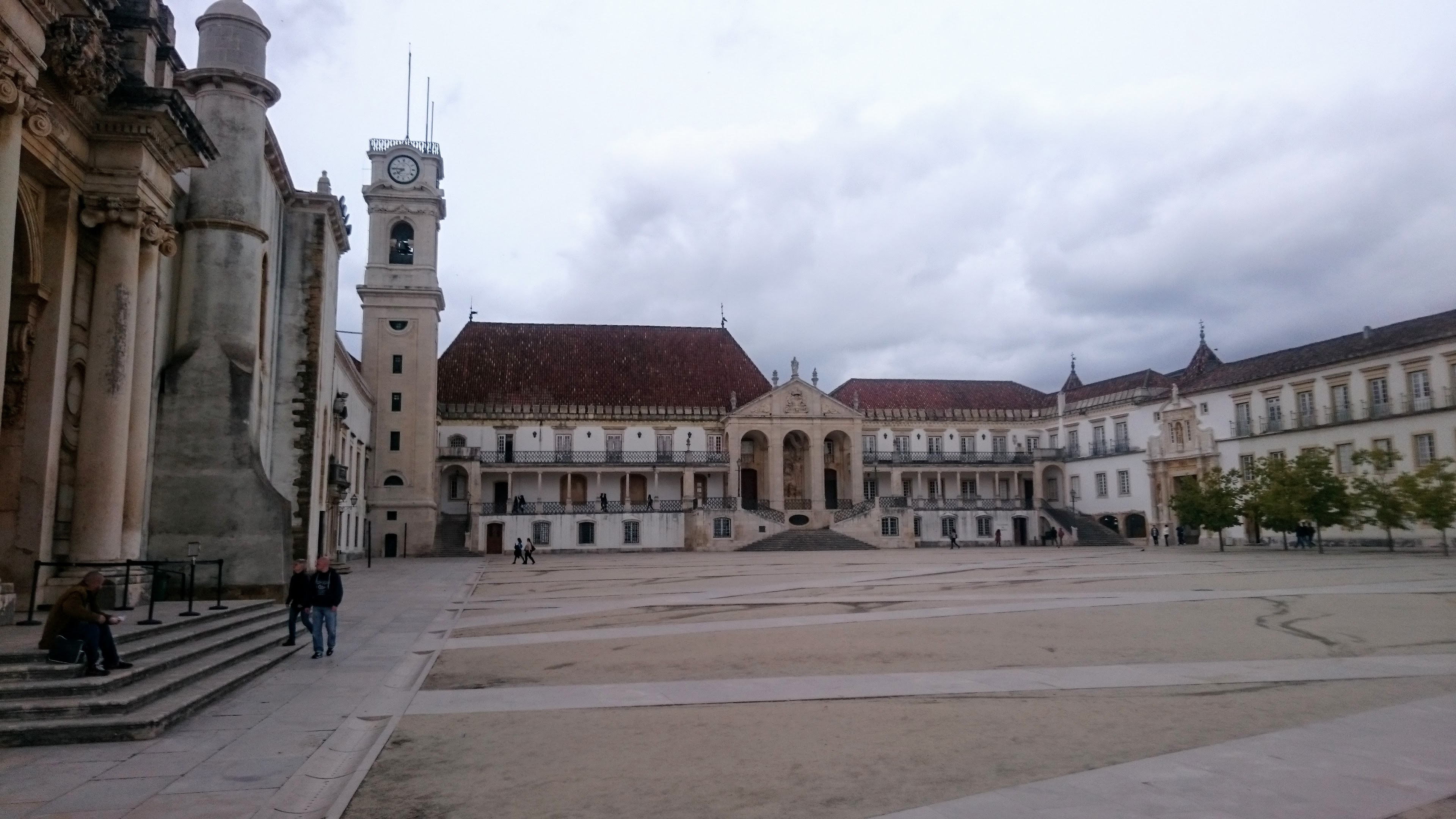
If Portugal’s cities were students, Coimbra would be the bookworm—refined, smart, and deeply steeped in tradition. Home to one of Europe’s oldest universities, Coimbra offers a slower pace with intellectual energy. It’s a city where Baroque libraries meet student serenades, where ancient ruins coexist with funky cafés.
What can you do in Coimbra?
1. Explore the University of Coimbra
A UNESCO World Heritage Site, the university is the crown jewel of the city. Joanina Library is the 18th-century Baroque library and an absolute must-see. With gilded bookshelves, centuries-old volumes, and even a colony of bats (seriously!) that help protect the books from insects it will enchants you with the historical beauty and silence.
Don’t Miss the Royal Palace of Coimbra! This centerpiece of the University of Coimbra is a must-see. Originally a medieval royal residence, this historic building served as the seat of Portuguese monarchs until the 16th century, when it was repurposed as part of the newly established university. One of the highlights of the palace is the Sala dos Capelos, the former throne room which has since been transformed into a majestic graduation hall. With its high, wood-paneled ceiling, intricate azulejos (traditional blue-and-white tiles), and portraits of past university rectors and monarchs lining the walls, the room exudes a solemn grandeur. It is still used today for formal academic ceremonies, including the conferring of doctoral degrees.
While exploring the palace, you’ll also encounter other historic chambers such as the Sala do Exame Privado, once used for oral examinations, and the Armory Room, showcasing a fascinating collection of artifacts. The palace courtyard, with sweeping views over Coimbra and the Mondego River, provides a scenic spot to reflect on the site’s rich past.
2. Catch a Fado de Coimbra Performance
This version of fado music is unique—more melancholic and academic than its Lisbon counterpart, often performed by male students in traditional black robes. Try À Capella, an atmospheric venue in a converted chapel.
3. Wander the Historic Center
Climb the hills of the old city, stop into tiny bakeries, and admire azulejo-tiled façades. The narrow alleys give way to sweeping views over the Mondego River.
4. Visit the Monastery of Santa Clara-a-Velha
Flooded and abandoned for centuries, this haunting Gothic ruin has been carefully excavated. Nearby is the new Monastery of Santa Clara-a-Nova, which houses the tomb of Saint Queen Isabel.
Where to Eat in Coimbra?

If you are looking for a local place that is not a tourist trap, go to Sete Restaurante. Here you will find big portions for a reasonable price. The staff is also very friendly and service is pretty fast.
Accommodation
I must say that generally there is a room for improvement when it comes to accommodation in Coimbra. However some places deserve a promotion. The first one is Hotel Mondego – located close to the train station, this boutique hotel in the heart of Coimbra. It offers a blend of historic charm and modern comfort. Here you will not only enjoy comfy and clean rooms but also a delicious breakfast on a rooftop terrace with a fantastic view.
If you are looking for a luxury experience, then check the Quinta das Lágrimas. This 5-star hotel features 55 rooms and suites across three distinct areas: the historic Palace, the serene Garden wing, and the contemporary Spa wing. You will also be able to enjoy a delicious dinner in the Michelin Restaurant on site. Excellent for special occasions
3. Porto: The Northern Charmer
Distance from Peniche: ~270 km
Travel Time: 2.5–3 hours by car, or 3.5 hours by train
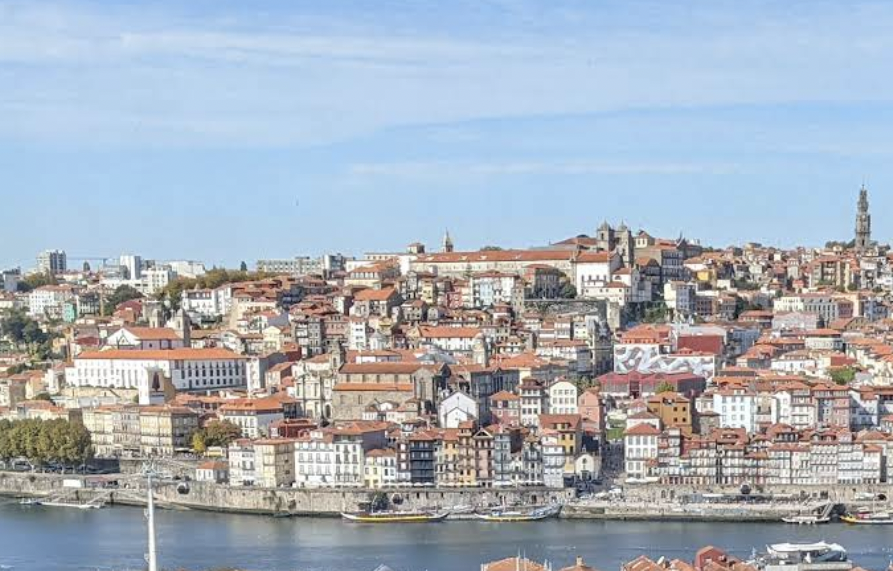
Porto needs little introduction. Portugal’s second city has exploded in popularity for good reason: it’s colorful, artistic, and buzzing with energy. With medieval streets tumbling toward the Douro River, iconic wine cellars, and a culinary scene that’s gaining international renown, Porto is a full sensory experience.
Must see places in Porto
1. Tour the Ribeira District
The Ribeira District, a UNESCO World Heritage Site, is the atmospheric soul of Porto. Its history stretches back to Roman times, and today, it offers a rich mosaic of experiences for every type of traveler.
Wander through narrow cobbled streets that seem frozen in time, with medieval stone buildings painted in vivid yellows, blues, and pinks. The façades are often covered in hand-painted azulejos (ceramic tiles) that tell religious or nautical stories. Laundry flutters from wrought-iron balconies above, while street musicians strum guitars or play accordions along the promenade.
The heart of Ribeira is the Praça da Ribeira, a lively square along the Douro River. It’s surrounded by cafes, wine bars, and shops selling local crafts and port wine truffles. By day, it’s a sun-dappled plaza perfect for coffee and people-watching. By night, it transforms into a bustling scene of live music, glowing lanterns, and riverside dinners.
Take time to visit the Church of São Francisco, known for its stark Gothic exterior and astonishingly ornate Baroque interior, entirely gilded with gold leaf. For a taste of Porto’s mercantile past, explore the Palácio da Bolsa (Stock Exchange Palace) nearby, especially the opulent Arab Room.
If you are not a vegetarian, try the regional dish francesinha. It’s a decadent sandwich layered with meats, cheese, and beer sauce. I have never tries it but apparently Ribeira is a great place to taste it.
2. Cross the Dom Luís I Bridge
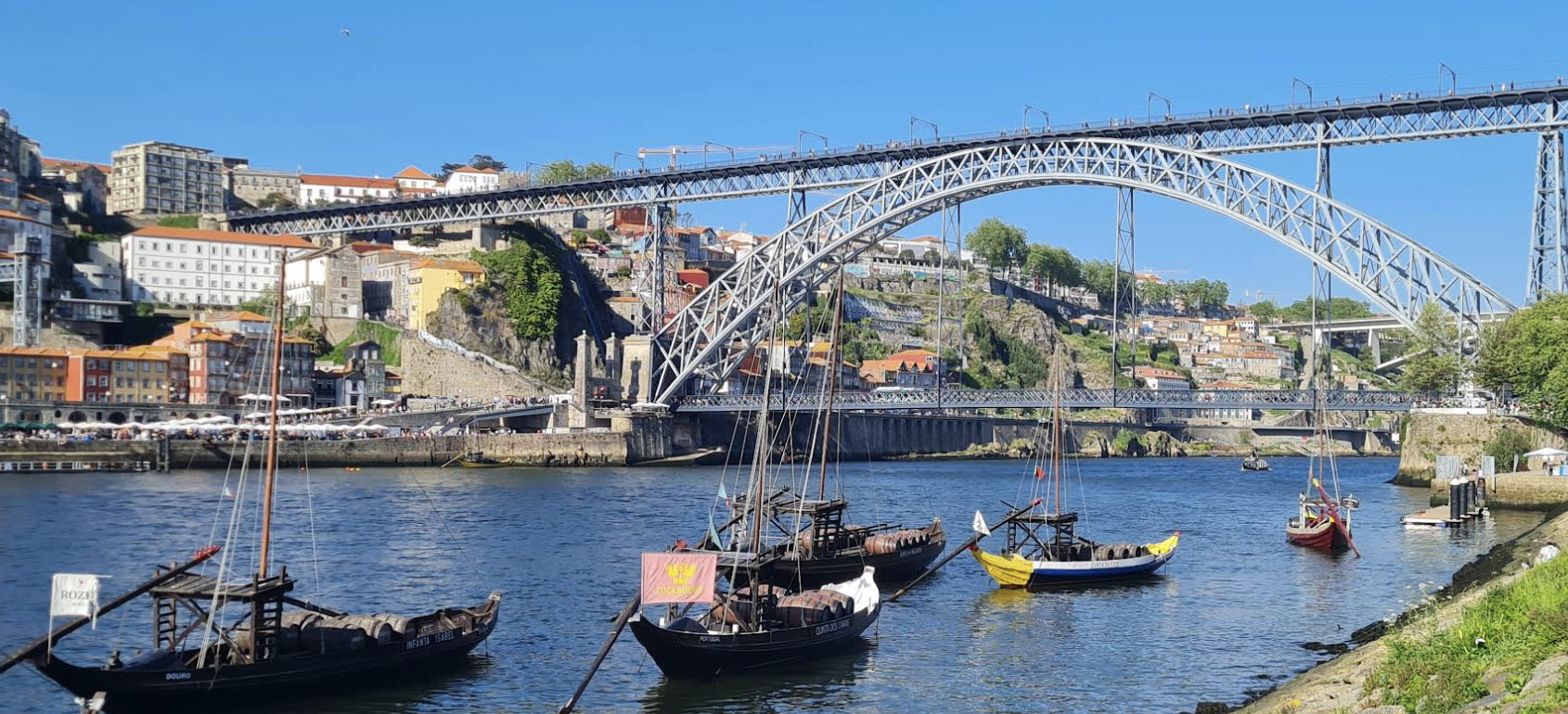
You might say it’s just a bridge. And you are right but it is worth to cross it. The Dom Luís I Bridge is the Porto’s most iconic landmark. Designed by Théophile Seyrig, a disciple of Gustave Eiffel the bridge was completed in 1886 and remains a masterpiece of 19th-century engineering. With two levels—one for the metro and pedestrians (upper deck), and another for cars and additional foot traffic (lower deck)—the bridge offers breathtaking panoramic views of both Porto and Vila Nova de Gaia. Start at the upper deck near the Sé do Porto (Porto Cathedral). The crossing provides a cinematic panorama: tiled rooftops cascading down the hillside, the winding Douro River flanked by boats, and the sun casting golden hues over the terraced wine cellars of Gaia.
On the lower level, you’re right at the river’s edge, where you can observe rabelos—the traditional wooden boats once used to transport barrels of port. Walking across at this level brings you close to the riverfront buzz and offers a different perspective.If you can, visit the bridge just before sunset. The golden light bathes the Ribeira in a warm glow, and from the top of the bridge, the view is nothing short of spectacular.
If you’re not afraid of heights, the teleférico (cable car) in Gaia gives a short ride with fantastic aerial views of the bridge and riverside.
3. Visit Port Wine Cellars in Gaia

A visit to Porto is incomplete without venturing across the river to Vila Nova de Gaia, where centuries of wine-making tradition come to life in the renowned port wine cellars. Here, in the cool, dimly lit lodges built into the hillside, Portugal’s most famous export has been aged and refined for generations.
As you descend into these lodges, the air becomes tinged with the scent of oak barrels, sugar, and time. Each cellar offers its own variation on the experience—some feature small museum-like exhibits, others focus more on tastings and pairings, and many combine both in a guided tour.
Here are three standout cellars to consider:
Graham’s Lodge
This is one of the most prestigious port houses. Their tour takes you through vast aging rooms filled with wooden barrels and vats, offering insight into the blending process and differences between vintage, tawny, ruby, and white port. The Vintage Room tasting experience is elegant and educational. If you wish to, you can also book a meal at Vinum, the onsite restaurant with panoramic views.
Sandeman

Founded in 1790, Sandeman is perhaps the most iconic brand in the port world, known for its caped logo and rich marketing history. The tour includes both visual storytelling (complete with vintage posters) and detailed explanations of the aging process. Their guides are often dressed in the signature Zorro-style black cape and hat.
Taylor’s Port
Taylor’s is one of the oldest and most respected port producers, still family-owned and fiercely independent. Their self-guided audio tour allows you to explore at your own pace while walking through atmospheric cellars filled with ancient barrels and the smell of time-aged wine. Their Fladgate Terrace bar offers tastings with panoramic views of the Douro. Don’t miss their Taylor’s Chip Dry White Port—a crisp, refreshing take often served chilled with tonic.
Tips for Visiting Wine Cellars
- Book ahead, especially during weekends and peak travel months.
- Most tours are offered in multiple languages, including English.
- Try different styles: Tawny port is aged in smaller barrels, leading to nutty, complex flavors, while ruby port is fruitier and aged in larger vats.
- Ask about food pairings—many cellars offer tasting flights with chocolate, cheeses, or nuts to enhance the experience.
- While most cellars charge for tours, they often waive the fee if you purchase bottles afterward—making it an excellent opportunity.
4. Ride the Historic Tram
Tram 1 runs from downtown to Foz do Douro along the river. It’s a one of those historic journeys but with seaside charm. If you are visiting with kids, you surely cannot avoid this experience.
5. Explore Livraria Lello
Arguably the world’s most beautiful bookstore and an inspiration for J.K. Rowling’s Hogwarts (she lived in Porto in the early 1990s). Expect a queue but it’s worth it. Goes without saying that it’s a must go number 1 in Porto for every Harry Potter’s fan.
6. Visit the Serralves Foundation
A cornerstone of Porto’s cultural scene, the Serralves Foundation is more than just a museum—it’s a hub for contemporary art, architecture, and nature, spread across a beautifully landscaped estate. Located just a short distance from the city center, this sprawling complex offers an inspiring mix of visual art, serene gardens, and architectural elegance.

At its heart is the Serralves Museum of Contemporary Art, designed by the renowned Portuguese architect Álvaro Siza Vieira. The museum is one of the most important institutions of its kind in Portugal, showcasing a rotating collection of cutting-edge works by national and international artists. With its minimalist design and natural light-filled spaces, the building itself is a work of art that harmonizes with its surroundings.
Beyond the museum, you can explore the Serralves Park, a 44-acre expanse of meticulously curated gardens, forested pathways, and tranquil water features. Highlights include a rose garden, a treetop walk offering panoramic views, and outdoor installations that blend seamlessly into the natural environment—making it ideal for a peaceful stroll or a family outing.
Another standout feature is the Casa de Serralves, a stunning 1930s Art Deco mansion that once belonged to a wealthy industrialist. With its period furnishings, pastel color palette, and elegant interiors, the house offers a glimpse into the refined lifestyle of Portugal’s early 20th-century elite and often hosts exhibitions and events that complement the museum’s programming.
The Serralves Foundation also hosts cultural events, film screenings, and educational programs throughout the year.
Where to Eat in Porto?
Cantinho do Avillez
Chef José Avillez brings Lisbon chic to Porto. In this Michelin Restaurant you can be sure to enjoy the best of local wines and delicious meals. Check the menu and book your table directly on their website.
Casa Guedes
A traditional sandwich shop known of course for the pork specialties but nowadays offering also many veggie and fish options. There are different locations in Porto. Try the one with the rooftop. In summer it’s better to call and reserve a table. All the info can be found on their new website here.
Accommodation
As in any tourist city you will find plenty of options: apartments, hostels, guest houses and hotels. I suggest you to have a look on couple of very special places:
Gallery Hostel Porto
Stylish, social, and centrally located. It features spacious dorms and warm private rooms. It’s really worth the price especially because of the delicious breakfast included. The staff is also super friendly and ready to answer all your questions. Book directly on their website.
Moov Hotel Porto Centro – Modern rooms in an Art Deco cinema building.
The Yeatman
If you are visiting Porto for a special occasion, this 5 star hotel is a perfect choice. Of course the price is high (starting at 300 EUR/night) but the view from the terrace is incredible. Here you will enjoy all the possible comforts of a 5 star hotel. Check the official website and get the best price for your booking. Even if you cannot afford to spend the night in Yeatman, you can still book a table for a sunset drink or dinner.
Getting Around
For your weekend escapes, driving is the best way and allows you to explore the countryside. Peniche is not served by railway line but there are couple of busses to Lisbon and Porto. Unfortunately not very frequent, especially on the weekends.
Living in Peniche means you’re surrounded by waves, sunshine, and small-town charm. But weekend escapes offer a refreshing perspective on Portugal’s diversity. Refined elegance of Cascais, the academic mystique of Coimbra, or the creative buzz of Porto and of course there is more. It’s up to you to choose and explore. So pack a bag, cue up a playlist, and hit the road. Portugal awaits.
 Nomadlytics
Leave a comment