
In the last five years, the world of work has undergone one of the most profound transformations in recent history. Remote work, once a niche option, has surged into mainstream consciousness, propelled by technological advances, shifting cultural values, and global events like the COVID-19 pandemic. Central to this shift is the explosive growth of the digital nomad population—a dynamic group of professionals who leverage technology to work from anywhere in the world.
This article explores how the digital nomad population has grown, why this trend is here to stay, and why investing time and resources into developing the skills necessary for this lifestyle can pay off in the long run. If you’ve ever dreamed of working from a beach in Bali, a café in Paris, or a mountain town in Colorado, this guide will show you why becoming a digital nomad might be the smartest career move you can make.
What is a Digital Nomad?
Simply put, a digital nomad is someone who works remotely using digital technologies and chooses to live and work in different locations around the world. Unlike traditional remote workers who might work from home or a single location, digital nomads travel frequently, blending work and exploration.
Jobs commonly suited for digital nomads include software development, graphic design, digital marketing, consulting, writing, online education, and many other roles that can be performed entirely online.
Explosive Growth: Digital Nomads in Numbers
Recent Growth Statistics
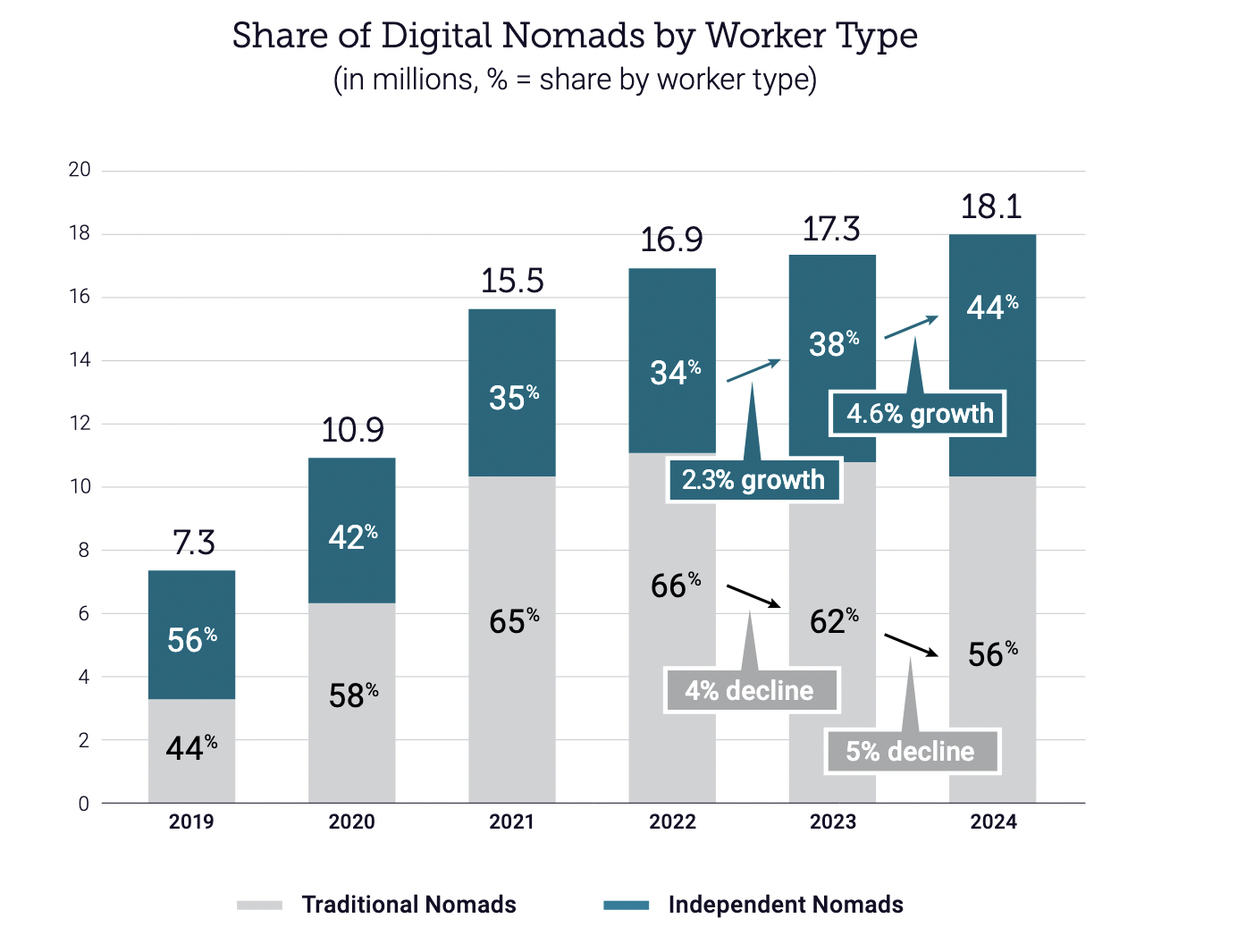
The digital nomad population has seen a dramatic increase in recent years:
- According to a 2019 report from MBO Partners, there were approximately 10.9 million digital nomads in the U.S. alone, a 49% increase from the previous year.
- By 2023, estimates suggest that globally there are over 35 million digital nomads — a number expected to keep growing exponentially.
- A 2022 study by Statista forecasted that by 2035, more than 1 billion people worldwide could be digital nomads, fueled by improved internet access and a growing acceptance of remote work by employers.
You can download the MBO Partners Report here and find out more about this growing trend.
Pandemic Impact and Remote Work Adoption
The COVID-19 pandemic accelerated the remote work movement, pushing companies to rethink office-centric models:
- Gartner’s 2021 report found that 47% of organizations intend to allow employees to work remotely full-time post-pandemic.
- Upwork’s Future Workforce Pulse Report (2022) predicted that 73% of all teams will have remote workers by 2028.
- This shift has lowered barriers for aspiring digital nomads, making remote jobs more accessible than ever.
Destinations Embracing Digital Nomads

Many countries have recognized the economic and cultural value digital nomads bring, launching visa programs to attract them:
- Portugal, Estonia, Barbados, Croatia, and Mexico now offer special visas for digital nomads.
- Bali, Chiang Mai, Lisbon, and Medellín are renowned hubs for remote workers.
- These destinations provide not just natural beauty but coworking spaces, networking events, and vibrant communities tailored to nomads’ needs.
Why the Digital Nomad Trend Is Here to Stay
1. Technology Is Constantly Improving
Faster internet, cloud computing, collaboration tools, and mobile devices continue to evolve, making remote work more seamless:
- Tools like Zoom, Slack, Asana, and Notion enable real-time communication and project management.
- Cloud storage means work is accessible from any device, anywhere.
- 5G and satellite internet initiatives promise to bring high-speed connectivity to even the most remote areas.
2. Employer Attitudes Are Shifting
Once skeptical, many employers now see remote work as beneficial:
- Remote work often leads to higher productivity, better work-life balance, and reduced overhead costs.
- Companies can access a global talent pool unrestricted by geography.
- Flexible work policies help attract and retain top talent.
3. Changing Employee Preferences
Modern workers prioritize flexibility and lifestyle:
- A 2023 Gallup poll revealed 54% of workers would leave their current jobs for ones offering more flexible remote work options.
- Millennials and Gen Z value experiences and work-life integration over traditional office careers.
- The desire to travel and explore while working fuels the nomadic lifestyle.
4. Economic & Environmental Factors
Remote work reduces commuting, office space needs, and carbon footprints, aligning with sustainability goals:
- Digital nomads can choose lower-cost living destinations, stretching their incomes further.
- Countries benefit from increased tourism and local spending by remote workers.
Why Becoming a Digital Nomad Is a Smart Investment in Your Future?
Develop In-Demand and Transferable Skills
To thrive as a digital nomad, you need skills that can be delivered remotely:
- Tech Skills: Software development, web design, cybersecurity, data analysis.
- Creative Skills: Writing, graphic design, video editing, content creation.
- Business Skills: Digital marketing, project management, consulting.
- Teaching & Coaching: Online tutoring, language teaching, life coaching.
These skills are highly sought after globally, and many can be learned through online courses, bootcamps, and certifications.
Financial Independence & Lifestyle Freedom
Digital nomadism offers financial flexibility:
- Potential for multiple income streams (freelance, consulting, passive income).
- Opportunity to live in affordable locations while earning global salaries.
- Control over work hours and environment, reducing burnout.
Personal Growth & Networking Opportunities
Living and working internationally fosters:
- Cross-cultural communication and adaptability.
- A global professional network and client base.
- Enhanced creativity from exposure to diverse cultures and ideas.
Work-Life Balance & Mental Health Benefits
Nomadic work reduces daily stressors of commuting, office politics, and rigid schedules:
- Enables designing your own day around productivity peaks and personal interests.
- Access to nature, outdoor activities, and new social communities boosts well-being.
Overcoming Challenges: What You Need to Know

While the digital nomad lifestyle sounds idyllic, it’s important to be prepared:
- Reliable Internet: Research and test connectivity before choosing destinations.
- Time Zone Management: Coordinate with clients or teams globally.
- Health Insurance: Secure plans covering international travel.
- Legal & Tax Considerations: Understand visa requirements and tax obligations.
- Loneliness & Community: Actively engage with local and digital nomad communities to build friendships and support.
How to Start Your Digital Nomad Journey
1. Assess Your Current Skills & Job
Can your current job be done remotely? If not, consider up-skilling or switching to a remote-friendly field.
2. Build Remote Work Skills
Enroll in online courses from platforms like Coursera, Udemy, or LinkedIn Learning. Focus on digital communication, project management, and your chosen technical skills.
3. Create an Online Presence
Build a professional website or portfolio showcasing your skills. Use LinkedIn and freelance platforms like Upwork or Fiverr to find remote gigs.
4. Start Small
Test remote work by working from home or a local coworking space. Gradually try working from different cities or countries for short periods.
5. Plan Your Finances
Save an emergency fund, research cost of living in your chosen destinations, and plan for health insurance and taxes.
6. Join Digital Nomad Communities
Connect with online groups on Facebook, Reddit, or Nomad List. Attend meetups and coworking events when traveling.
The Digital Nomad Life Is the Future of Work

The rise of the digital nomad is not a passing trend—it’s a fundamental shift in how we work, live, and experience the world. With millions already embracing this lifestyle and millions more on the horizon, digital nomadism represents a new frontier of career freedom and personal fulfillment.
Investing your time and resources into developing the skills that enable remote work isn’t just a career move—it’s a lifestyle investment. It opens doors to financial independence, global experiences, and a healthier work-life balance. The tools and opportunities are more accessible than ever. If you’re ready to break free from traditional office constraints, the digital nomad life offers a vibrant, sustainable, and exciting path forward.
Start now—build your skills, create your network, and plan your escape. The world is waiting.
 Nomadlytics
Leave a comment