
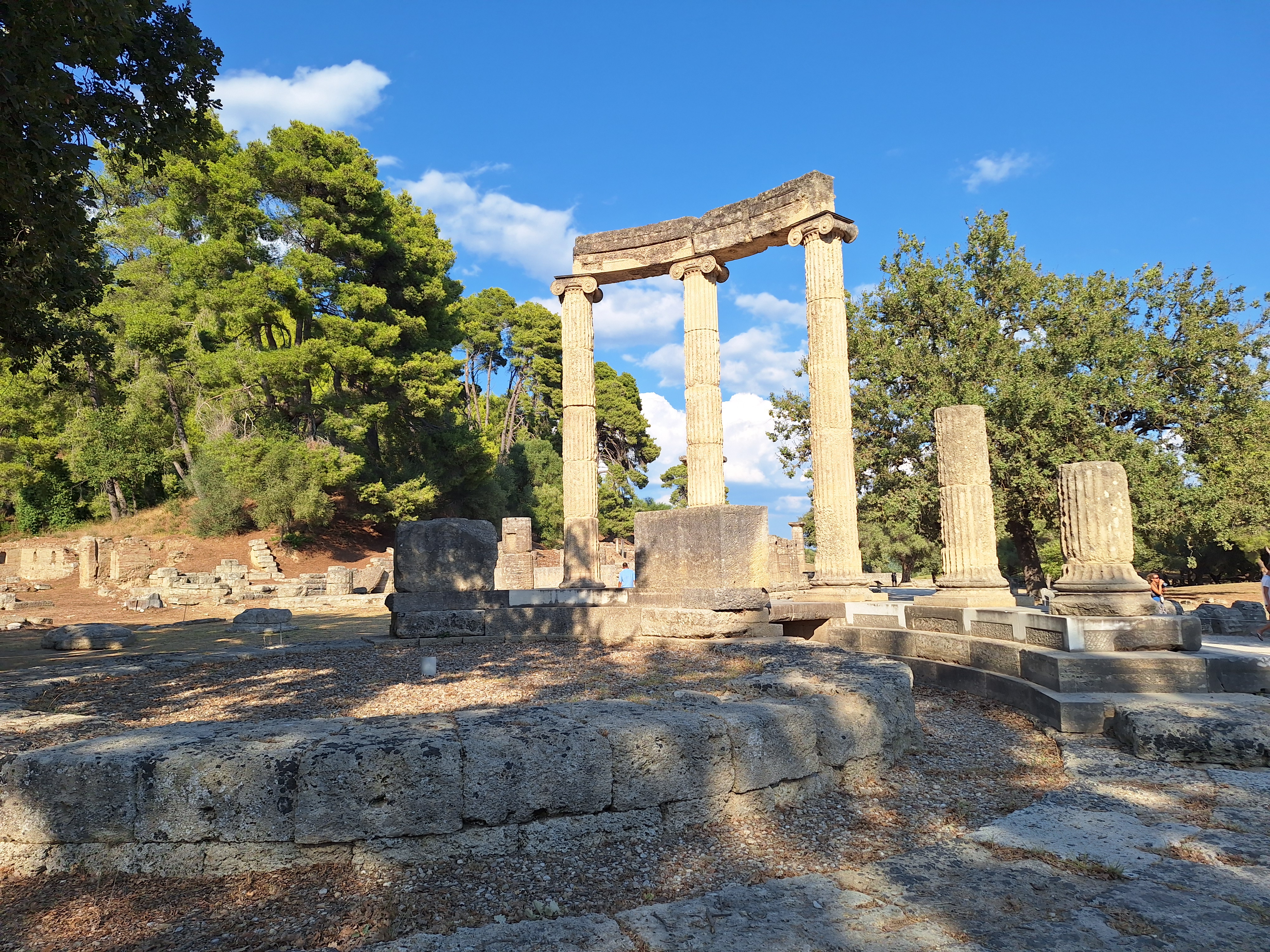
Ancient Olympia is a place where history breathes through ruins, and legends echo through olive groves. It’s almost incredible that a place like this is situated in the lush valley of the Alfeios River in the western Peloponnese. A visit to Ancient Olympia is a journey back in time — to the birthplace of the Olympic Games and one of the most significant archaeological sites in Greece.
A Brief History of Ancient Olympia
Olympia was not a city in the traditional sense but a religious sanctuary, dedicated to Zeus, the king of the Greek gods. From the 10th century BCE, it became a center of worship and hosted the first Olympic Games in 776 BCE, an event held every four years to honor Zeus.
Key highlights of Ancient Olympia’s history include:
- The Temple of Zeus, once home to the Statue of Zeus, one of the Seven Wonders of the Ancient World.
- The Temple of Hera, the oldest surviving monumental temple in Greece.
- The ancient stadium, which could hold up to 45,000 spectators.
- The Philippeion, a circular memorial built by Philip II of Macedon to celebrate his victory at the Battle of Chaeronea.
- The Gymnasium and Palaestra, where athletes trained.
The Games continued for over a thousand years until they were banned in 393 CE by Roman Emperor Theodosius I, as part of his effort to suppress pagan practices.
Olympia Today

Ancient Olympia today is primarily an archaeological site and a major tourist attraction, where visitors can explore the ruins of temples, athletic facilities, and other historic structures that once hosted the original Olympic Games. While the ancient stadium and sacred grounds are preserved for their cultural and historical value, the site also plays a symbolic role in modern times. Notably, every two years, the Olympic flame for the modern Games is lit at Olympia in a special ceremony using a parabolic mirror and the sun’s rays, marking the official start of the torch relay. Aside from this ceremonial event, no competitive sports are held at the site; its main function is educational and commemorative, allowing people to connect with the legacy of the ancient Olympics and the ideals of peace and unity they represent.
Entry Fees and Opening Hours
- Combined ticket (site + both museums) are available online and on site
- Opening hours: Typically 8:00 AM – 8:00 PM in summer; shorter hours in winter so check the website before your visit.
- Free Entry Days: March 6, April 18, May 18, last weekend of September, and every first Sunday from November to March.
- Best Time to Visit: Spring (April–June) and Autumn (September–October) offer mild weather and fewer tourists.
- Summer (July–August) can be hot and crowded, but early morning visits are still enjoyable.
- It’s up to you ho much time you want to dedicate to this site but if you want to visit the archeological ruins and both museums (Museum of Olympia and Museum of the Olympic Games) then at least half a day is recommended.
- The site is open year-round, but reduced hours apply in winter months.

How to Get to Ancient Olympia?
Ancient Olympia is located in the region of Elis in the western Peloponnese, about 4–5 hours from Athens, depending on your route.
By Air:
The nearest airport is in Kalamata (KLX), about 90 minutes away by car. Seasonal flights connect Kalamata with major European cities. From Athens International Airport, you can rent a car or take public transportation. It’s around 3h-4h drive.
By Car:
Driving from Athens to Olympia is straightforward via the Olympia Odos (A8) motorway. It takes approximately 3.5–4.5 hours. From Patras it’s 2 hours and from Kalamata around 1.5 hours.
By Bus:
- KTEL buses run daily from Athens (Kifissos Bus Terminal) to Olympia. The journey takes 5–6 hours with one transfer, usually in Pyrgos.
Tips for Visiting Ancient Olympia
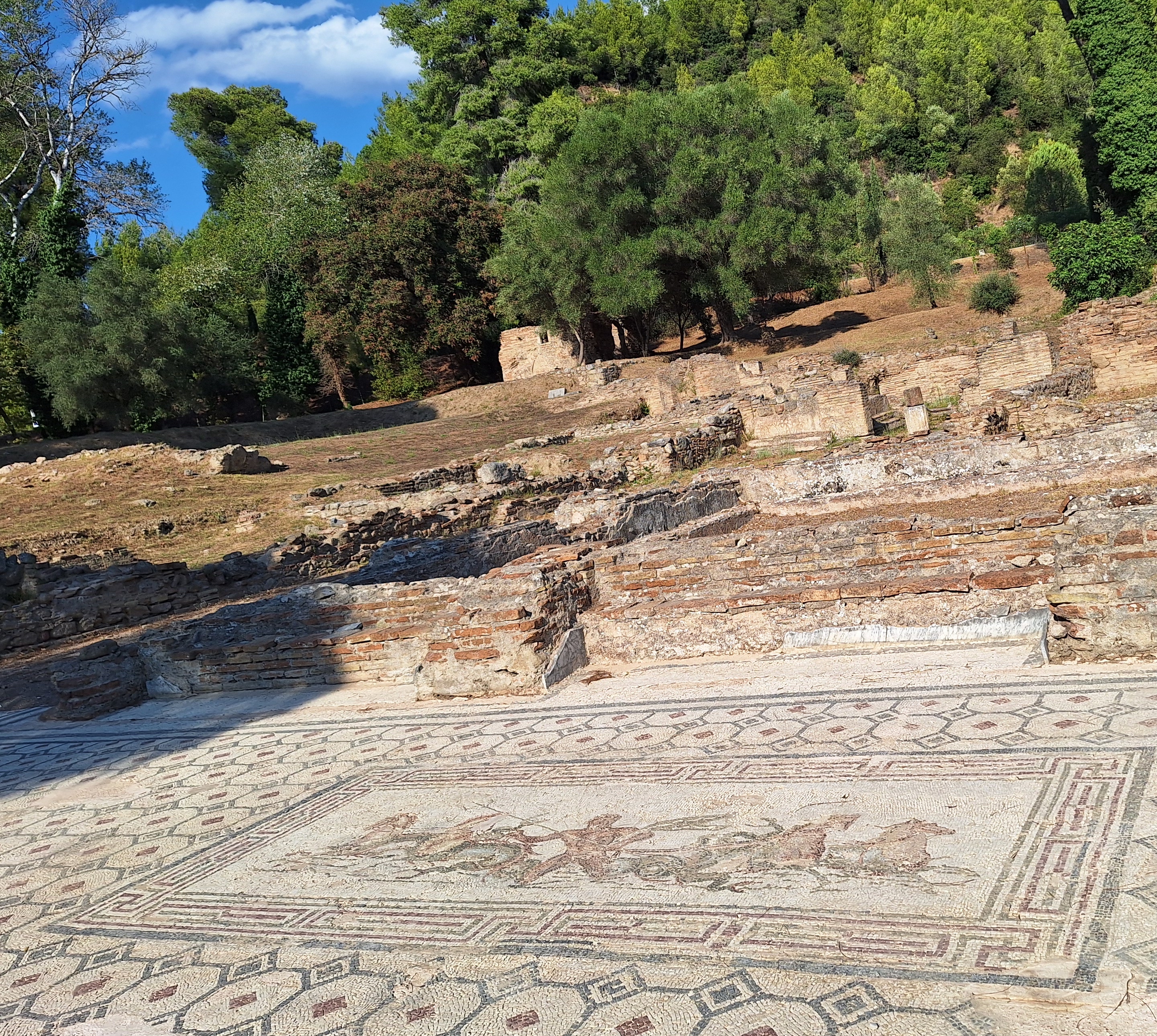
Best time to visit:
Olympia can get crowded in summer. Arrive when the site opens (usually around 8:00 AM) to beat both the heat and the tour groups or just after 5.00PM when most of the crowds leaves. It can get hot but there is a lots of shade.
Don’t Miss the Archaeological Museum:
Adjacent to the site, the Archaeological Museum of Olympia holds some of Greece’s most significant ancient artifacts, including:
- The famous statue of Hermes of Praxiteles.
- Sculptures from the Temple of Zeus.
- The helmet of Miltiades, the general at the Battle of Marathon.
Visit the Museum of the History of the Olympic Games:
Located nearby, this smaller museum offers a timeline of the Games and fascinating details about ancient sports.
Other Places to Visit Nearby
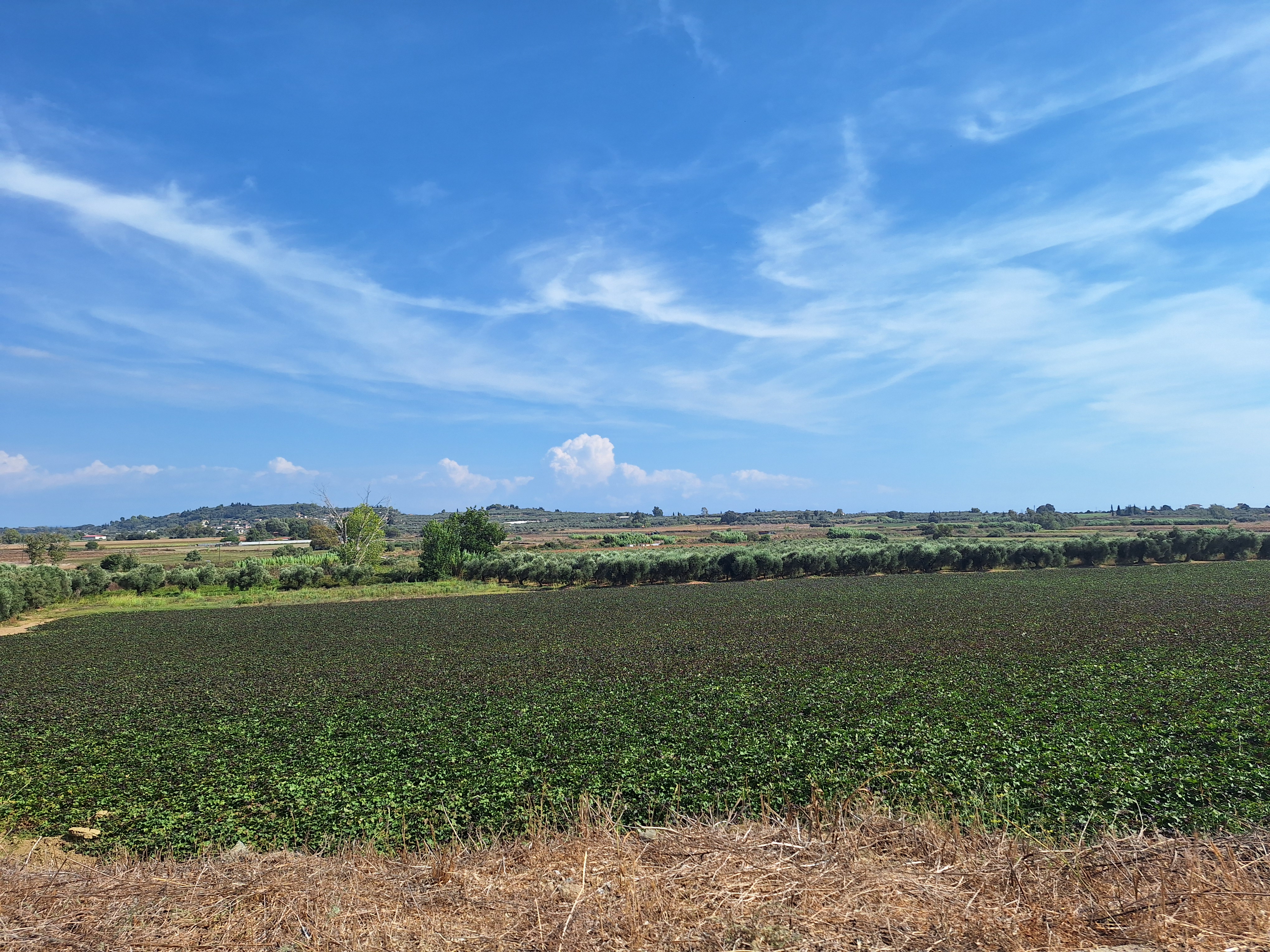
It’s worth to stay in the area and visit other sites of interest. Let’s see them together:
Olympia Wineries
Visit local wineries like Olympia Land Winery for tastings of Peloponnesian wines and Greek hospitality. Immerse yourself in the rich viticultural heritage of the Peloponnese with a visit to family-run wineries such as Olympia Land Winery. Situated in the scenic countryside near ancient Olympia, this charming estate invites you to explore its vineyards, learn about traditional and modern winemaking techniques, and enjoy guided tastings of locally produced wines—from crisp whites to robust reds made from indigenous grape varieties. Beyond the wine, it’s the warm Greek hospitality that makes the experience unforgettable. Engage with passionate winemakers, savor regional delicacies paired with your tastings, and relax in a rustic, authentic setting that reflects the spirit of rural Greece. It’s not just a tasting—it’s a cultural experience.
Andritsaina Village
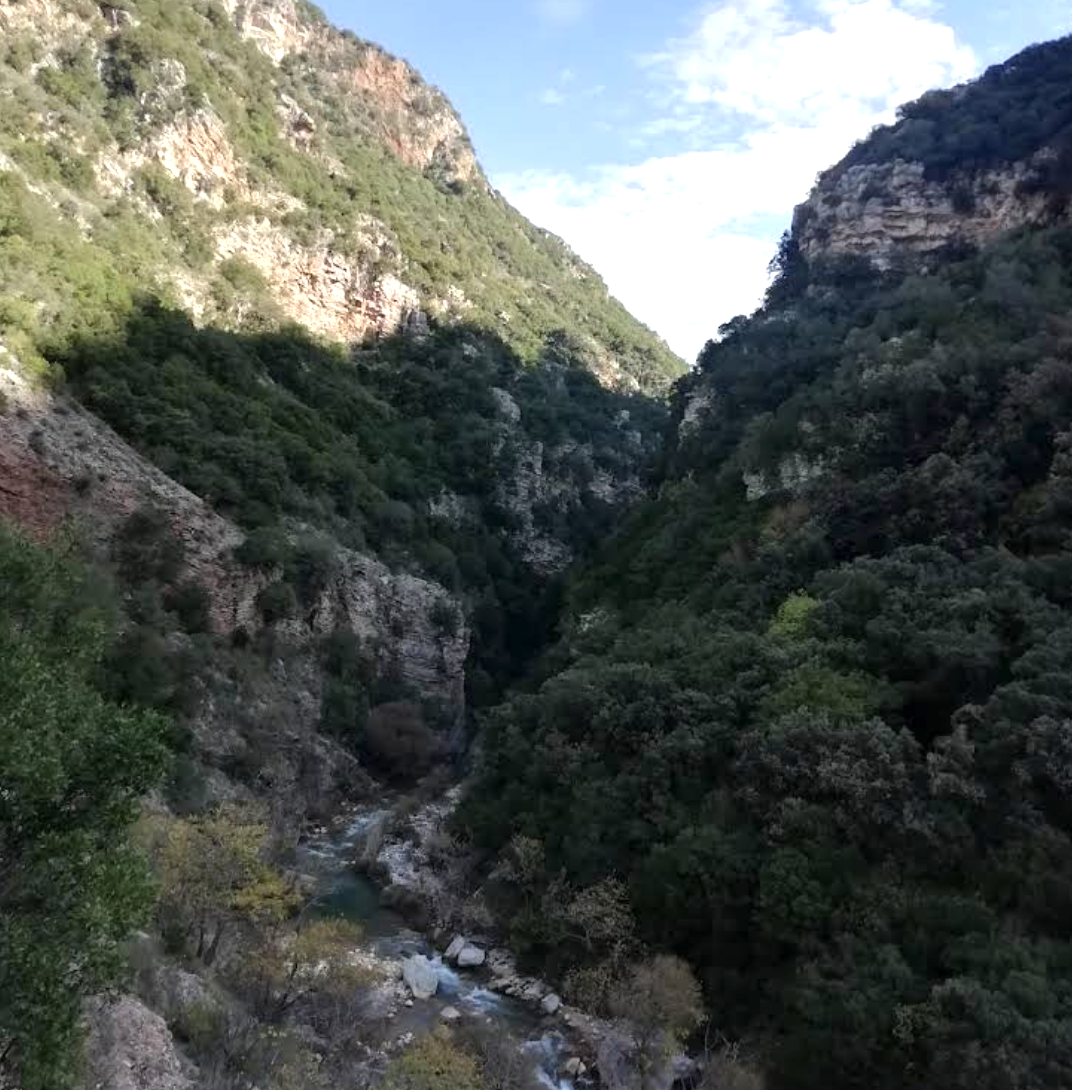
Tucked into the mountains of western Peloponnese, Andritsaina is a charming, historic village located about 40–45 minutes southeast of Ancient Olympia. Perched at an altitude of nearly 700 meters, Andritsaina offers a peaceful escape from the tourist crowds, with a rich cultural heritage and stunning natural surroundings.
Wander through winding cobblestone streets lined with stone mansions, red-tiled rooftops, and flower-filled balconies — many of which date back to the 18th and 19th centuries. Relax in the central platia (square) under the shade of ancient plane trees. Here you’ll find authentic tavernas and kafeneia serving traditional Greek coffee and homemade dishes like lamb with herbs or local cheese pies. Don’t miss the Nikolopouleios Library in Andritsaina houses over 40,000 rare books and manuscripts, donated by Greek scholars. It’s considered one of the most important rural libraries in Greece.
Temple of Apollo Epicurius at Bassae
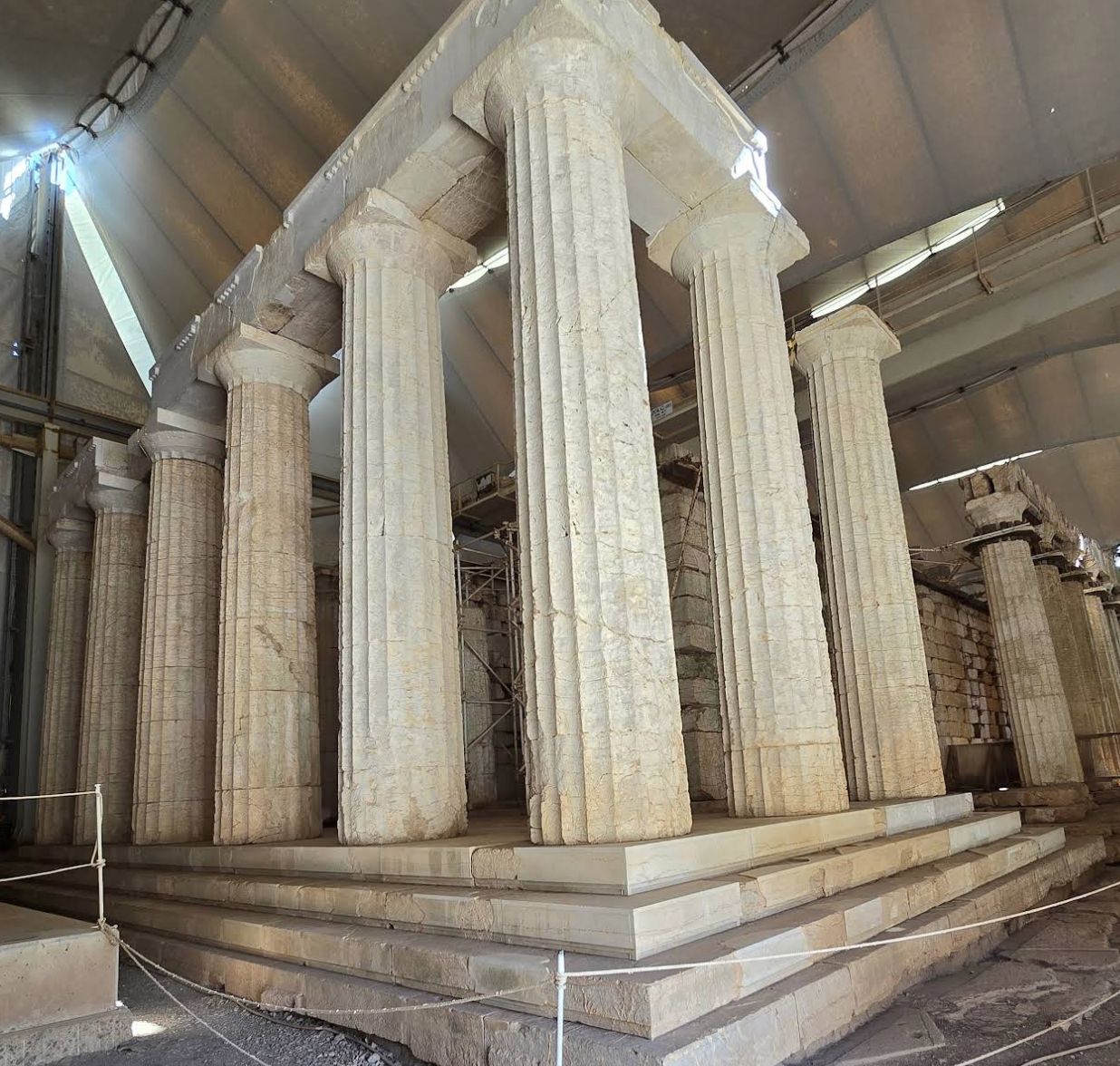
Just 14 km (about 20 minutes) from Andritsaina lies one of Greece’s most remarkable ancient temples: the Temple of Apollo Epicurius, a UNESCO World Heritage Site.
The Temple was built in the 5th century BCE by Iktinos (one of the architects of the Parthenon). It’s known for its unique blend of Doric, Ionic, and Corinthian styles — a rare architectural combination. The Temple is set on a remote mountaintop at 1,130 meters altitude, the setting is as impressive as the temple itself. Keep in mind that the temple is under renovation. When you arrive, you cannot notice a big white tent. This means you cannot admire the temple with the beautiful nature in the background but you still can enter inside the tent and 10 EUR ticket includes a brief explanation of the history. Absolutely worth a visit.
The road to Andritsaina is winding but scenic, passing through forests and small villages — ideal for those who enjoy road-tripping through rural Greece. Driving is basically the only option here as the public transportation is very limited.
If you’re looking for authentic Greek mountain life, beautiful landscapes, and a less touristy cultural experience, Andritsaina is a perfect addition to your Peloponnesian itinerary. It pairs ancient history with rustic charm — ideal for travelers who want to explore beyond the classics.
Peloponnese Beaches
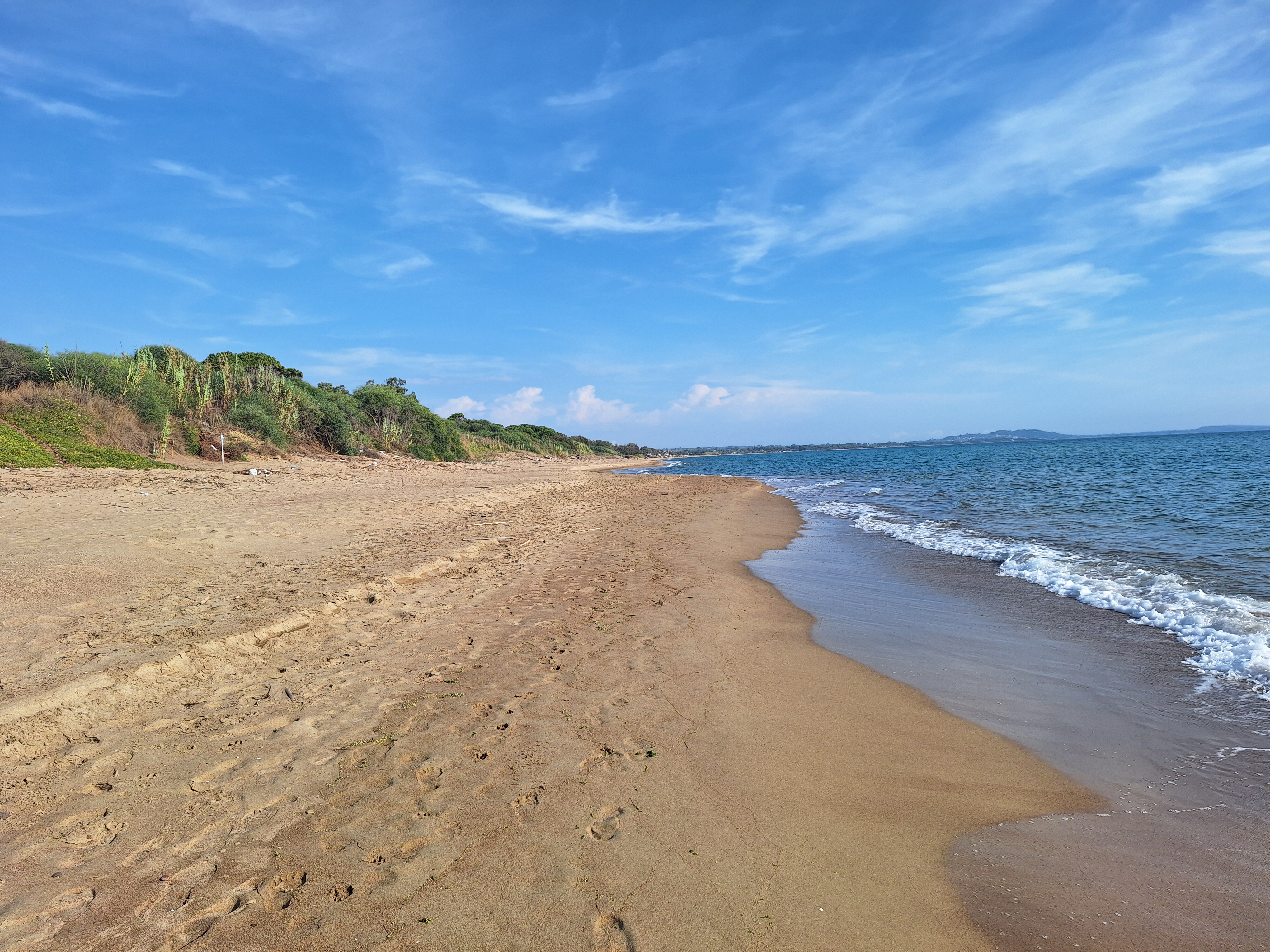
Need a break from ruins? The Ionian Sea coast is just an hour’s drive away, offering beautiful sandy beaches. This is why it’s worth to stay in the area for more than a weekend. I am preparing a detailed post about the best beaches in Peloponnese. Meanwhile, let’s see the most beautiful beaches just half an hour from the Ancient Olympia Site.
Kaiafas Beach
Just half an hour drive (25km) from Olympia, this peaceful and wild beach is a real paradise. Kaiafas Beach is a long stretch of golden sand backed by dunes and a dense pine forest, creating a beautifully raw and natural atmosphere. The beach is part of a protected area near the Kaiafas thermal lake, so development is limited—meaning fewer crowds and more untouched beauty. The waters are clean and shallow, ideal for swimming, and the setting sun over the Ionian Sea is truly magical here. It’s perfect if you’re looking for space, serenity, and a connection with nature. As anywhere in Greece, also here you will find a little part of the beach dedicated to a bar with snacks and drinks and a possibility to use sun beds and umbrellas.
Zacharo Beach
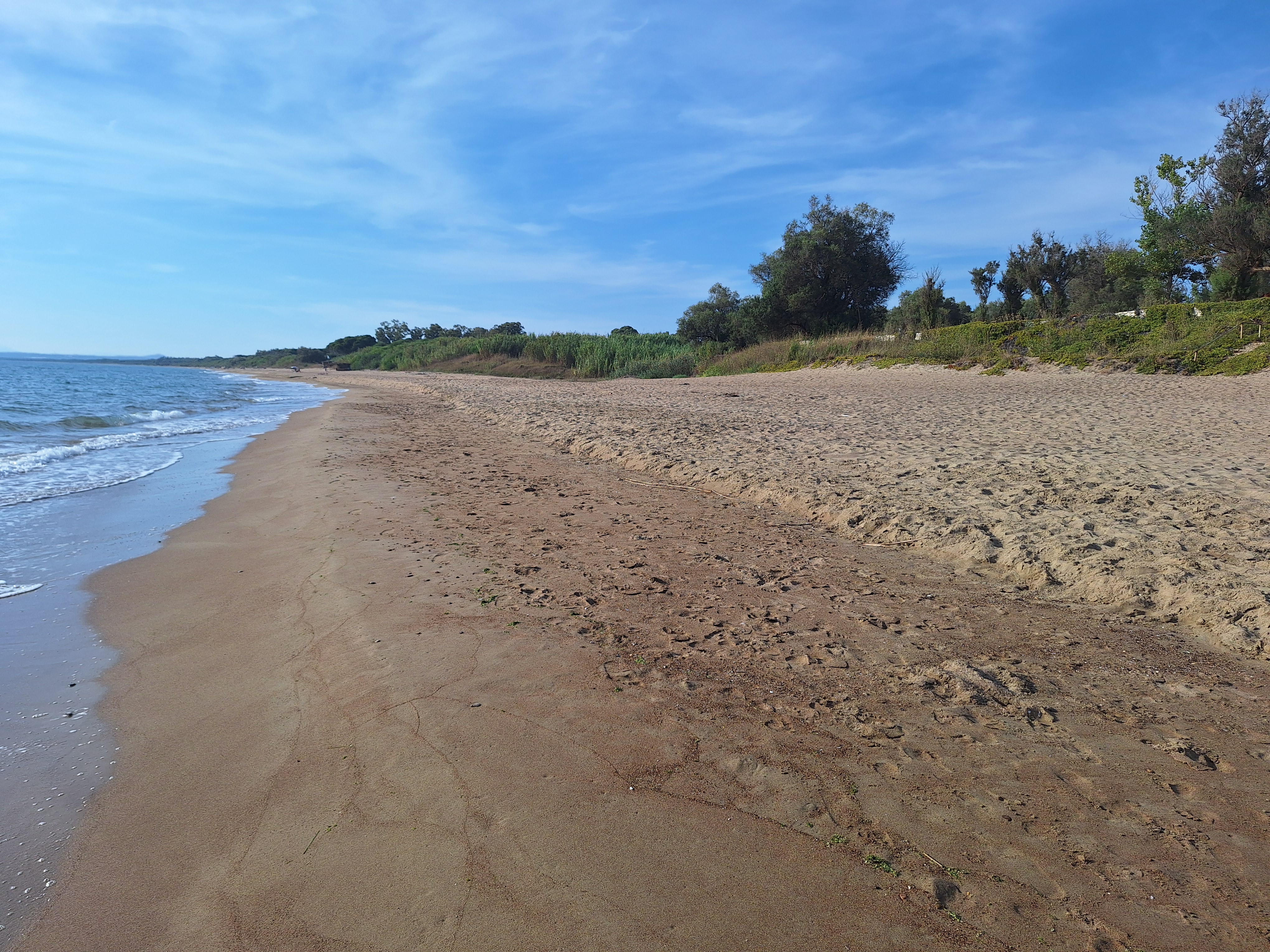
This is another sandy and large beach just 30km away from Olympia. Zacharo Beach is one of the longest sandy beaches in Greece, stretching for kilometers along the western coast. It’s known for its fine, soft sand, clean waters, and a laid-back atmosphere. While there are a few tavernas and small beach bars scattered along the coast, much of it remains wonderfully undeveloped, especially the southern stretches. It’s a great spot for walking, sunbathing, or just relaxing under an umbrella with a good book and the sound of waves.
Kato Samiko Beach
Just 22 km away from the Ancient Olympia, super serene and secluded beach. Kato Samiko Beach is hidden between dunes and olive groves and it offers a more secluded escape for nature lovers. With soft golden sand and a wild look, it’s less known than Kaiafas or Zacharo, making it a great option if you want to avoid any hint of crowds. There are no facilities here—just you, the sea, and the sky—so bring water, snacks, and shade. This beach feels like a quiet secret waiting to be discovered.
These beaches are best visited with a car, and early evening is a great time to go for a swim and enjoy a peaceful sunset picnic. If you’re into nature photography or just looking for a quiet, sandy retreat after a day of sightseeing, these spots won’t disappoint.
 Nomadlytics
Leave a comment