
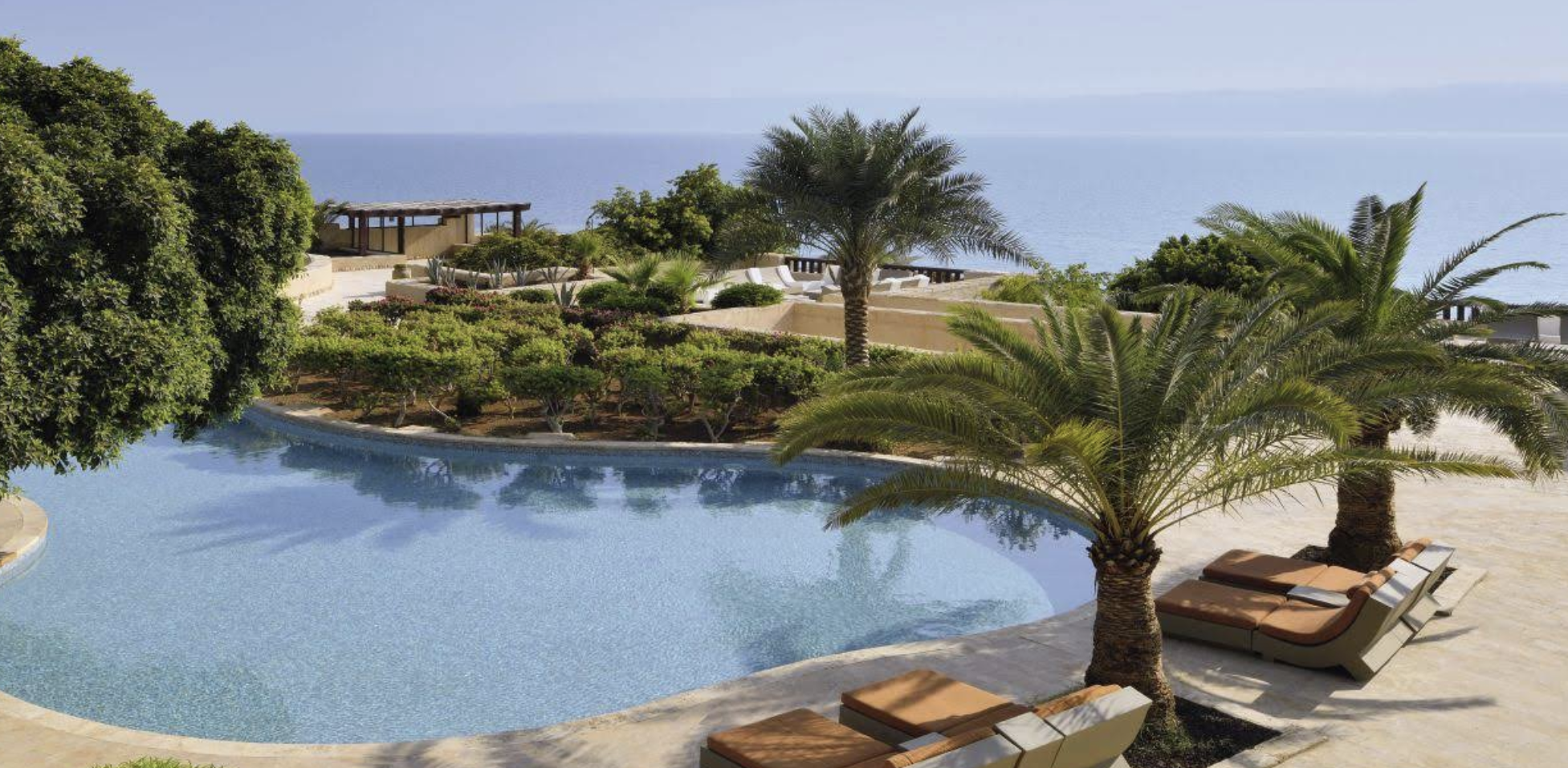
Visiting the Dead Sea in Jordan is one of the most unique travel experiences you can have: floating effortlessly on water so salty that it defies sinking, covering yourself in therapeutic black mud, and staying in resorts perched at the lowest point on Earth. In this guide I’ll cover everything: what the Dead Sea is, why it’s worth visiting, where to stay (including resorts for wellness purposes or family trip but also more traditional accommodation far away from the crowds), how to enjoy public beaches and how to get there. Yes, you can go there also by public transport!
What Is the Dead Sea?
The Dead Sea (in Arabic, al-Bahr al-Mayyit) is a salt lake bordering Jordan to the east. It lies over 430 meters below sea level, making it the lowest terrestrial point on Earth. Its salinity is extremely high — roughly one of the saltiest major bodies of water in the world — which gives it those famous buoyant properties. Because of this salinity, the Dead Sea can sustain very little aquatic life: hence the name “Dead” Sea. The water, mud, and air of the Dead Sea are reputed to have therapeutic qualities. The lake’s minerals — such as magnesium, calcium, potassium, bromine, sodium, and iodine — are known for skin benefits and healing properties. These elements have been used in natural treatments for various chronic ailments — psoriasis, dermatitis, arthritis, circulatory issues. The mud (also called “peloid”) from the Dead Sea is rich in sulfide and retains heat — people apply it to the skin, leave it to dry, then wash it off, believing in its cleansing and pain-relieving properties.
The air above the Dead Sea also has a high oxygen content due to the low altitude, which might benefit respiratory health.
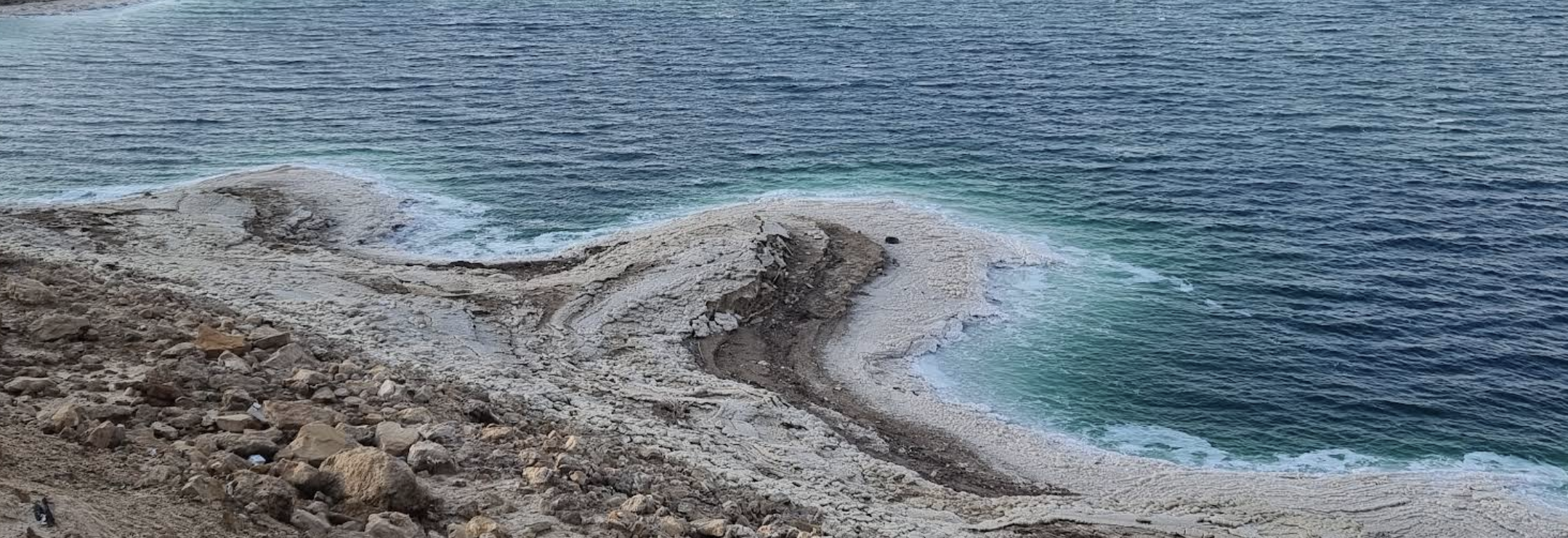
Here you will be able to have a unique natural experience – floating. Because of the extreme salinity, you float easily. It’s a surreal sensation. The landscape itself is insanely beautiful: steep desert cliffs, salt-crusted shores, and still, mirror-like water. Sunset is absolutely incredible.
The Dead Sea has been mentioned in ancient texts and used for its minerals for millennia. Cleopatra is reputed to have used its mud, and empires have since prized it for its therapeutic properties. Nearby historical and natural attractions (e.g., Wadi Mujib, Mount Nebo and Madaba) make it a good base or side-stop on a broader Jordan itinerary.
Top-tier resorts line the shores, offering spa experiences, infinity pools, upscale dining — it’s a place to unwind in luxury. If you don’t like the resort vibe, there are also quieter options like small chalets and private homes, sometimes further away from the coast but still in a natural environment.
How to Get there?
If you rent a car, it’s about 45–60 minutes by car from Amman, depending on where along the Dead Sea coast you go. Just follow the Rooute 65 or Jordan Valley Highway and don’t hesitate to stop along the way in some gorgeous view points.
There are also JETT buses from Amman to the Dead Sea. Usually the Jett bus stops nearby Amman beach (public beach). Some buses may go part of the way, but then you can take a taxi for the final stretch.
I advice to stay longer than one day but if you have just that, it’s worth to know that many resorts offer day passes. This gives you beach access, showers, and food — more comfortable than trying to use rougher public access points. Amman Public beach has all facilities you need (shower and sunbeds) but remember to bring plenty of water and snacks as there is no restaurant nor bar. Check my section about public beach below.
Enjoying the Public Beach
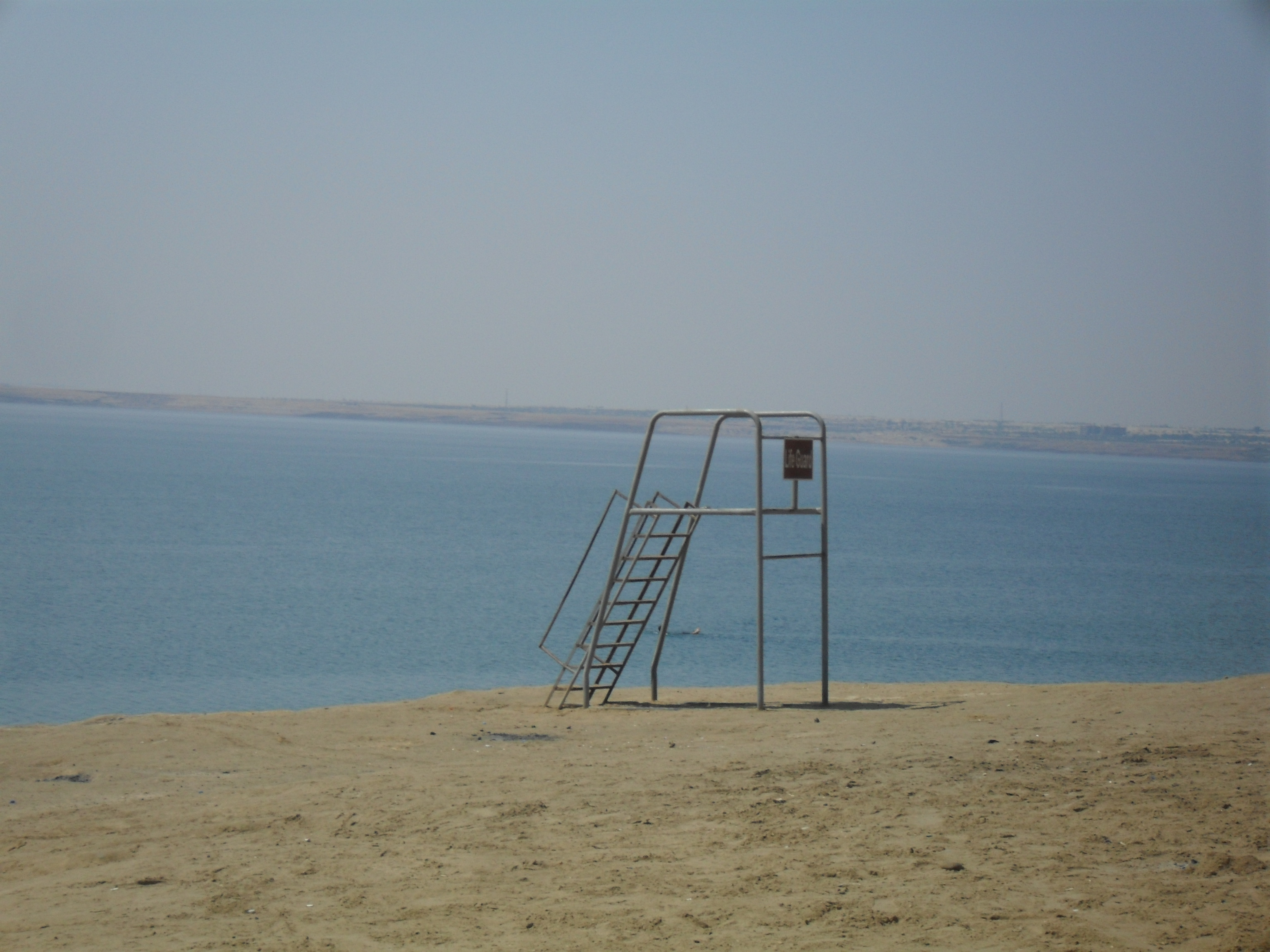
While many visitors stay in resorts, it’s also possible to access the Dead Sea via public or semi-public beaches. Here below is the list of all accessible beaches that are free of charge or a apply an economic entry ticket.
Amman Beach
Though sometimes called “public,” Amman Beach is more a tourism-beach facility than a wild free beach — it’s part of a complex with amenities like changing rooms, showers, and even places to use Dead Sea mud. The access cost 20 Jordanian dinars (JD), so much less than the day pass in a resort. This beach is very popular among day-trippers from Amman and those who don’t want (or cannot afford) to stay in a resort. It’s also a great day option if you are staying in the area of Madaba.
Free Beaches
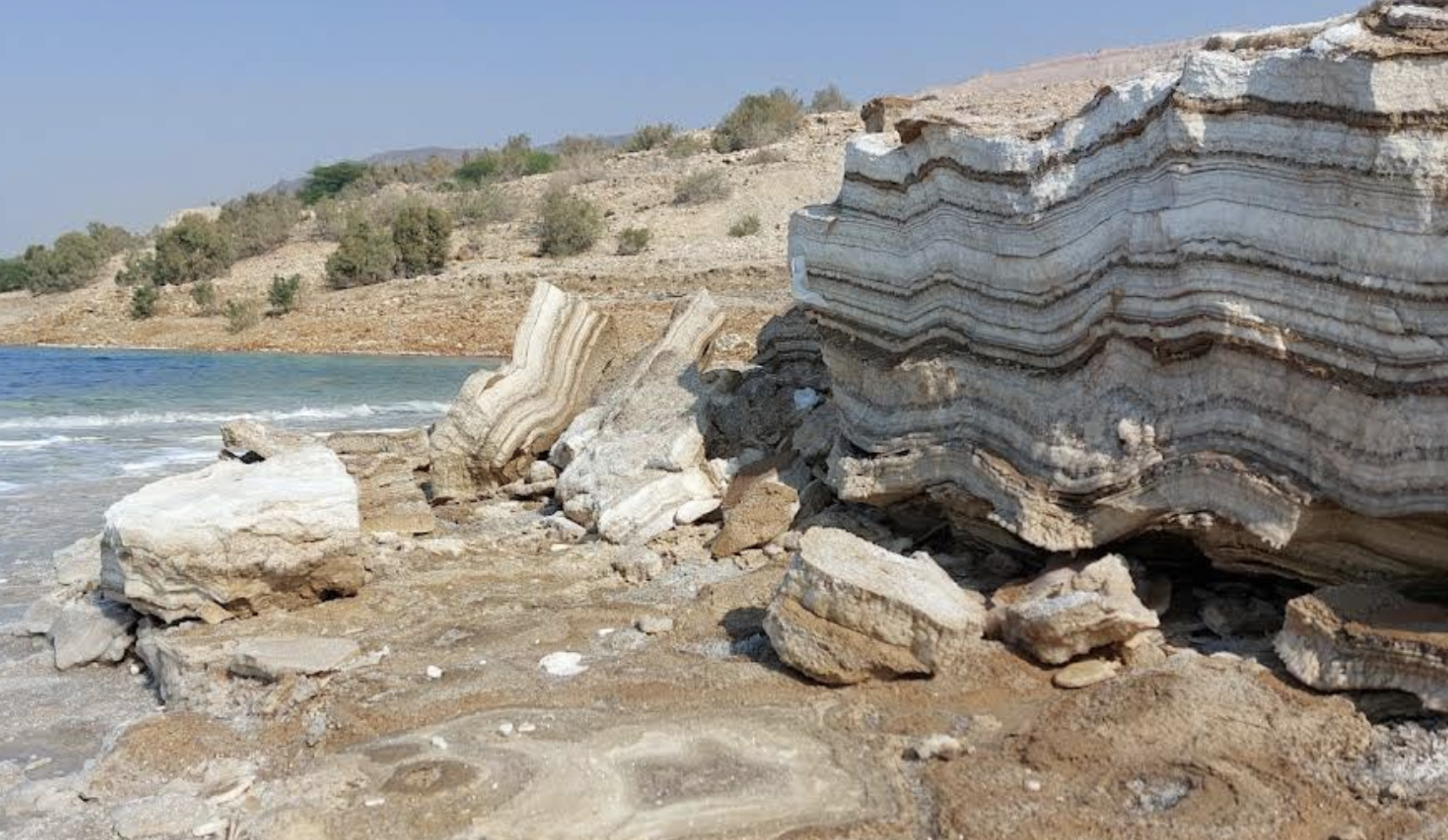
There are some more rugged, less-developed access points along the Dead Sea Road (Route 65) where locals and budget travelers go down to the shore. These spots usually lack amenities: no formal changing rooms, possibly limited or no showers, and salt-crust terrain that can be sharp underfoot.
If you plan to visit these beaches, bring water shoes (to protect against sharp salt crystals), plenty of water (not only to drink but also to rinse off the salt). Unfortunately these beaches sometimes are literally covered in trash. If you care about the environment, remember not to litter. Speaking about the sustainability, the Dead Sea level is declining — around 30 cm (1 ft) per year. The environmental changes can affect beach access, salt crust formation, and shoreline stability.
In order to visit these less known public free beaches, you will need a car or a taxi ride. The Jett bus does not stop near those beaches unfortunately. To locate these free beaches you have two options: ask your taxi driver to get you to the access that he knows or drive yourself along the route 65 and find the best spot for you. Check my accommodation section in this post to know more about some hidden chalets where you can stay and enjoy the Dead Sea beaches for free and far away from the tourists.
Dress Code
There is often one question that arises around attire, especially for women, on the public beaches of the Dead Sea in Jordan. It’s a question regarding swimsuits and bikinis. Well, Jordan is a conservative, majority-Muslim country. Public or less formal beach spots may involve sensitivities. Amman beach is usually OK for woman wearing bikini as there are always many tourists and less locals. Sometimes the guardian will indicate you in which part of the beach you can wear a swim suit. Free access public beaches are usually more strict. If you are alone (just you or just your group) then it’s OK to wear a bikini. However, if you see local people enjoying their time on the beach, be respectful and cover up.
Resorts are obviously more relaxed and you can wear bathing suits in the water and on the beach but it’s still recommended to maintain modest outfit in public areas outside the water (resort lobbies, restaurants).
Accommodation
If you are looking for a more traditional option, less crowded than a large resort check Royal Chalets. Here you will enjoy stunning views of the sea and you will be able to relax in the shared swimming pool. The staff is super friendly and the rooms are spotless clean. They don’t have the website yet but visit their instagram to get in touch and book your room. Truly worth it!
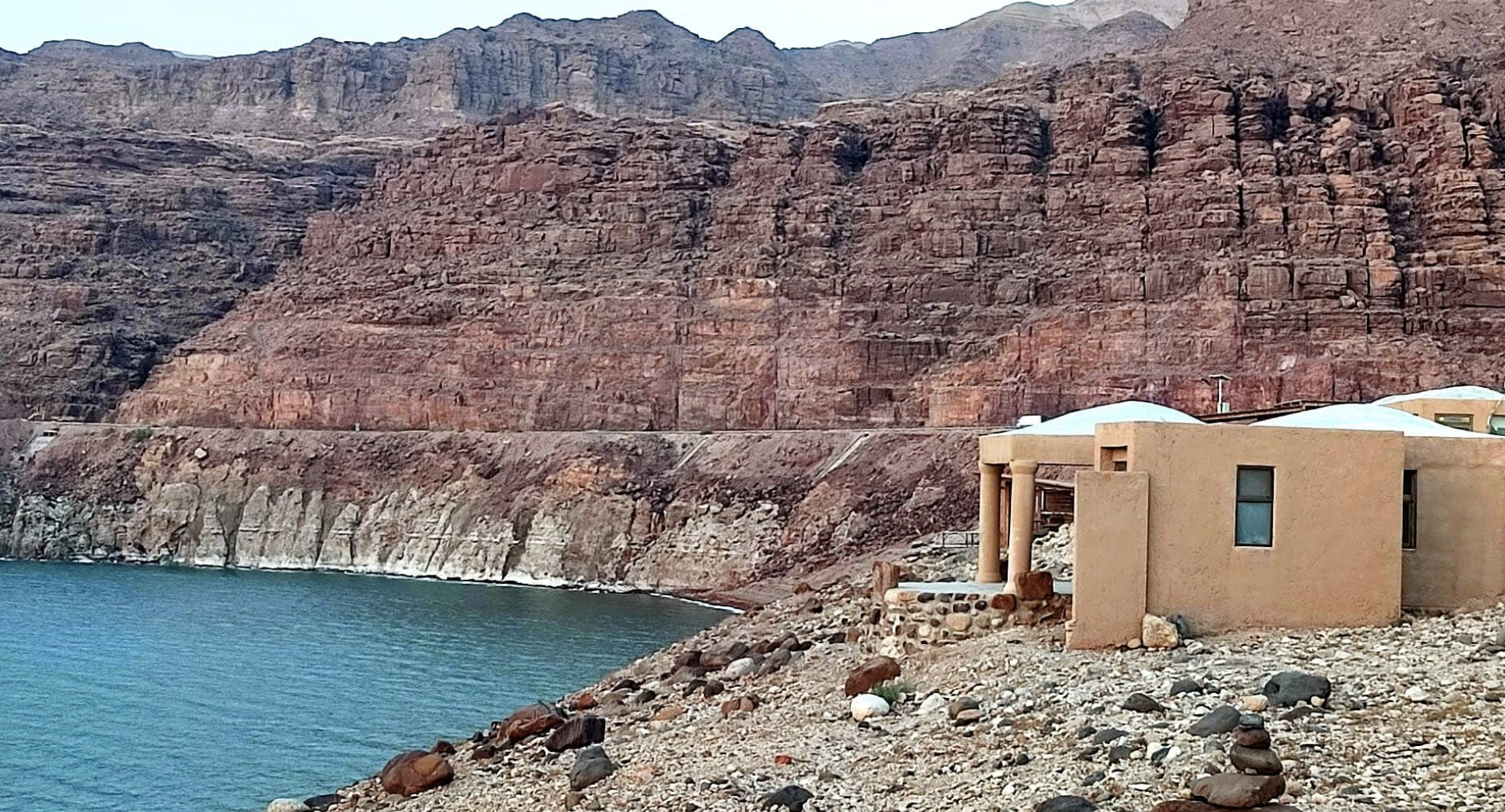
Another great alternative to the pricey resorts are Mujib Chalets located within the Mujib Biosphere Reserve — the lowest nature reserve on Earth. Here you will be able to connect with the wild side of Jordan. There are 15 independent chalets, all offering uninterrupted views of the Dead Sea from the Madash peninsula. Each chalet has a shaded terrace, so you can relax and take in the sunrise or sunset over the water. There is a direct access to the beach but it’s very rocky so bring your water shoes. It’s a fantastic accommodation for those who want to combine floating and mud application with some hikes in the nature. The chalets are super close to the Wadi al Mujib where you can go for a canyon or river hike.
If you prefer more comfortable option with full SPA package then try the 5 start luxury Kempinski Hotel Ishtar Dead Sea inspired by the hanging gardens of Babylon. It features nine swimming pools, including hydro pools and a Dead Sea saltwater pool, plus a very large spa with 20 treatment rooms. It’s perfect if you are looking fortherapeutic treatments (skin treatment or stress relief). The spa in fact offers treatments that leverage Dead Sea minerals: mud wraps, salt massages, mineral facials.
Traveling with kids? No problem. The Crowne Plaza Jordan – Dead Sea Resort & Spa offers private access to a white sandy beach on the Dead Sea (very unusual). Here you will also find children’s pools, a kids’ club and a promenade with room for strolling. The resort’s spa has a large number of treatments and facilities including hydro pools, sauna, steam rooms, and a Dead Sea pool. It can be crowded (not in winter) as there are more than 400 rooms.
Floating and Mud Application Safety Tips

Because of the high salinity, you float very easily. Lie back, relax, and let the water support you. Avoid splashing, diving, or going too deep: it’s safer to float than to try “swimming” in the traditional sense. It’s recommended no more than 15–20 minutes per session (especially if you have any cuts, open skin, or sensitive areas). Always rinse off after floating: the salt is intense, and prolonged exposure can dry out and irritate your skin.
The black mud is therapeutic: apply a thin layer, let it dry, then rinse off. Be careful if you recently shaved or have cuts: the salt will sting. After mud, rinse thoroughly with freshwater, ideally using showers. All resorts and Amman beach have showers. Public beaches not always feature showers or sometimes they might be broken. If you are planning to stay on a free access public beach, bring plenty of water to rinse of the salt.
Avoid letting the water enter your eyes or mouth. It burns. If you accidentally swallow or get water in your eyes, seek fresh water quickly.
Best Times to Visit
Winter is great to visit the Dead Sea and Jordan in general. Warm temperatures but not too hot and less crowds. If you plan to stay in a fancy resort, remember that some outdoor swimming pools might be closed between December and February. The most popular but also the most crowded seasons are spring and autumn: when the temperature is simply perfect to stay outdoors. Summer is Ok if you can put up with extremely hot weather.
Must visit places near Dead Sea
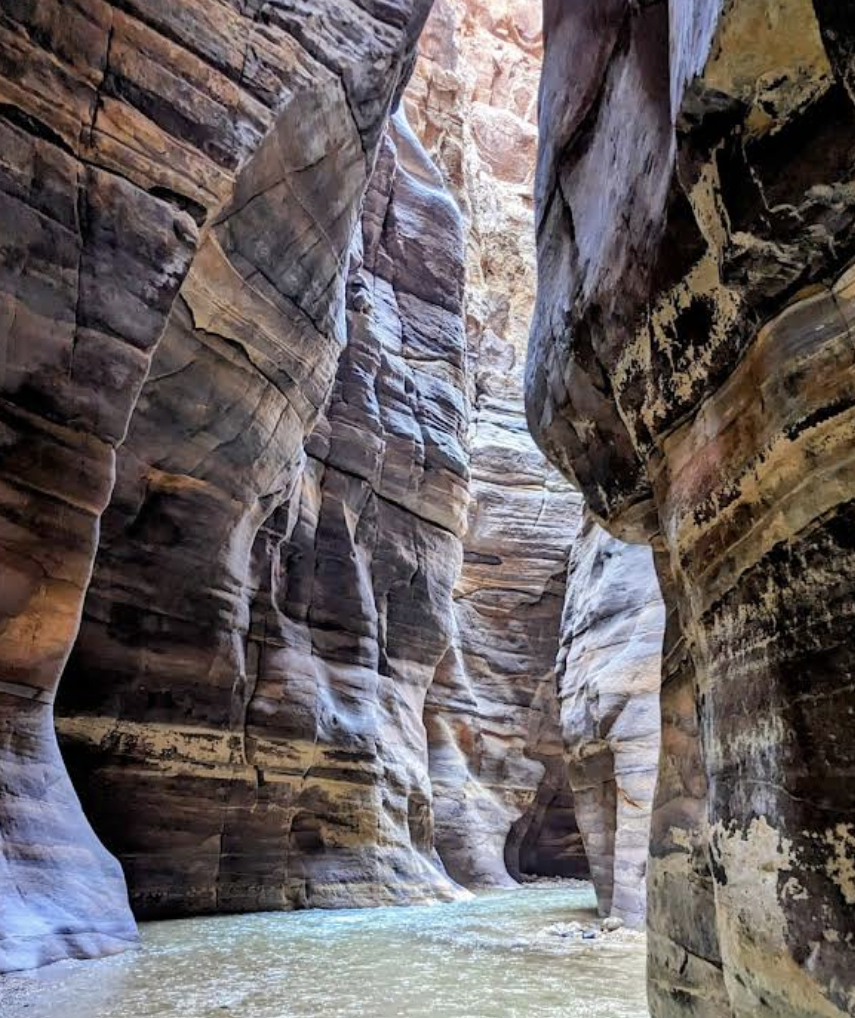
Wadi Mujib
Just one hour drive from Amman. Wadi Mujib is minutes away from the shore of Dead Sea but you will need a car to get here because there is no public transport. Taxi could be an option or if you are staying in the nearby chalet, you can arrange a transport with them. Wadi Mujib is often called Jordan’s Grand Canyon. This river gorge cuts through steep sandstone cliffs before emptying into the Dead Sea. It’s one of the most stunning natural landscapes in the country. The famous Siq Trail lets you hike, wade, and even swim through narrow canyon walls—it’s one of Jordan’s most exciting outdoor experiences and you generally can do it on your own without a guide. As part of the Mujib Biosphere Reserve, it’s home to unique plants and animals, including the rare Nubian ibex. If you are planning to visit Wadi Mujib, I strongly advice you to stay in the nearby chalets.
Ma’in Hot Springs
Hidden among rugged desert hills southeast of the Dead Sea, Ma’in Hot Springs is a natural haven where steaming mineral water cascades down rocky cliffs into warm pools. Long valued for their therapeutic qualities, the springs offer a soothing retreat for travelers seeking for a quiet relax. This is a unique natural spa experience with a beautiful landscape around.
Madaba and Mt. Nebo
Madaba is less than one hour away from the shores of Dead Sea. It’s a truly charming, culturally rich town. It is known worldwide as Jordan’s “City of Mosaics.” Its narrow streets lead to centuries-old churches and archaeological parks where intricate Byzantine and Umayyad mosaics are beautifully preserved. The highlight is the 6th-century Mosaic Map inside St. George’s Church—an extraordinary piece of early cartography depicting the Middle East in colorful stone tiles. Beyond its historical treasures, Madaba has a warm, easygoing feel, with local artisans, traditional restaurants, and a welcoming community that showcases Jordanian hospitality.
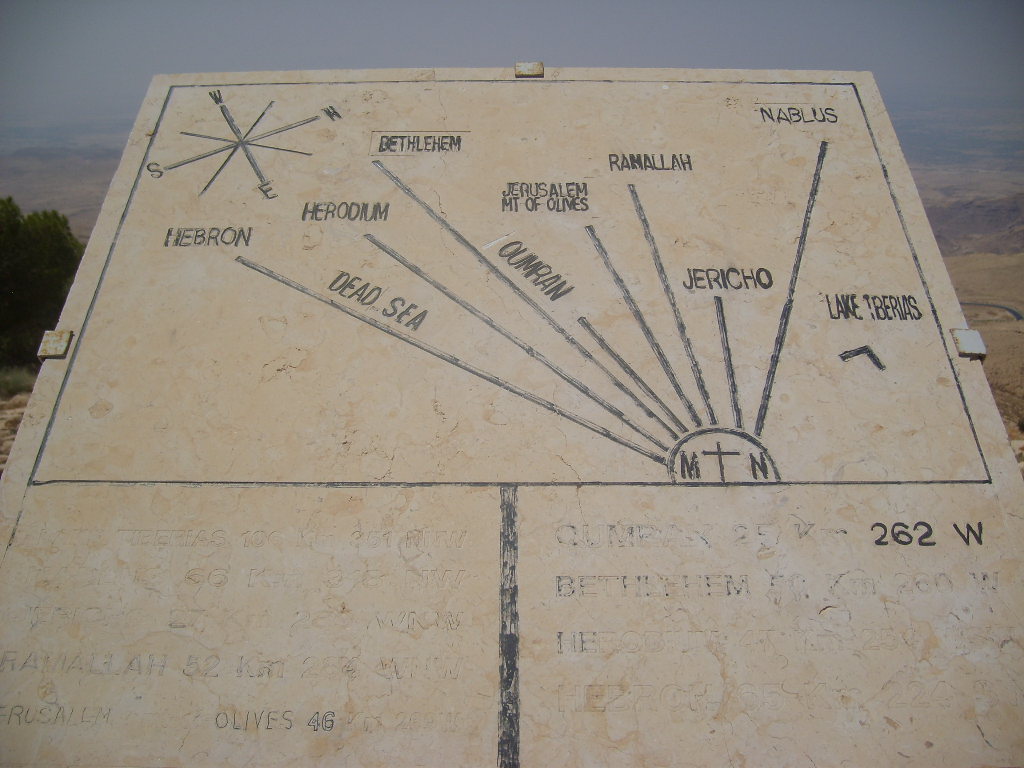
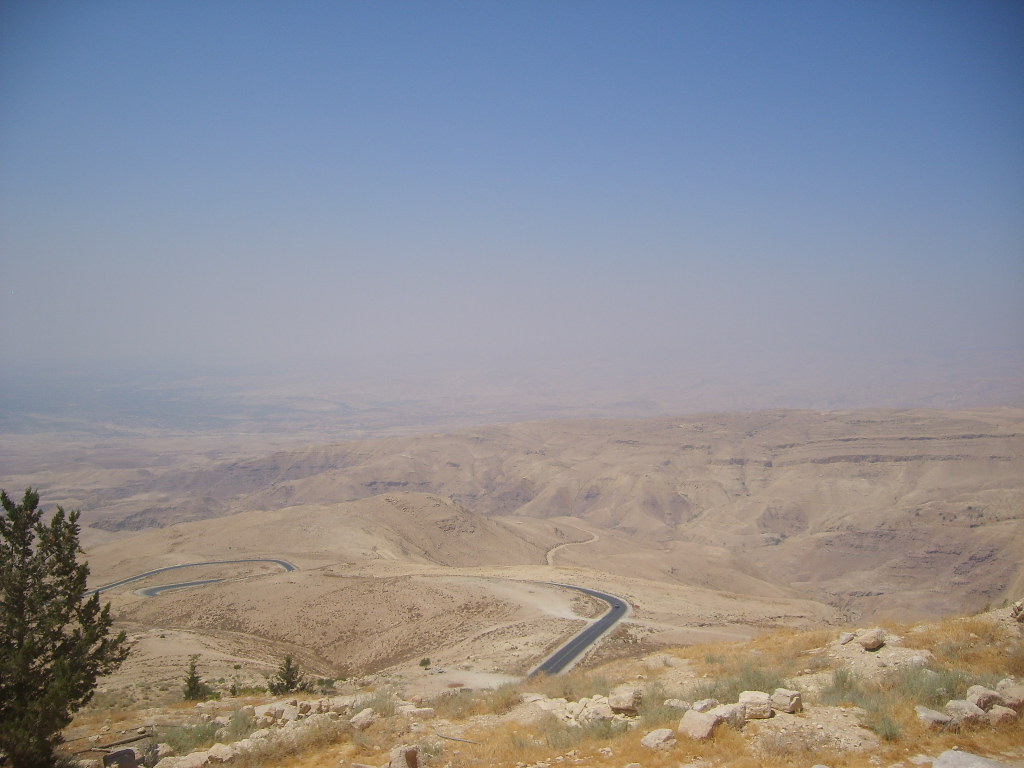
Mount Nebo rises above the Jordan Valley and it’s just few minutes drive from Madaba. It is said that here Moses saw the Promised Land. The panoramic views from the summit remain breathtaking—stretching across the Dead Sea, the West Bank, and on clear days, Jerusalem. The site also features a beautifully restored basilica and exquisite ancient mosaics. Really worth to visit.
Traveling to the Dead Sea in Jordan is a bucket-list experience for many — and for good reason. It’s not just about checking off a “lowest point on Earth,” but immersing yourself in a place that combine natural wonder, health and history. Whether you stay in a resort built for wellness, relax in a family-friendly hotel, or simply experience the raw beauty of free beach access, there’s a way to make your Dead Sea trip absolutely fantastic. If I were to pick just one takeaway: don’t rush. Take your time to float, apply mud, rinse, rest — let the place do its magic. Don’t come for a day trip but stay at least one night in the area so you can appreciate its beauty and its hidden variety.
Once you had enough floating and mud, rinse off thoroughly, pack, and depart for your next destination: Amman, Petra, Aqaba or Ajloun? Need more info? Read my post about why it’s worth to visit Jordan this winter here!
 Nomadlytics
Leave a comment