
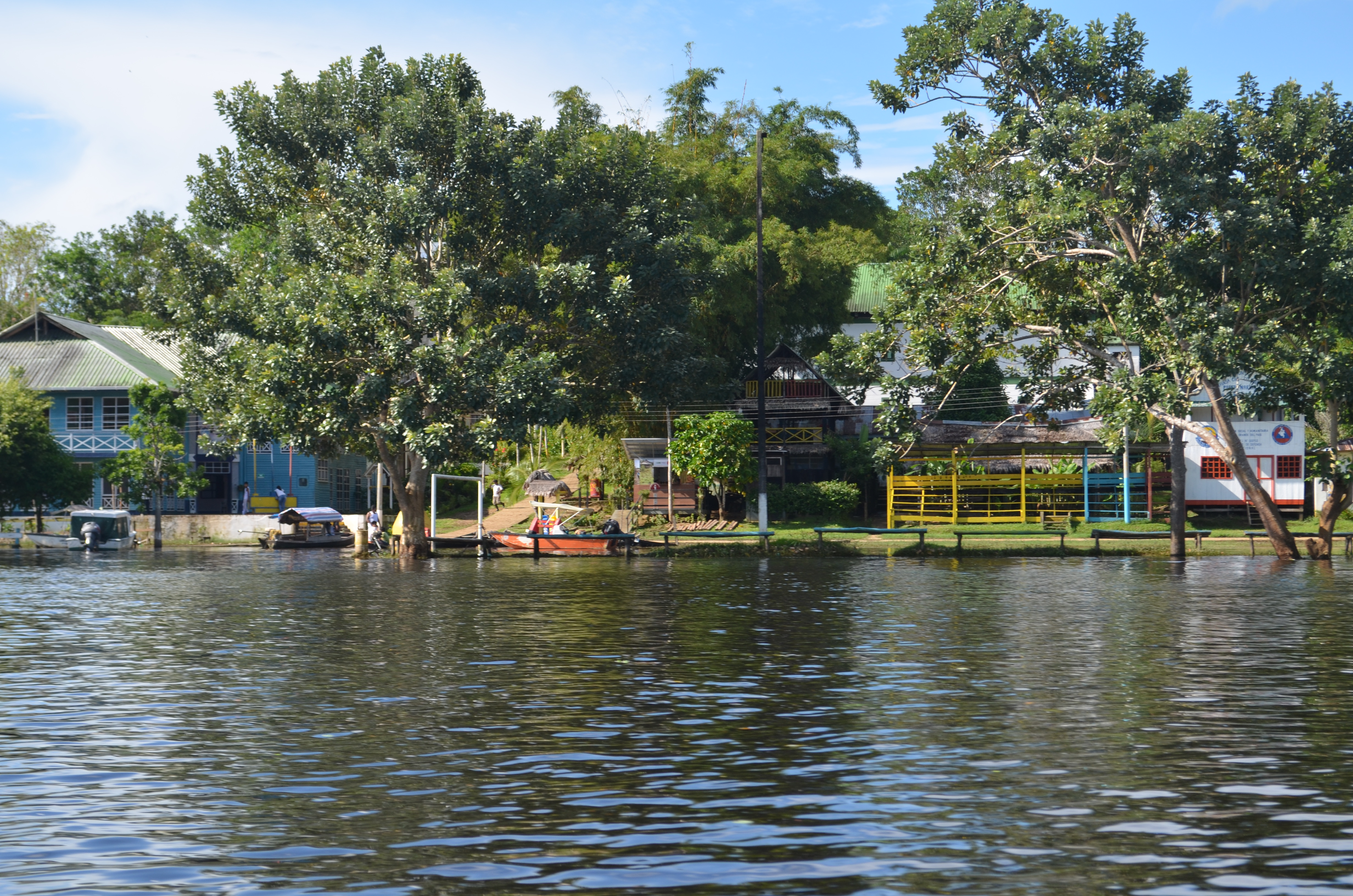
If you’re looking for real jungle, not manicured eco-parks or polished lodges, Colombian Amazonia is still one of the most authentic places you can visit. But not for long. Tourism here only really began about 20 years ago. There are still very few hotels, infrastructure is minimal, and many locals are not fully used to receiving visitors yet. That’s exactly what makes this place special. People are incredibly friendly and helpful, even if they don’t always know what to do with tourists. Once upon a time, these jungle routes belonged to drug traffickers. Today, they’re slowly becoming travel destinations. If the Amazon is on your list, don’t wait too long. Let’s explore together this incredible region and let’s plan your next trip. I advice you to spend at least a week here in order to meet with locals, understand the traditions, culture and everyday life.
How to Get There?
Your gateway to the Colombian Amazon is Leticia, a small, safe town in the southern tip of the country. Fly into Leticia Airport from Bogotà. A nice surprise in Leticia is that you can walk straight into town. Yes, walk. It’s close, easy, and perfectly safe, no need of taxi or bus ride. If you arrive early enough, you can already start exploring on day one.
What can you do in Amazon Region for one week?

When you think of the Amazon rainforest, you probably imagine an endless sea of green with a mighty river winding through it. And yes—that image is absolutely real. But what often goes unseen is the life within it. Deep inside the forest and along the riverbanks, humans and animals live side by side, adapting to nature every single day.
The Colombian Amazon is not a place to rush through. It’s perfect for slow travel, quiet exploration, and genuine connection—with nature, with wildlife, and with local communities. This region offers far more than dramatic landscapes: it’s a living classroom where you can learn about medicinal plants, discover new species, and gain a deeper understanding of indigenous cultures that have thrived here for generations.
Time moves differently in the Amazon. Days are shaped by the river, the weather, and the rhythms of the jungle. Instead of ticking off attractions, you learn to observe, listen, and appreciate the details—bird calls at dawn, giant water lilies opening at night, and stories shared by locals who know the forest better than anyone.
Below, you’ll find a selection of must-do experiences based on my most recent trip to the Colombian Amazon—activities that helped me understand not just what the Amazon looks like, but how it truly lives.
Monkey Island (Isla de los Micos)
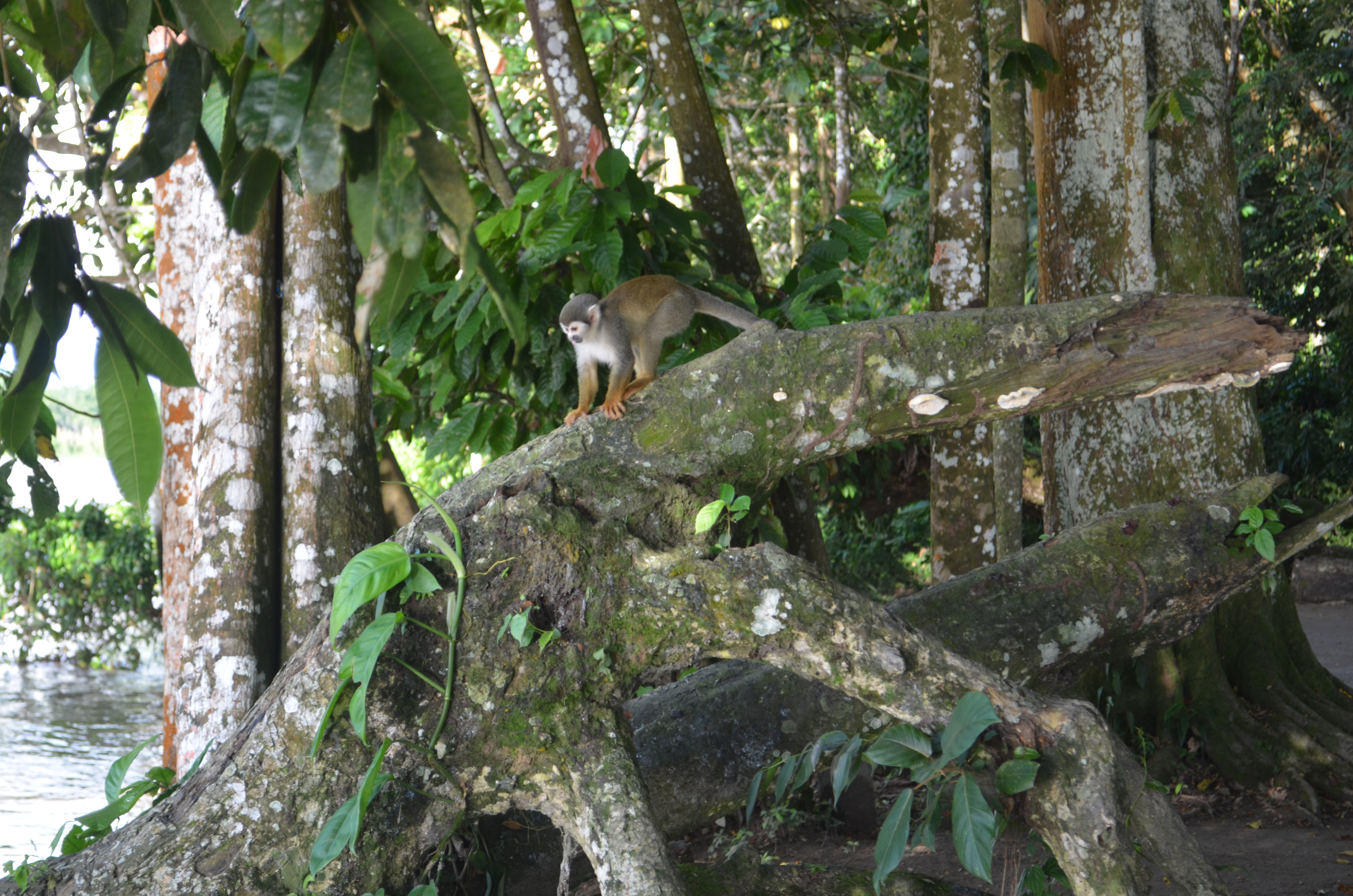
The first trip I did from Leticia was a boat ride to Isla de los Micos. It’s just outside the town. The island is full of tiny, playful monkeys that jump on you the moment you arrive—banana or not. Once food comes out, they go absolutely wild but they are absolutely peaceful (not like the monkeys in South Africa or in Bali) so don’t worry, they won’t bite you.
The island’s history is as strange as the Amazon itself. This island once belonged to a US-Greek drug dealer who turned it into a tourist attraction. After his arrest, the island was abandoned. Only about 20 years ago did the Colombian government lease it to a local hotel chain, and tourism slowly returned. Currently there is no hotel though and you can visit the island upon a small fee. Most tour groups come here in the morning, so if you hate crowds like I do, go in the afternoon and you will have the island almost entirely to yourself.
You must arrange the transport with a local guide. Ask for it at the reception or your hotel (or the host of your apartment) and they will be happy to arrange this for you. The local guides are more like friends who get you around. Don’t expect a professional tourism here.
Puerto Nariño, the Heart of the Amazon
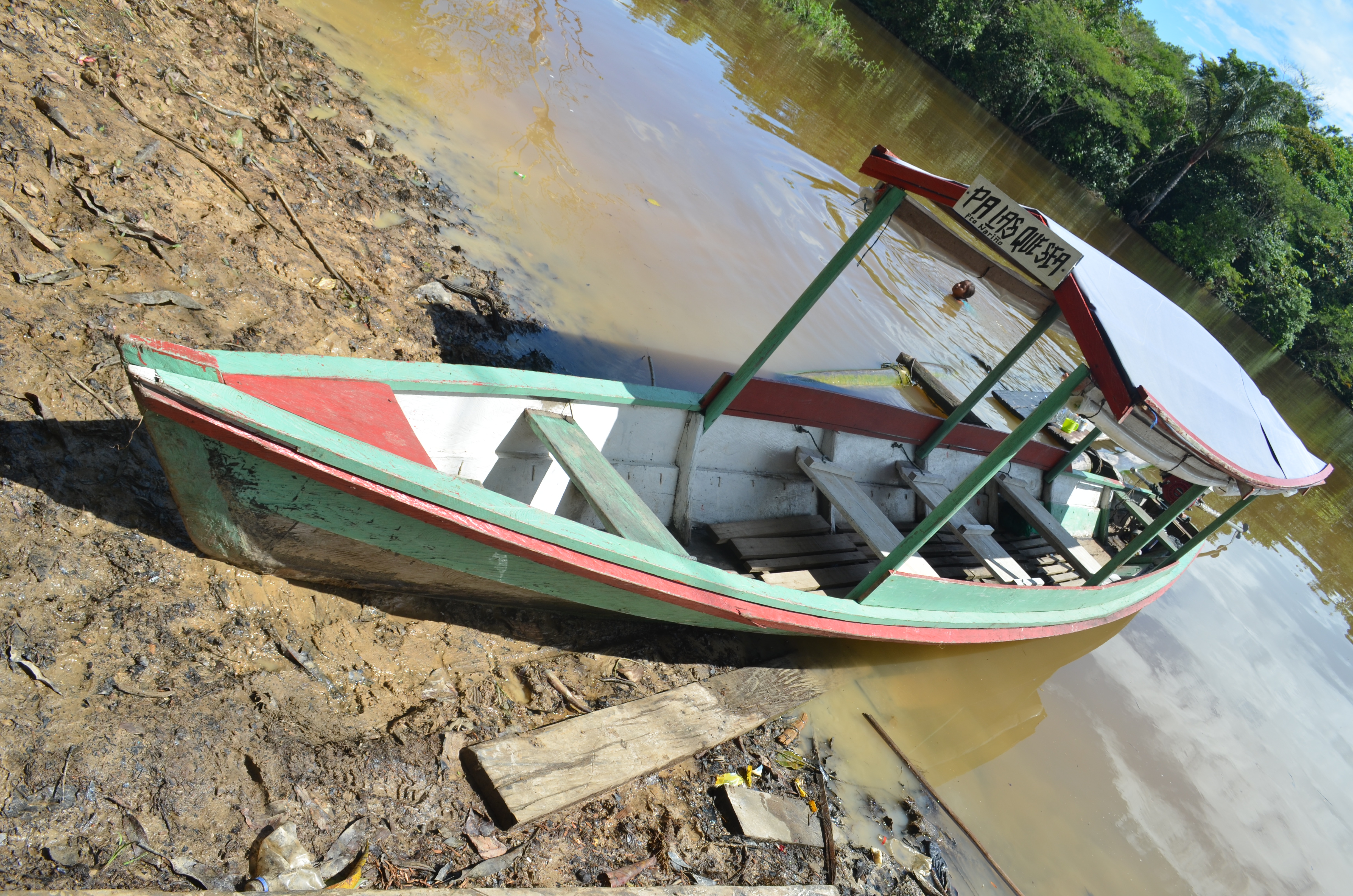
Don’t stay in Leticia too long, there is much more to explore. Take a boat to Puerto Nariño, a small, peaceful village about two hours from Leticia. This is where you want to slow down. Puerto Nariño is car-free, calm, and surrounded by jungle—it’s the perfect base for daily excursions. I advice you to stay one week here but if you can’t, book at least three nights.
There are some accommodation options in town, most of them are simple cottages run by locals. I stayed at Lomas del Paiyú, simple but clean hotel with nice outdoor space and some hammocks for your afternoon relax time. The owner is incredibly helpful and he will be happy to call the local people to arrange all sorts of trips for you.
Visiting Indigenous Communities & Jungle Walks

While in Puerto Narino, it’s worth to visit the San Martín community, home to about 200 people. Life here revolves around fishing, hunting, collecting fruit, and building homes from jungle materials. Tourism is still new, and visitors are rare. Ask your host to arrange a boat trip with a local guide. Remember that there is no real tourism organization here: you arrive to the community by boat with a local from Puerto Narino and once here, a local guide will introduce to the inhabitants of the community. We explored the jungle with Omar, a local guide who lives in the community and had only started guiding six months earlier. He showed us medicinal plants and explained daily life in the Amazon—information we wouldn’t have gotten without him. Lunch was at a small hotel-restaurant run by a Dutch woman who moved here some years ago. She’s the only non-indigenous resident and seems completely integrated.
A Day Trip to Peru: Caballo Cocha
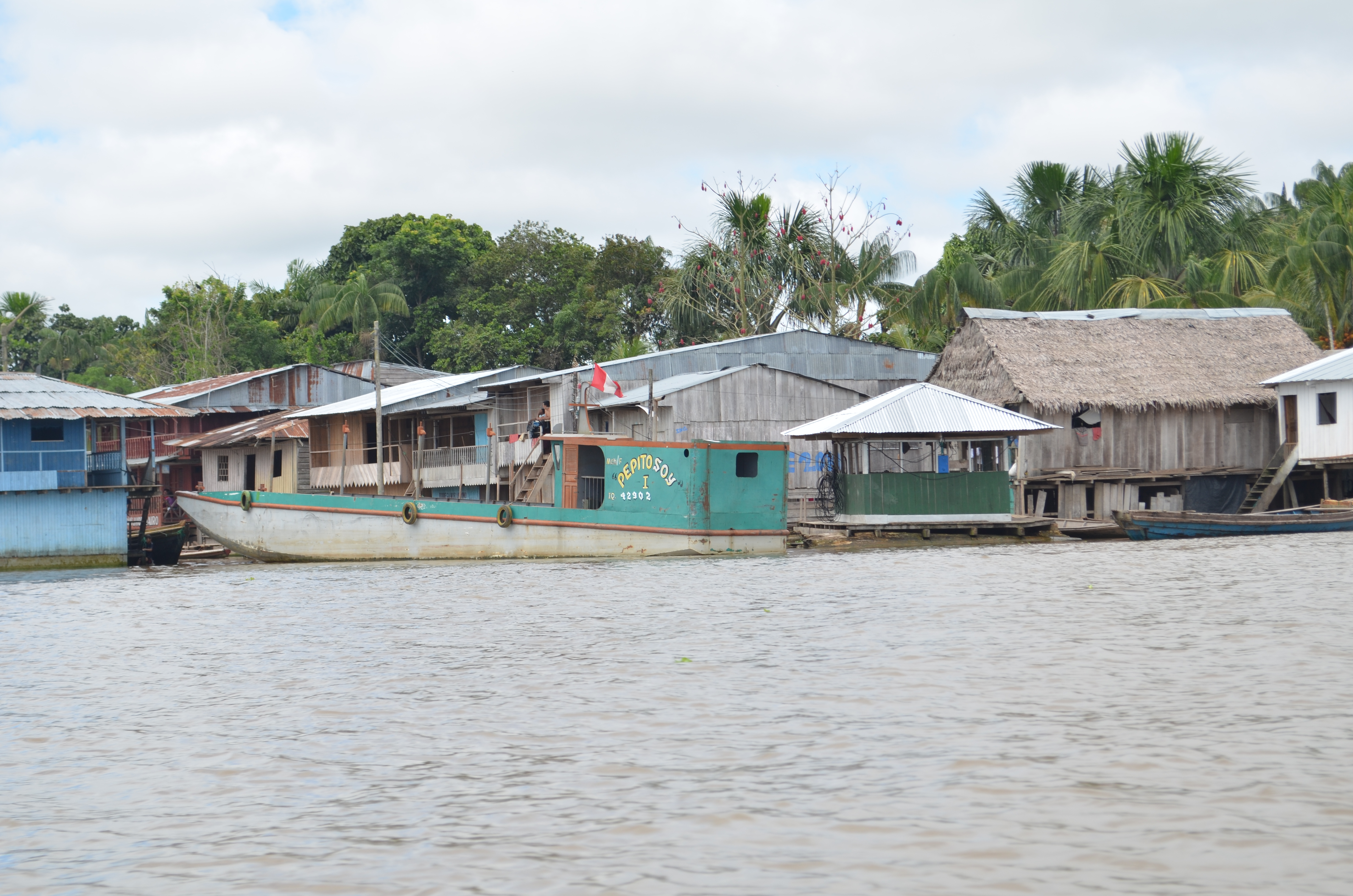
One of the most surprising experiences in the Colombian Amazon is a boat trip across the river into Peru. In just a couple of hours, you can reach Caballo Cocha, a lively mid-sized town that feels worlds away from the quiet villages of the Colombian side.
The difference is immediate. The riverbanks change, the town feels busier, and the overall pace of life suddenly picks up. After days of slow rhythms in Puerto Nariño, Caballo Cocha feels energetic and unmistakably Peruvian.
And then there’s the food. Forget Colombian arepas for a moment—this is the place to indulge in ceviche, chaufa, grilled river fish, and other classic Peruvian dishes. Walking through town, you’ll find small restaurants and market stalls serving fresh, flavorful meals that make this short border crossing completely worth it. It’s amazing how quickly your taste buds realize you’ve left Colombia.
Caballo Cocha is also a great place to simply wander. Spend some time walking along the waterfront, exploring local markets, and observing daily life in a town that is clearly more connected to regional trade and river traffic. It offers a fascinating contrast to the smaller, more isolated Amazonian communities.
If you can, stay overnight. An extra night allows you to explore beyond the town itself and visit nearby indigenous communities, which are less frequently visited and offer a deeper look into life along the Peruvian Amazon. With more time, you can also enjoy the town in the early morning and evening, when the river comes alive and the heat softens.
Even as a day trip, Caballo Cocha is a great choice—but with an overnight stay, it becomes an experience you’ll be glad you didn’t rush.
Birds, Caimans and Giant Water Lilies

It’s absolutely worth to go for a bird watching expedition. It’s better to do that with a local guide. Let’s say that some of the guides are not really prepared in terms of recognizing the birds but they surely know the way around the Amazon forest and through the river. This is why I advise you to find a local who will guide you through the endless trails and most importantly who will navigate the boat through the river. If you didn’t grow up here, it can be difficult to move on the Amazon river and it is easy to get lost in the forest.
The bird watching trip requires an early morning star, like 4-5.am. If you are on time, you will be able to see many species like for example Amazon kingfisher. I was also able to see the Victoria Regia, the giant Amazon water lily that blooms only at night and has the largest leaves in the world. Sailing the Amazon at sunrise, wrapped in silence and birdsong, was one of the most peaceful moments of the trip, as said it is absolutely worth the early morning alarm.
The whole experience of bird watching is usually part walking, part boat sailing depending also on the conditions. Make sure to bring your mosquitoes repellent.
While walking through the forest, be ready to meet with new people and extend your walk. We encountered an old local man who was raising the caimans in his private lake. He turned out to be one of the most informative people we have met in the Amazon so we spent hours in his garden listening to stories, tasting fresh cocoa and guanábana, and learning about old and evolving traditions. As said, the local guides are not really tourist oriented, they improvise a lot. The positive aspect about it is that there is no fixed schedule of your “tour”: you simply go with the flow, stop if you encounter local family, have a snack. The concept of time is not really important – as long as you have the will to go around, the guide will be happy to walk with you.
Dolphins and Piranhas: Life Beneath the Amazon’s Surface
The Amazon isn’t only alive above the water—it’s just as interesting below the surface. Two of the region’s most iconic creatures live here, and seeing them in their natural habitat is one of the most amazing experiences you can have in the Colombian Amazon.
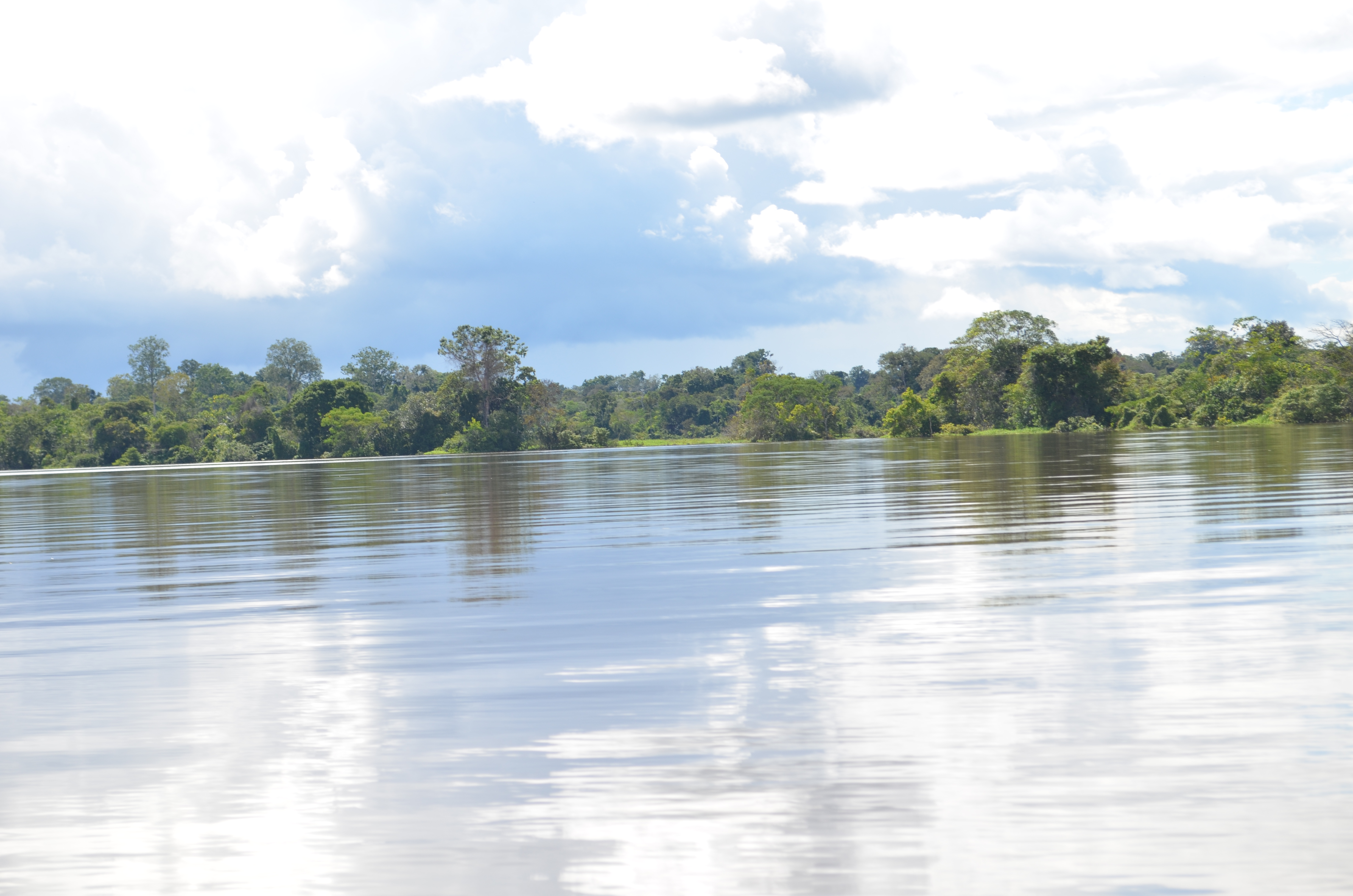
Spotting pink and gray Amazon dolphins in Tarapoto Lake is easy and absolutely magical. These freshwater dolphins glide silently through the water, often surfacing just a few meters from the boat. The pink ones, also known as botos, are especially fascinating: their color deepens with age, and local legends describe them as shape-shifters that come ashore at night. Whether you believe the stories or not, watching them move through the river feels almost unreal.
Equally iconic are the piranhas. While Hollywood loves to portray them as aggressive and dangerous, in reality they are cautious, curious fish that play an important role in the river ecosystem. If you’re interested in fishing, ask your host to organize a piranha fishing excursion, always accompanied by a local guide who knows the river’s rhythms, safe spots, and traditional techniques.
Fishing is usually done from a small wooden boat using simple lines and bait, and patience is key. When you do catch one, it’s more exciting than scary and often followed by laughter and stories from your guide. In many communities, piranhas are part of everyday life and are commonly eaten, often grilled or fried shortly after being caught. Talking about food, keep on reading to discover the local specialties.
Experiences like these offer a deeper understanding of how people and wildlife coexist in the Amazon. Dolphins, piranhas, fishermen, and travelers all share the same waterways, each playing a role in the delicate balance of river life. It’s not about thrill-seeking—it’s about witnessing the Amazon as it truly is: wild, complex, and deeply alive.
Visit San Francisco Community
Just outside Puerto Nariño lies the community of San Francisco, a settlement shaped as much by tradition as by outside influence. It was originally founded by Catholic priests who encouraged families living deep in the forest to move closer together, making it easier to attend mass, access basic services, and form a centralized community. What emerged is a place where ancestral customs and modern life now coexist, sometimes comfortably, sometimes with tension.
Many traditions here are still very much alive, especially those connected to family life, nature, and rites of passage. One of the most significant is the ritual surrounding a girl’s first menstrual cycle. Even today, when a girl reaches this milestone, she is traditionally secluded for around 20 days, cared for by her grandmothers and older women. During this time, she is taught what it means to be a woman in the community—how to manage a household, respect the forest, prepare food, and eventually raise a family.
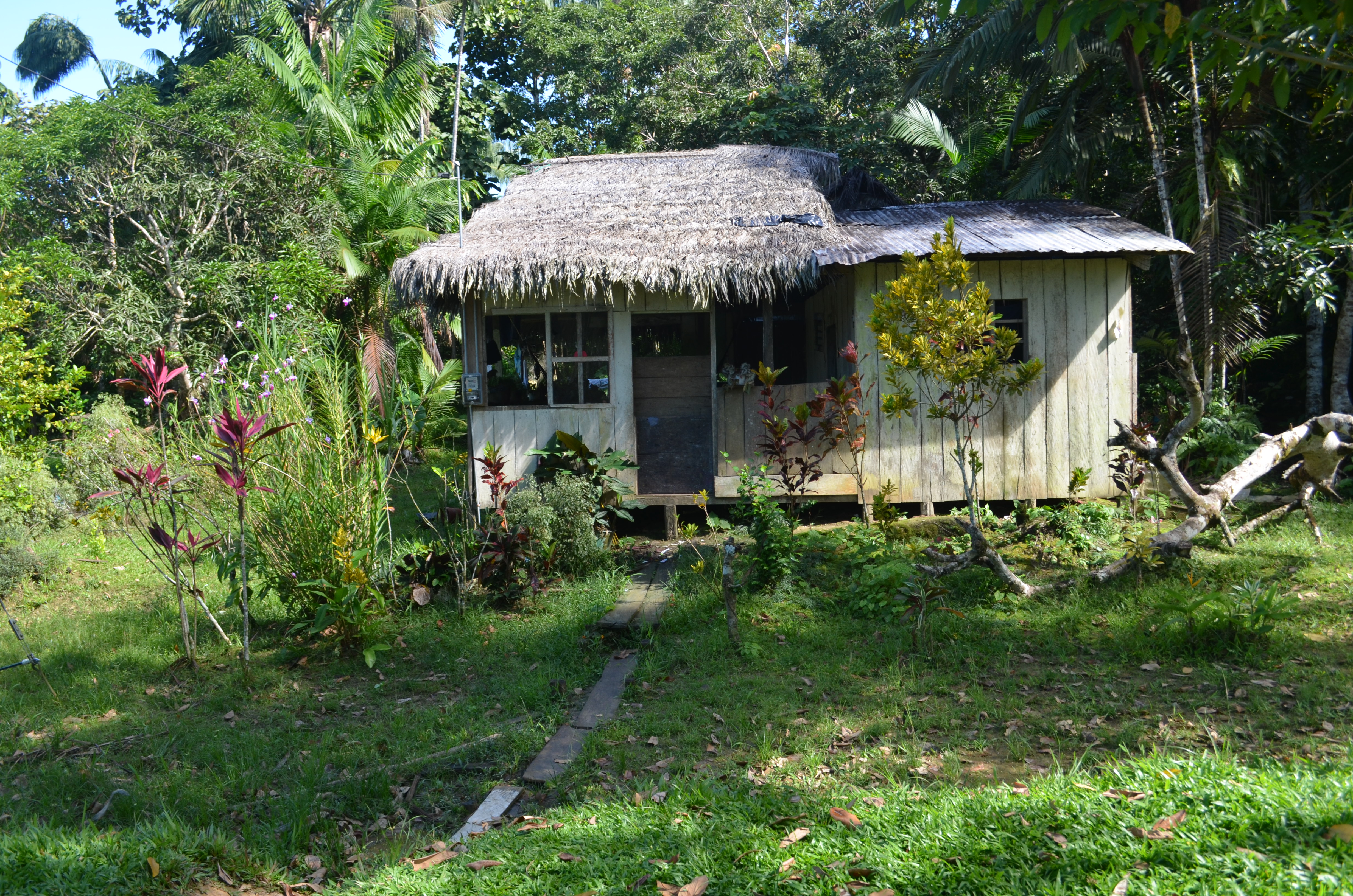
In the past, this period of isolation was far more extreme. Girls could be secluded for years, completely separated from daily life, and the transition from childhood to adulthood involved painful physical rituals meant to mark the change. Over time, education, contact with the outside world, and human rights advocacy have helped reshape these practices. Today, the emphasis is more on guidance, storytelling, and emotional support, rather than physical hardship.
Change in San Francisco does not happen overnight. Traditions adapt slowly, often unevenly, and always through negotiation between generations. Elders strive to preserve cultural identity, while younger members are increasingly exposed to school education, mobile phones, and visitors from outside the Amazon. Some customs fade, others transform, and new ones quietly take their place.
This delicate balance between past and present is what makes communities like San Francisco so fascinating—and so real. The Amazon is not frozen in time. It is evolving, step by step, shaped by history, belief, necessity, and resilience.
The food in Amazon
If you read all of I wrote in this post, you should be picturing the Colombian Amazon as a wild, untouched place where local communities live mainly from fishing. Here, kids as young as 4 years old know how to drive a boat and catch a fresh piranha. There are few shops selling imported goods but locals are mainly self sufficient.
Most of the hotels offer a rich breakfast but you will need to find restaurants for your lunch and dinner. There are some local options and all of them are pretty much the same and really genuine. The main specialties are grilled or fried piranhas, caimans and chicken. Don’t count on too many vegetarian options but of course you will have no problems finding side dishes made of pure local vegetables. Goes without saying that piranhas are fresh, directly from the river and they are delicious.
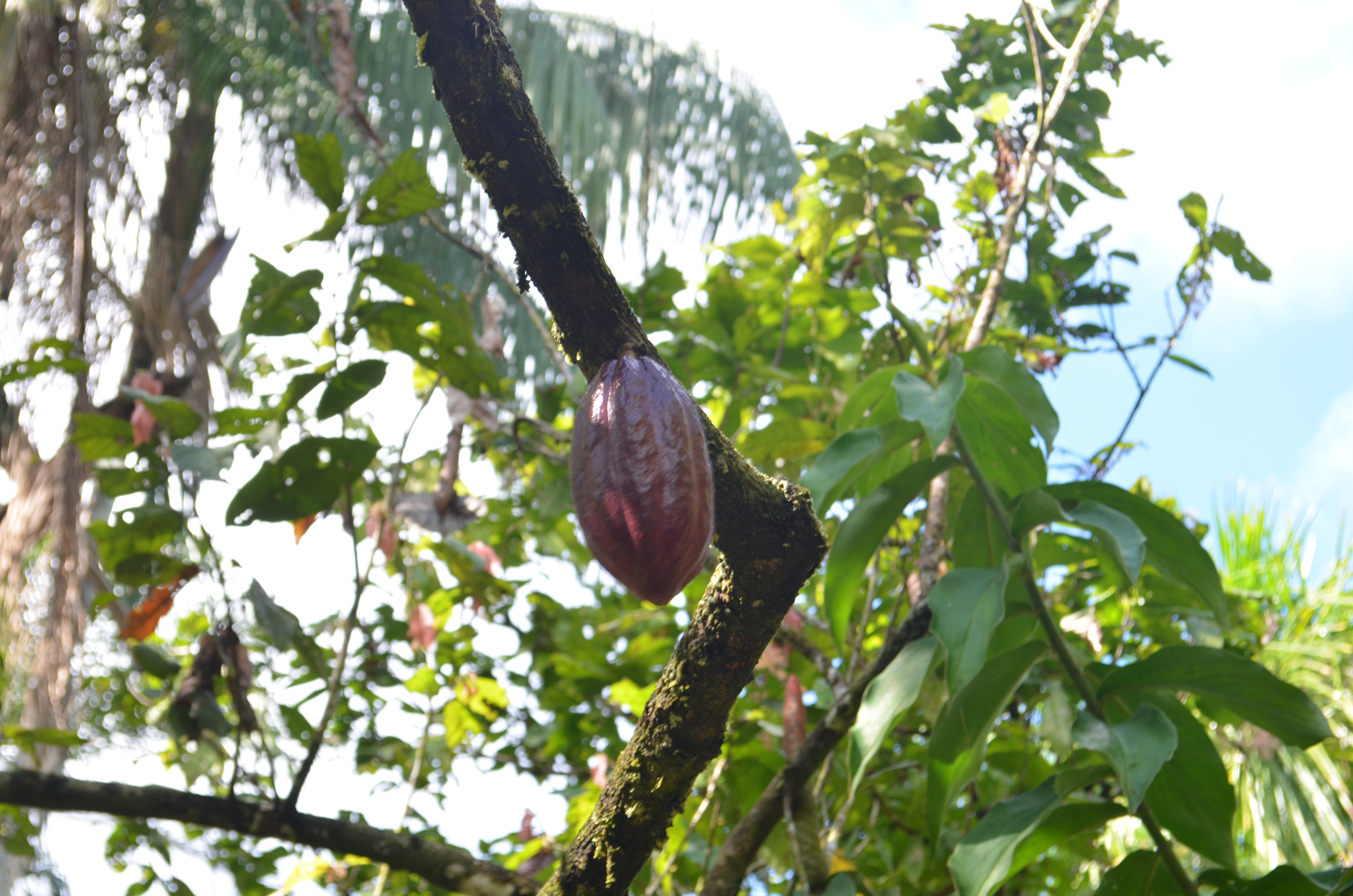
If you walk near the hospital of Puerto Nariño, you will find a ways to a house of an old man who sells handmade cocoa balls. These are simply perfect for rich hot chocolate – pure amazon cocoa. If you’re there, look for the house hidden in a garden near the Claro antennas or ask the locals. Remember, it’s not a shop; if you come here, count some time to spend chatting with the man and his family – the stories are as good as the chocolate.
Health, Climate and Mosquitoes
The Colombian Amazon is breathtaking, but it’s important to remember that this is a remote, tropical region, where health conditions are very different from what most travelers are used to. Being informed and prepared makes all the difference.
What You Should Know about Mosquitoes and Malaria?
Amazonia is a malaria-prone area, even if the topic is sometimes brushed aside. Some locals will tell you malaria isn’t an issue, while others quietly acknowledge it as part of life here. Officially, malaria cases are often under reported. Walk through local cemeteries and you’ll notice many graves of young people, with causes of death described simply as “fever.” Among older generations, deaths from paludismo—another name for malaria—are still common. This highlights how much work remains to be done in terms of health education, prevention, and access to medical care.
How to Stay Safe and Healthy?
You don’t need to panic—but you do need to be cautious.
- Stay hydrated and protect yourself from the sun.
Heat and humidity are intense. Drink only filtered or bottled water and take breaks during the hottest hours of the day. - Mosquito prevention is essential, especially from late afternoon through the night. Wear long sleeves and long trousers in the evening, use a strong insect repellent, and sleep under mosquito nets whenever possible.
- Choose accommodation carefully.
Stay in places that provide mosquito nets, clean drinking water, and basic hygiene standards. - Consider malaria medication carefully.
Some travelers take anti-malarial drugs, others don’t due to side effects or medical reasons. Speak with a travel doctor before your trip and make an informed decision based on your health and travel style. - Avoid evening river activities.
Dusk is peak mosquito time. Early mornings are generally safer and more pleasant.
The Colombian Amazon is not easy, not polished, and not always comfortable. But it is real. If you want nature, culture, contradictions, and stories that stay with you—go now. Because it won’t stay this wild forever.
 Nomadlytics
Leave a comment