
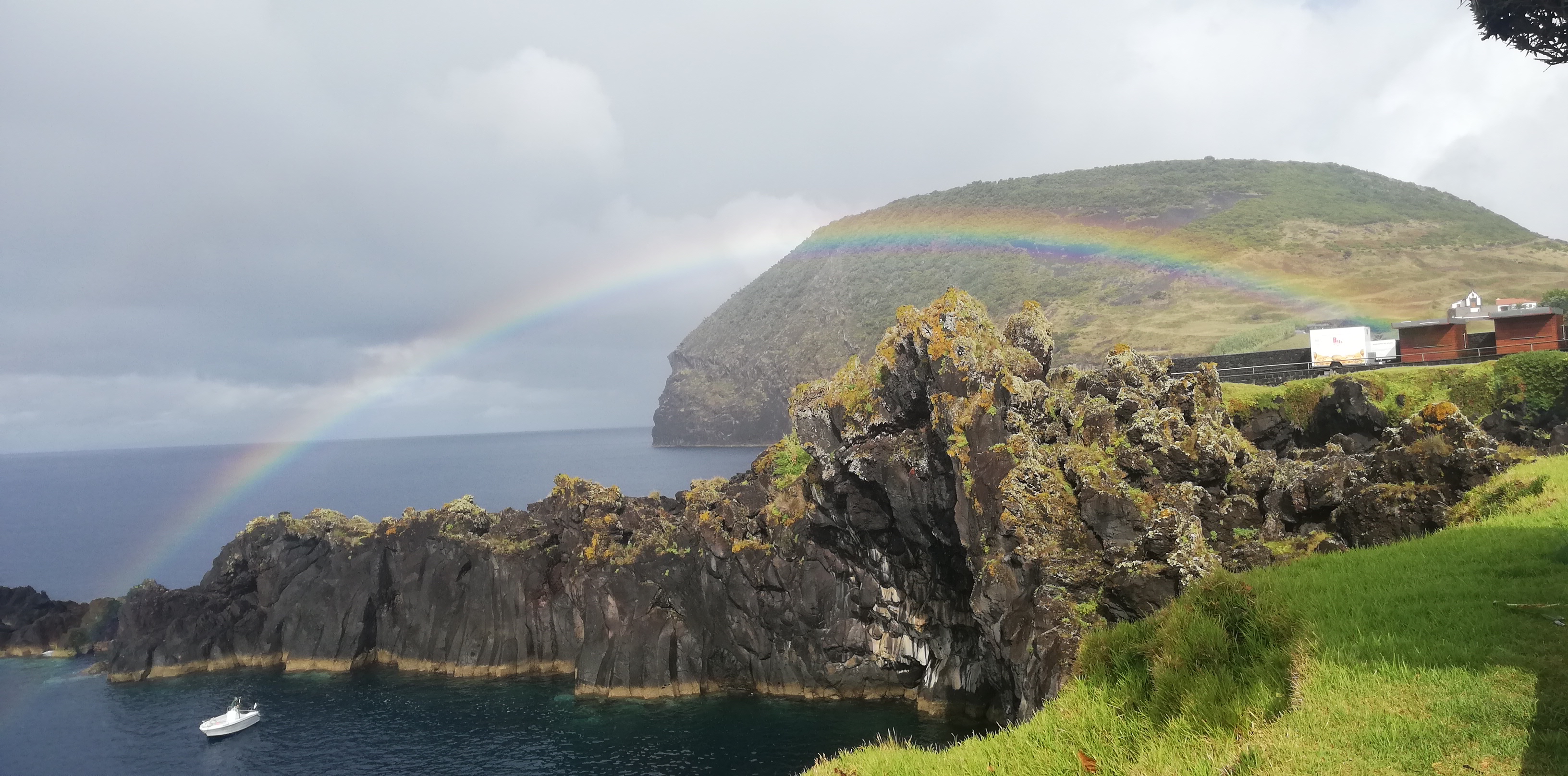
São Jorge is one of the most unique and underrated islands of the Azores archipelago. Long, narrow, and shaped by volcanic forces, it stretches for about 50 km across the Atlantic, with its landscape defined by steep cliffs and green plateaus. What makes São Jorge truly special are its fajãs—flat coastal areas formed by lava flows or landslides, sitting at the foot of towering cliffs. Most of them can be reached on foot only, which makes hiking here not just an activity but the best way to experience the island.
The island is in fact a true paradise for hikers. However it also offers natural swimming pools, great snorkeling spots, and a strong connection to local traditions—from cheese production to fishing. If you’re looking for raw landscapes, ocean views, and a genuine Azorean atmosphere, São Jorge delivers in a way few places in Europe can. So let’s discover together the best hiking trails of São Jorge.
Hike from Fajã Do Cubres to Fajã Do Santo Cristo
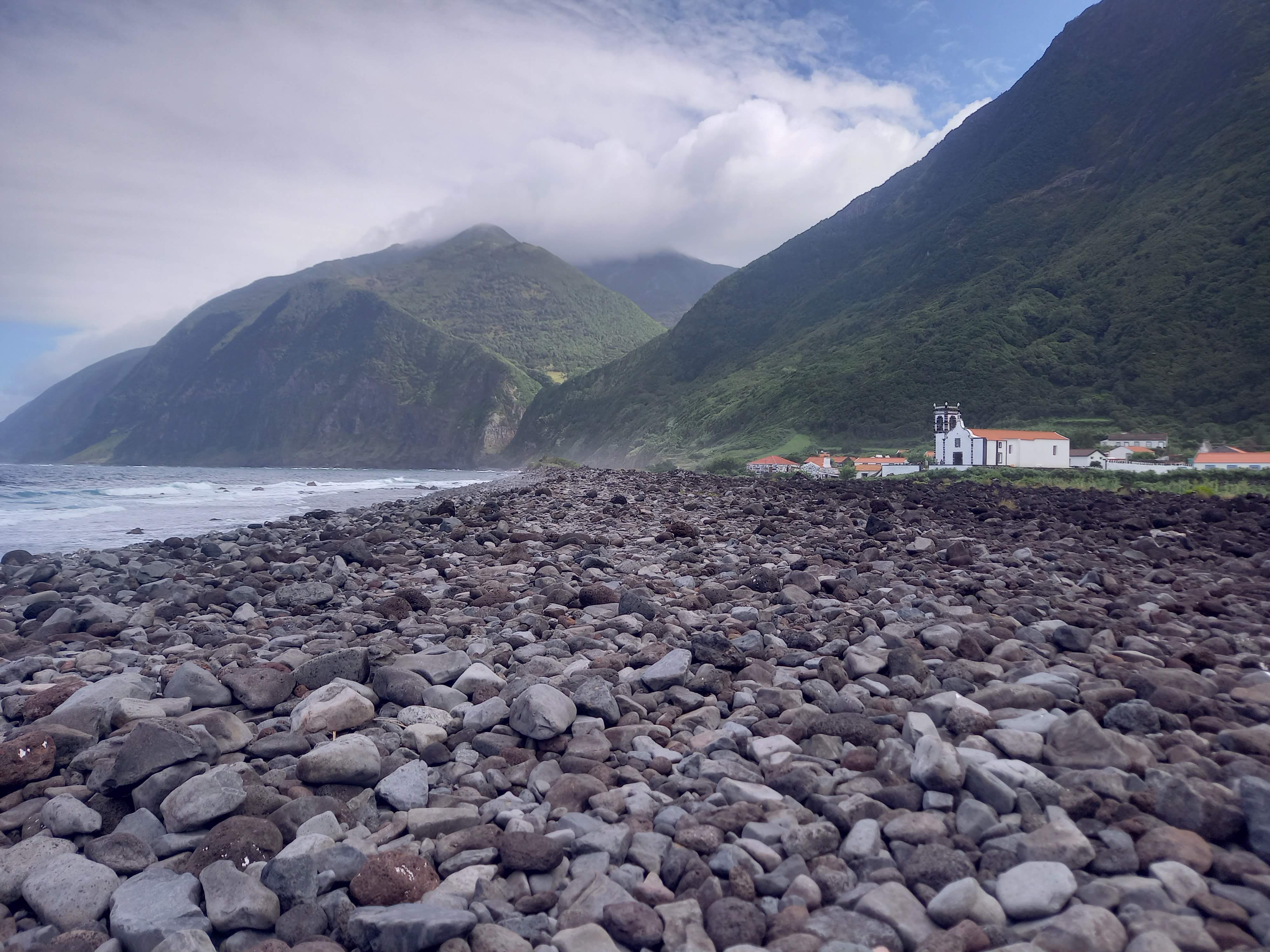
If you are planning to hike from Fajã Do Cubres to Fajã do Santo Cristo (easy 10 km both way scenic trail with less than 400m of elevation) it’s better to go there either off the season or during lunch time in summer months. From June to September the service of quads is active on the trail which means you will most probably encounter the smelly and noisy quads on the path. It’s not like your experience will be ruined but simply it’s more peaceful and natural when the quads are not there. The hike is totally feasible also for kids who are used to walk in the mountains. If you surf and don’t want to bring your own board, don’t worry, incredible but true there is a small surf rental in Fajã do Santo Cristo. If you have read that there is no electricity in Fajã, well actually it’s just a myth. Still, it’s worth going to explore Fajã and even to walk further on to Topo. You will be amazed by the nature, cliffs and the power of the ocean. As everywhere in the Azores, also in Fajã do Santo Cristo you will find a nice playground for kids with a clean toilet next to it.
The hike starts at the very end of the road in Fajã do Cubres, right next to the lagoon (Lagoa da Fajã dos Cubres). You wil need a car or a taxi to get there – no public transport. Drive down to Fajã do Cubres (well-paved but steep road). Continue all the way to the last parking area near the water and small houses. You’ll see a wide dirt track heading along the coastline—this is the trail. There is a wooden sign (PR trail marker) indicating the direction to Fajã do Santo Cristo. There’s really only one path to follow, so once you start walking, navigation is straightforward.
And what about the famous clams? Yes, they do fish clams in the Fajã and they are wild and as fresh as they can be. They are delicious but a bit overpriced. We ate them in the little bar in Fajã do Cubres where you can also pay with PayPal (no credit cards but cash is ok). The times of complete isolation are over but the place does deserve a visit.
Fajã de Além – São Jorge PRC05 SJO

Less popular and quite short but a bit demanding circular trail of 5 km and over 400m of elevation gain. You will cross forests, rural fields and waterfalls while enjoying the views of the Fajã itself and island of Terceira and Pico. Being less popular means it’s really quiet. The trail starts in the village of Fajã de Além. You can leave your car at a small parking near the church.
Pico do Pedro – Pico da Esperança – Fajã do Ouvidor – São Jorge PR4SJO
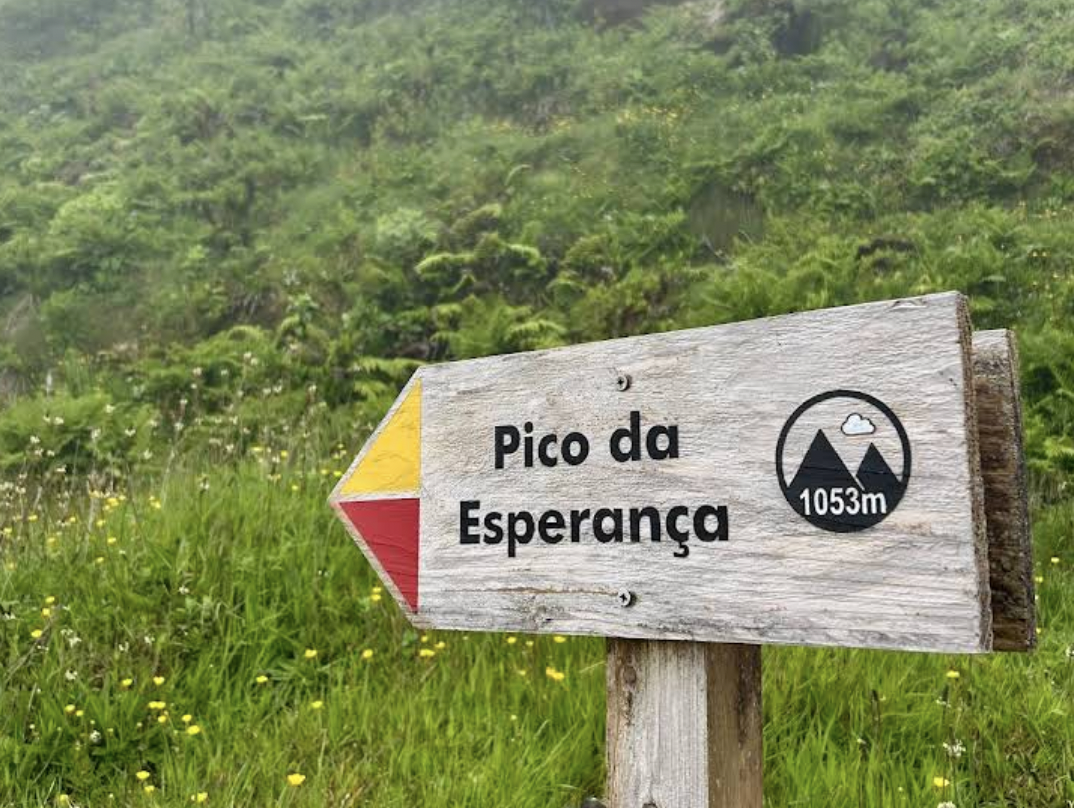
This linear route, along the mountain range, covers the central area of the island between Pico do Pedro, passing by Pico da Esperança, highest point of the island with 1053 meters and ends in Fajã do Ouvidor in the North coast. The trail begins at the base of Pico do Pedro, near the road EN3, through a dirt road. Go around the mountain by the North slope and follow the signs until you find the arrow with the detour to Pico da Esperança. It’s really well marked- just loook for São Jorge PR4SJO signs. The hike develops partially through the central volcanic range, between 800 and 1000 meters high and as you hike, you will see other peaks such as Carvão, Junça, Verde, Montoso and Morro Pelado. At the highest point of the island it is possible to go around the crater and enjoy the view of the lake inside.
It’s worth going on a clear day to enjoy spectacular views. Be aware that the weather in the mountain can change quickly and this trail can be tricky with fog. It’s a long one: back and forth it’s over 33 km. If you don’t have enough time or simply you don’t think to be fit enough to walk back, you can still arrive to Faja do Ouvidor and arrange a taxi pick up from there.
Norte Pequeno – São Jorge PRC06 SJO

This beautiful circular route on the north coast of São Jorge takes you through three remote and fascinating fajãs: Mero, Penedia, and Pontas. It’s one of those hikes that really shows the raw, untamed side of the island. It’s 10km long circular trail – not long but with ca 500 m elevation gain. The path is also very. exposed in certain spots so usually it’s not recommended to families with kids.
The trail starts just outside the small village of Norte Pequeno. From here, you walk through the village streets heading toward the ocean, following the familiar PRC06 SJO trail marker. You don’t reach the shore but turn left onto a dirt road that leads into agricultural land—a quiet area where locals still work the fields. Along the way, you’ll notice native vegetation as well as water collection systems still used by the community.
At a certain point the path descent toward the coast (super steep). You’ll pass a mix of native and introduced plants. Reaching the shoreline, the first fajã you encounter is Fajã do Mero, a small and quiet settlement that feels completely cut off from the modern world. After exploring the area, continue along the main path toward Fajã da Penedia. Once you reach the center, it’s worth taking a short detour to the left to visit the recently rebuilt Chapel of Santa Filomena—a simple but meaningful landmark.
Back on the main route, the trail continues east until you reach a fork. Here, take the left path down to Fajã das Pontas. This section leads you to a small fishing harbor surrounded by a handful of houses, with a rugged coastline that’s surprisingly inviting for a swim—if the ocean conditions allow it.
It’s the perfect place to take a break and enjoy the sound of the waves. To complete the loop, head back up to the fork and take the uphill trail toward Norte Pequeno via the Penedia route. The climb is steep and can be demanding, but the views at the top make it well worth the effort. Follow the trail markers all the way back to where you started.
If you still have energy left, this trail also connects to the GR02 SJO Great Route of São Jorge, which allows you to continue exploring the island either east toward Fajã dos Cubres or west toward Santo Amaro.
GR02 SJO Great Route of São Jorge 02
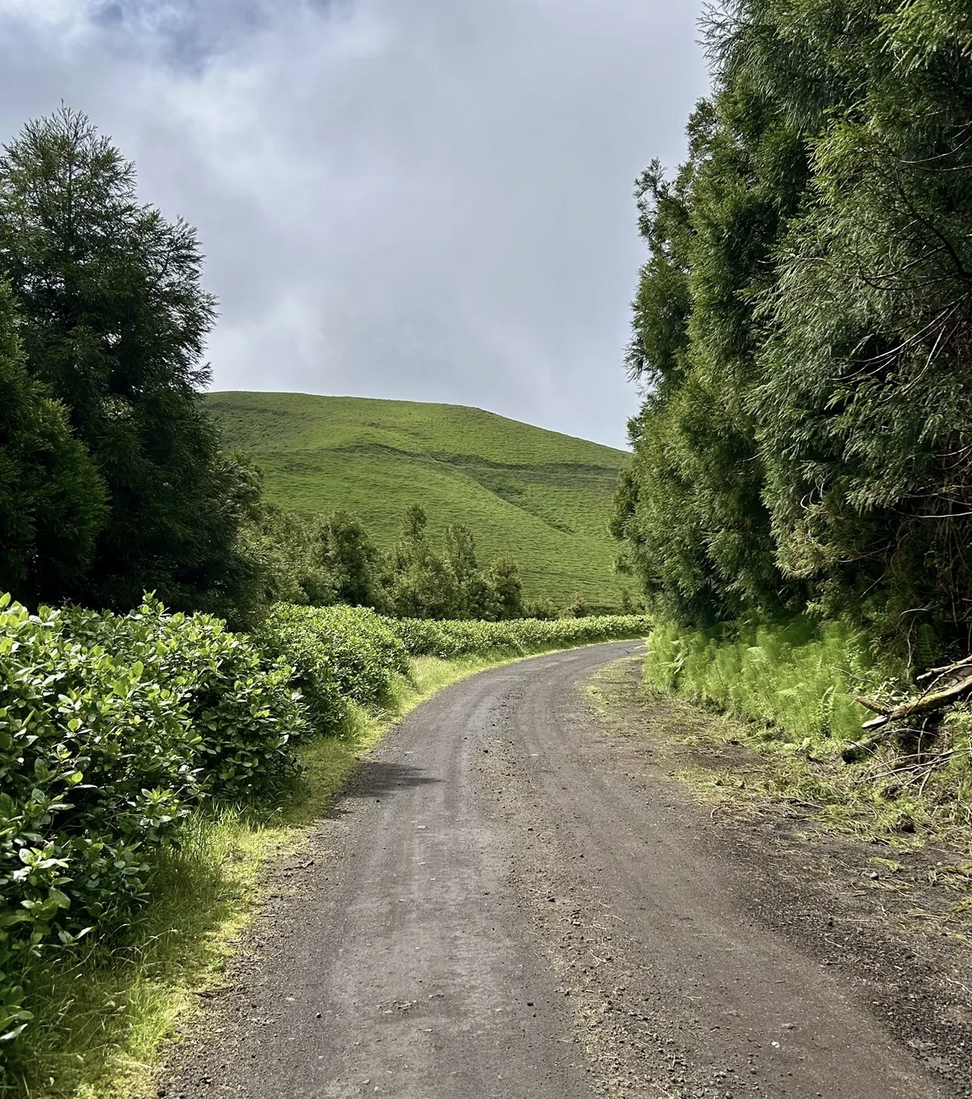
When writing about hiking in São Jorge it’s impossible not to consider the great route. It’s a 52 km trail divided in two parts: first one from Ponta dos Rosais to Santo Amaro (almost 22 km) and the second one from Santo Amaro to Faja do Cubres (30 km) where you can actually continue to Topo. It goes without saying that it’s not for the beginners. Walking on this path is magical. You will see the plateau of the inner part of the island, where the volcanic cones that generated the Island were actually born. You will also pass on high and steep cliffs that come to an end in small flat areas at the sea level – the famous Fajãs of São Jorge. Finally the natural pools that give you the possibility of refreshment. It’s the best of the island in one trail. It’s not impossible to complete it in one day, especially on a long summer day but obviously you will enjoy it more if you dedicate two days to this hike. The more time you spend on this trail the more authentic your experience will be. It’s possible to sleep in one of the local communities along the trail. To be honest you don’t need to reserve in advance if you are happy to spend a night in a simple and clean room in one of the villages. If you prefer to have a secured spot, you can book online in villages like Santo Amaro (half way) or in Norte Grande. I suggest Hotel Os Moinos in Santo Amaro – a bit off the main trail but still easily accessible on foot. Here you will be welcomed by teh owner and her family and you will love the delicious breakfast included in teh price of the room.
It’s (not) all about hiking
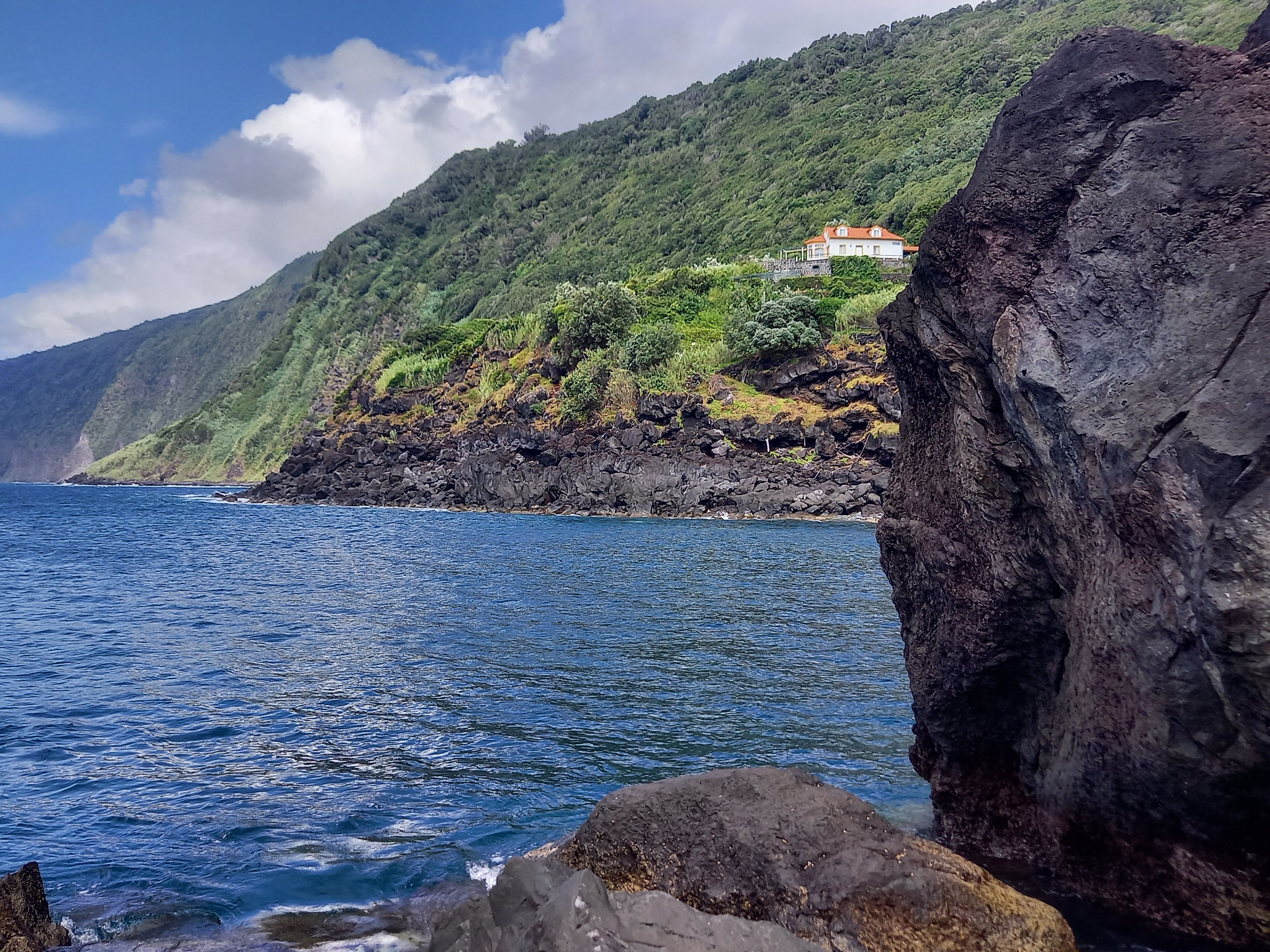
For me São Jorge is almost all about hiking but it’s also an island in the middle of the Atlantic. Although there aren’t many or real beaches, you can still chill in the wonderful natural swimming pools where you also will be able to enjoy snorkeling. You can find those almost everywhere on the island. Usually they are also equipped with free wooden umbrellas as it might get burning hot in summer.
As said before, there are some great surf spots as well. Fajã da Caldeira de Santo Cristo is one of the most magical spots when it works. You must be an advance surfer to get into the water. The waves in the north are super powerful. If you are looking for a slightly smaller waves, head South to Fajã dos Vimes – sometimes the conditions are ok even for the beginners.
Useful tips for visiting São Jorge
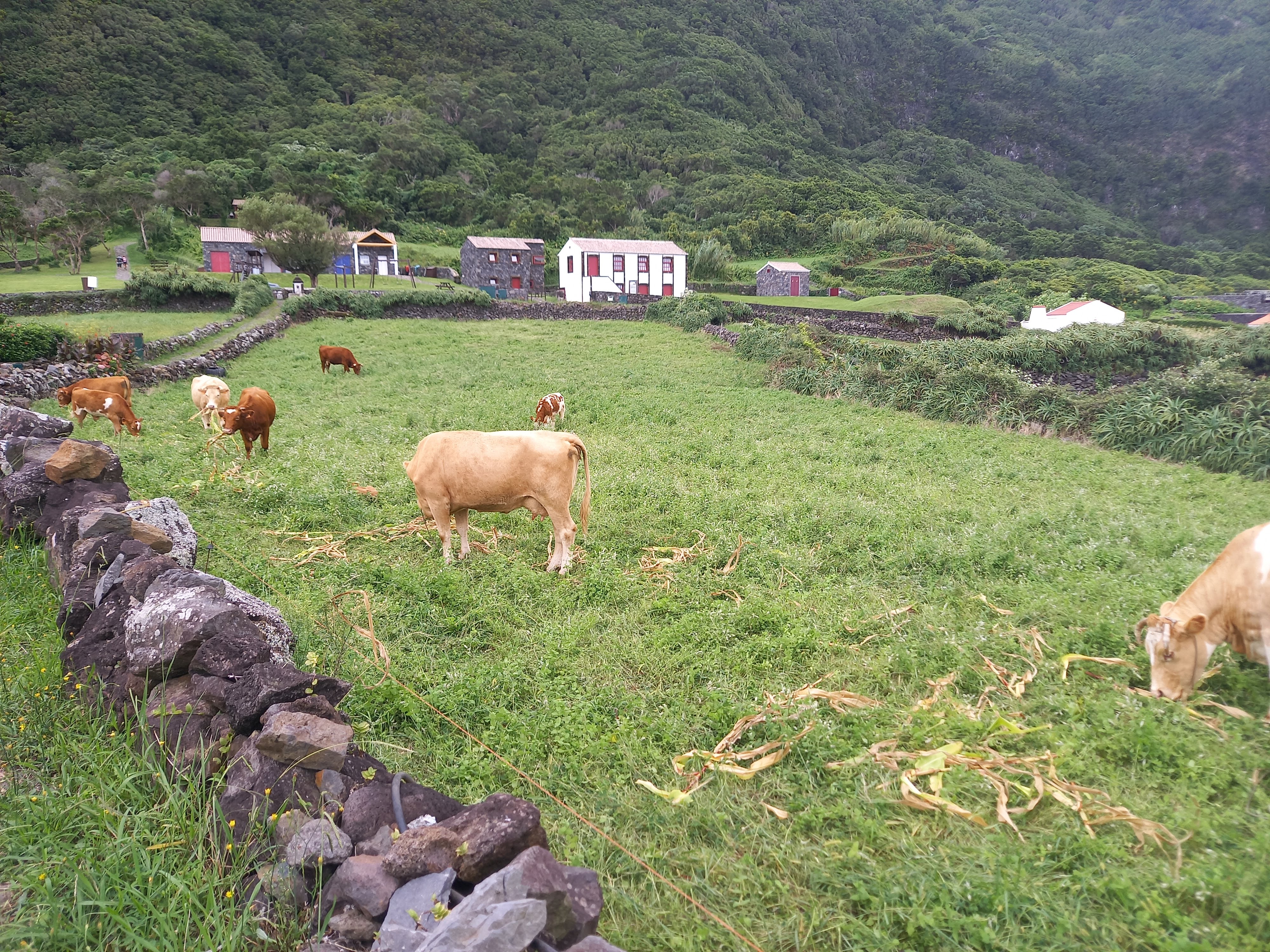
If you want to have all the details in one place, check visitazores.com download all trails off line maps so you can plan your hiking in the best possible way. And if the technology does not assist you, remember that all the trails across all the Azores island are very well marked so no issue in finding signs.
Trails are very well marked, but fog on the ridge can reduce visibility to a few meters and some descents (like Norte Pequeno) are very steep.
Always bring water and snacks and plan for lunch. In some fajãs you will find restaurants, in others you will find absolutely nothing. If you plan to eat in a restaurants, call and check if they are open.
Wear good hiking shoes and always bring a rain proof jacket. The weather might change really quickly. Even if you start early in the morning (more chances of a clear sky), it still can get really rainy before the midday.
Best time to hike? Surely, May and June are the less crowded months with a good weather. August is a high season and the warmest time. There are more tourists but some trails will be still empty. September and October are great but the weather can be really unstable.
How to get there?
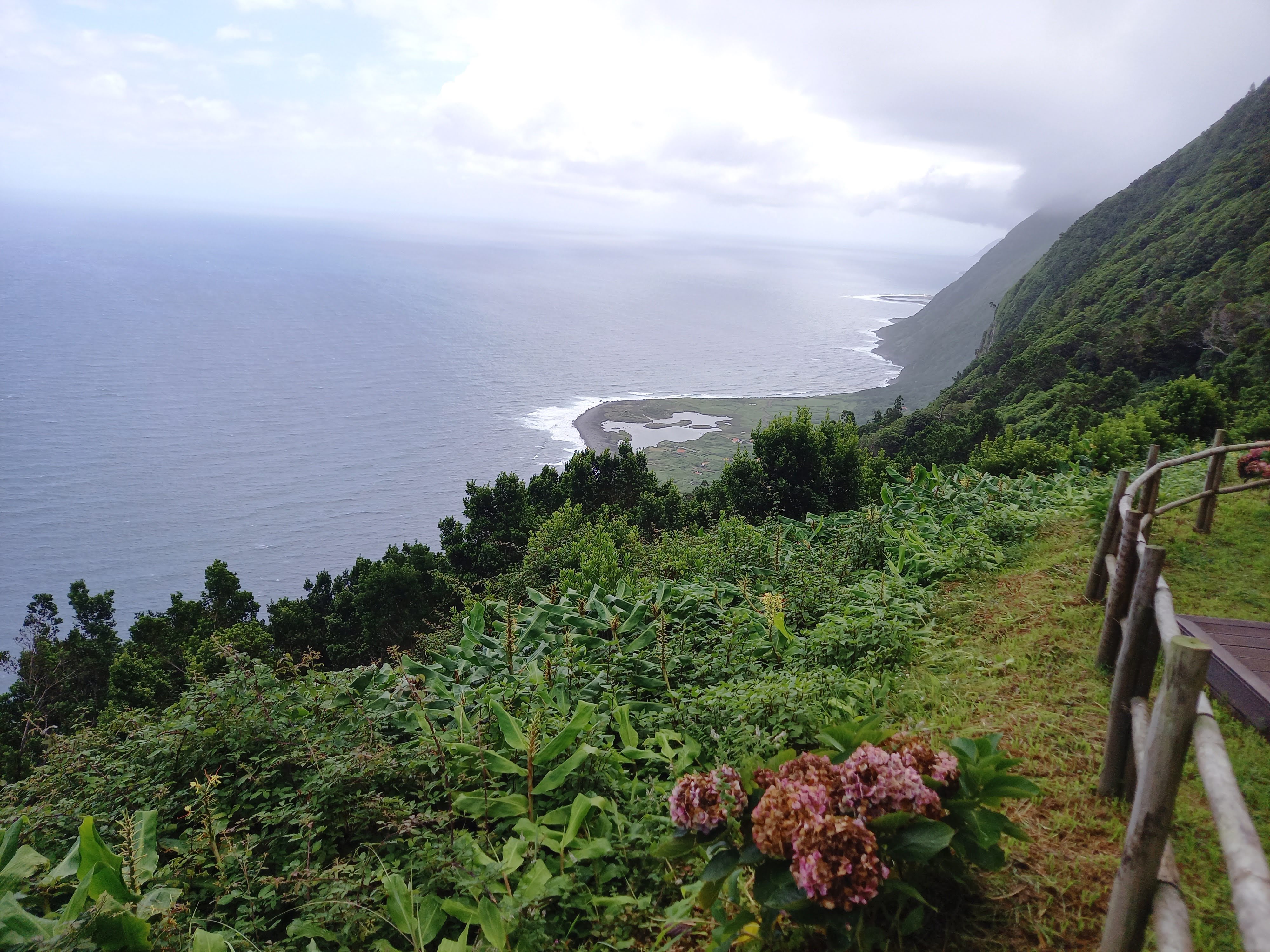
Reaching São Jorge takes a bit of an effort, but that’s part of its charm. The easiest way is to fly with SATA Air Açores from Ponta Delgada or Terceira to Velas (São Jorge airport). Flights are short (30–40 minutes).
Alternatively, ferries operated by Atlanticoline connect São Jorge with Pico and Faial, especially in summer. This is a great option if you’re island hopping or traveling with a car.
Once on the island, renting a car is strongly recommended—many trailheads (like Fajã do Cubres or Serra do Topo) are remote and not served by public transport.
Accommodation
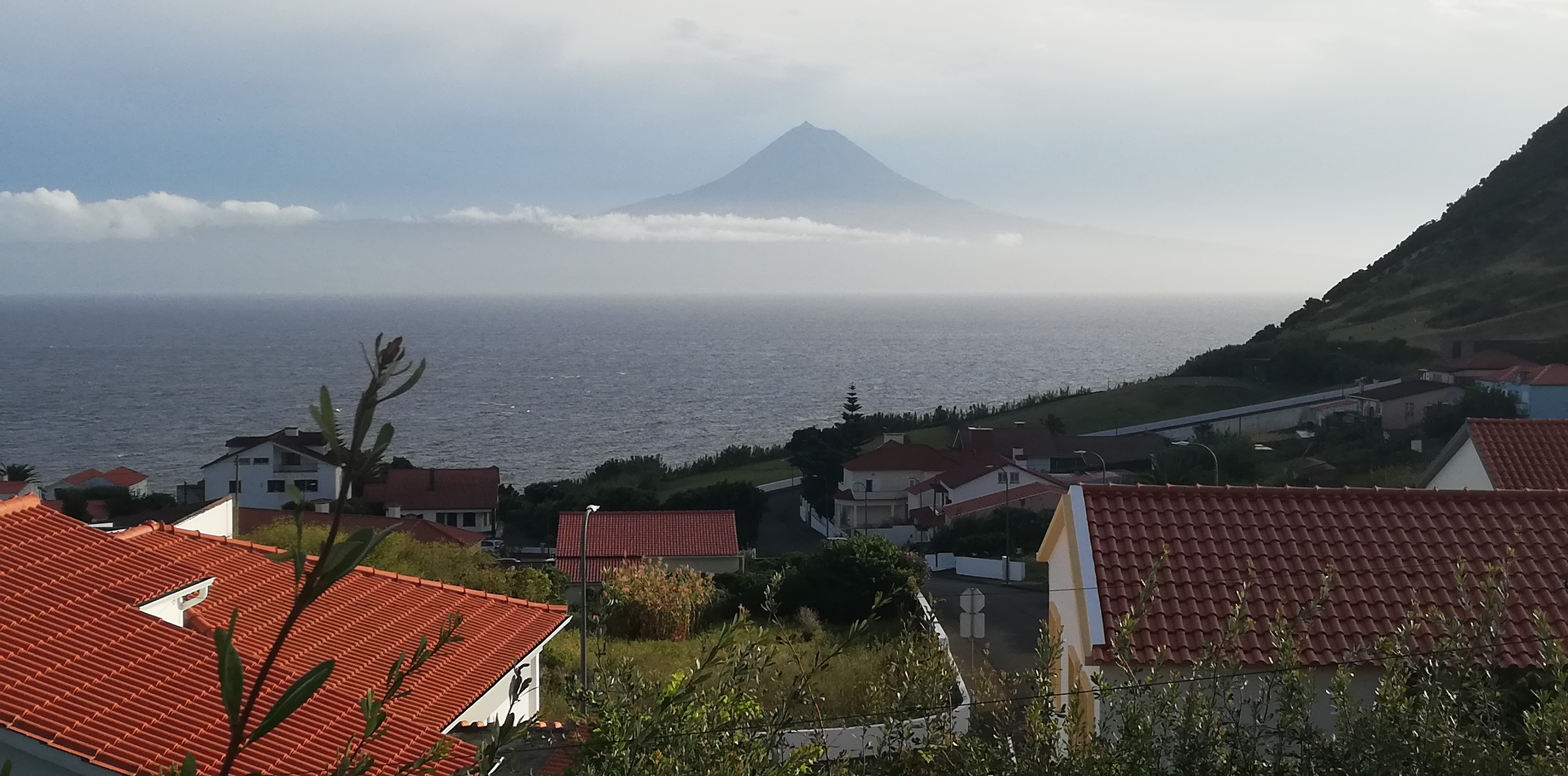
São Jorge offers a surprisingly wide and varied range of accommodation, especially considering how remote and wild the island feels once you’re out on the trails. At the luxury end, you’ll find a handful of boutique hotels and stylish rural estates, mainly around Velas and Urzelina. These places often come with ocean views, pools, and modern comfort.
A step down in scale but often the most atmospheric option are the boutique guesthouses and rural hotels. These are usually converted stone houses or small family-run properties. Many are spread along the south coast, offering easy access to hiking routes while still having cafés and restaurants nearby.
Then there are the island’s signature stays: cottage-style houses and local accommodation (Alojamento Local). These are scattered across villages and even inside some fajãs. Think simple but charming self-catering houses, often built from volcanic stone, sometimes with gardens or ocean views. This is the most common and practical option for hikers, especially if you want flexibility along routes like the GR02.
Finally, there is the budget range, including hostels and simple guesthouses in towns like Calheta or Velas. These are ideal for solo travelers or anyone prioritizing hiking and spending most of the day outdoors.
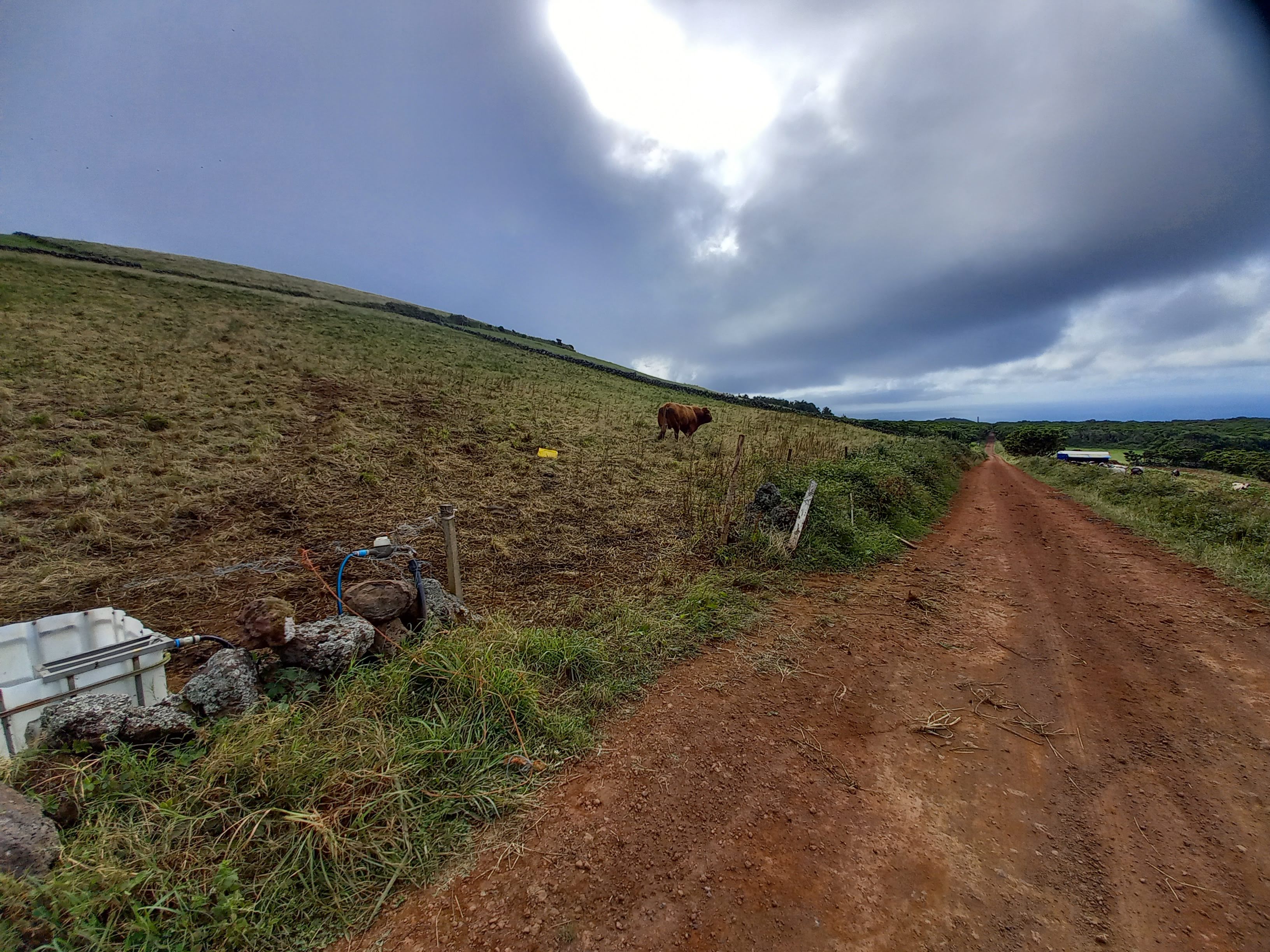
São Jorge is one of those places that really rewards people who enjoy being outdoors. If you like hiking, ocean views, and quiet landscapes without crowds, it’s hard not to enjoy it here. You come for the trails and end up discovering fajãs, natural pools, small villages, and some of the most impressive coastal scenery in the Azores. If you’re planning a trip to the Azores and wondering whether São Jorge is worth including, the answer is simple: yes. Give it at least a week, rent a car, and get out on the trails!


Leave a comment