
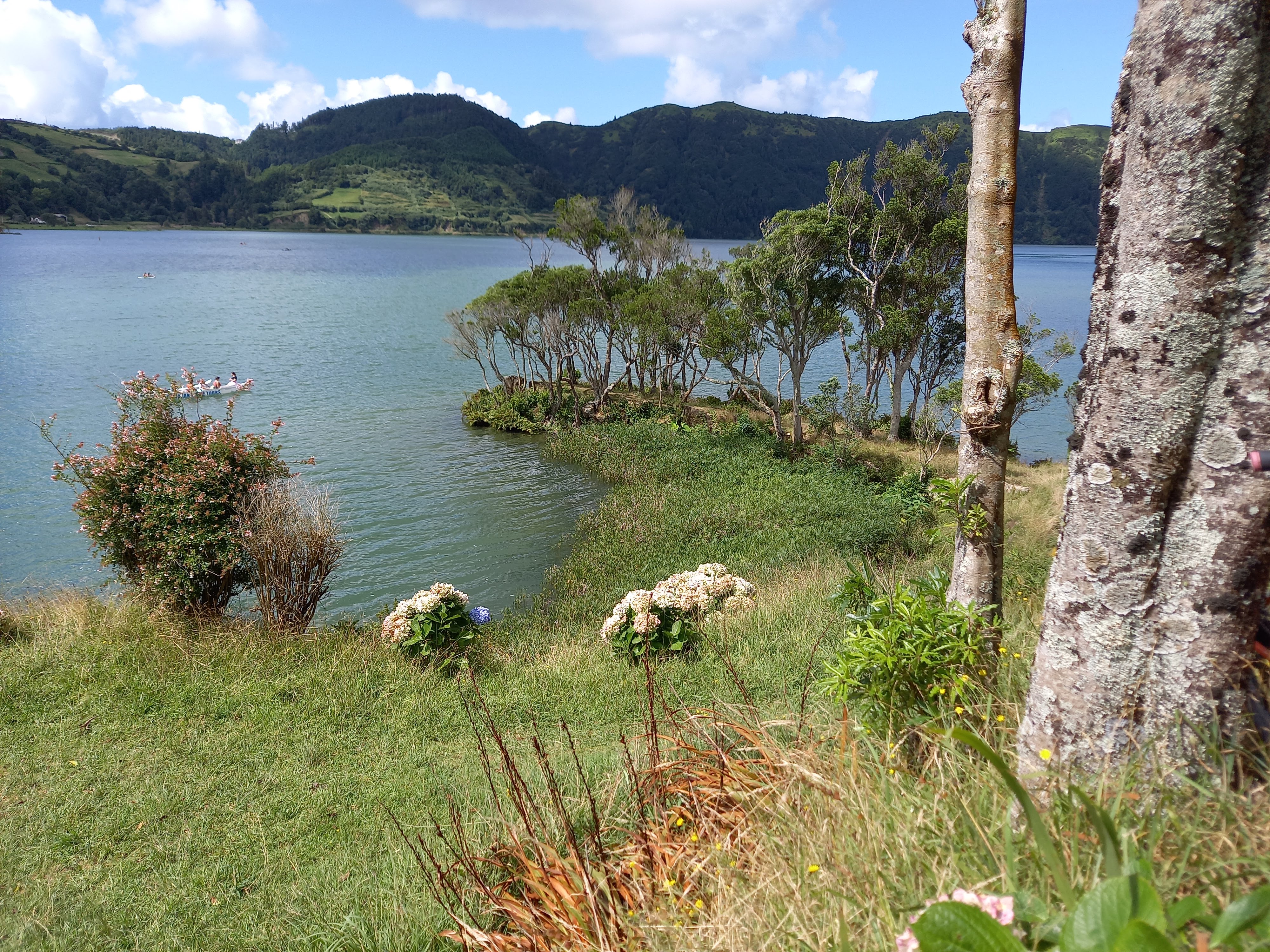
Why Visit São Miguel in the Azores?
If you’re searching for a destination that combines volcanic landscapes, dense greenery, wild coastlines, and unforgettable outdoor experiences, São Miguel Island should be at the top of your list. Just like all the other Azorean islands. Often called “The Green Island,” São Miguel offers some of the best hiking in Europe, alongside geothermal hot springs, crater lakes, black sand beaches, and abundant marine life. 10 days is a minimum to explore this island but I am sure that if you are a hiker or a surfer, you will probably want to stay longer and it’s really possible as the internet connection is usually strong enough to allow a remote work.
How to get there?
Reaching São Miguel, the largest island in the Azores, is easier than you might expect—though it still feels pleasantly off the beaten path.
The main gateway is João Paulo II Airport in Ponta Delgada, which receives direct flights from several European cities, especially from Portugal. If you’re already in the country, flying from Lisbon or Porto is the most straightforward option, with multiple daily departures and a flight time of around two to two and a half hours.
Accommodation
Accommodation on São Miguel is as diverse as its landscapes, offering everything from simple hostels and boutique hotels to charming rural stays and stylish villas.
For most visitors, Ponta Delgada is the most convenient place to stay, thanks to its wide range of accommodation, restaurants, and easy access to the airport and main roads—ideal if you want a central base for exploring the island. If you prefer something quieter but still well connected, Ribeira Grande on the north coast offers a more relaxed atmosphere with beautiful coastal scenery and good access to surf spots and hiking areas. Check my other post about São Miguel where I mention some great options for an extraordinary stay.
10 Days Itinerary to Explore The Green Island
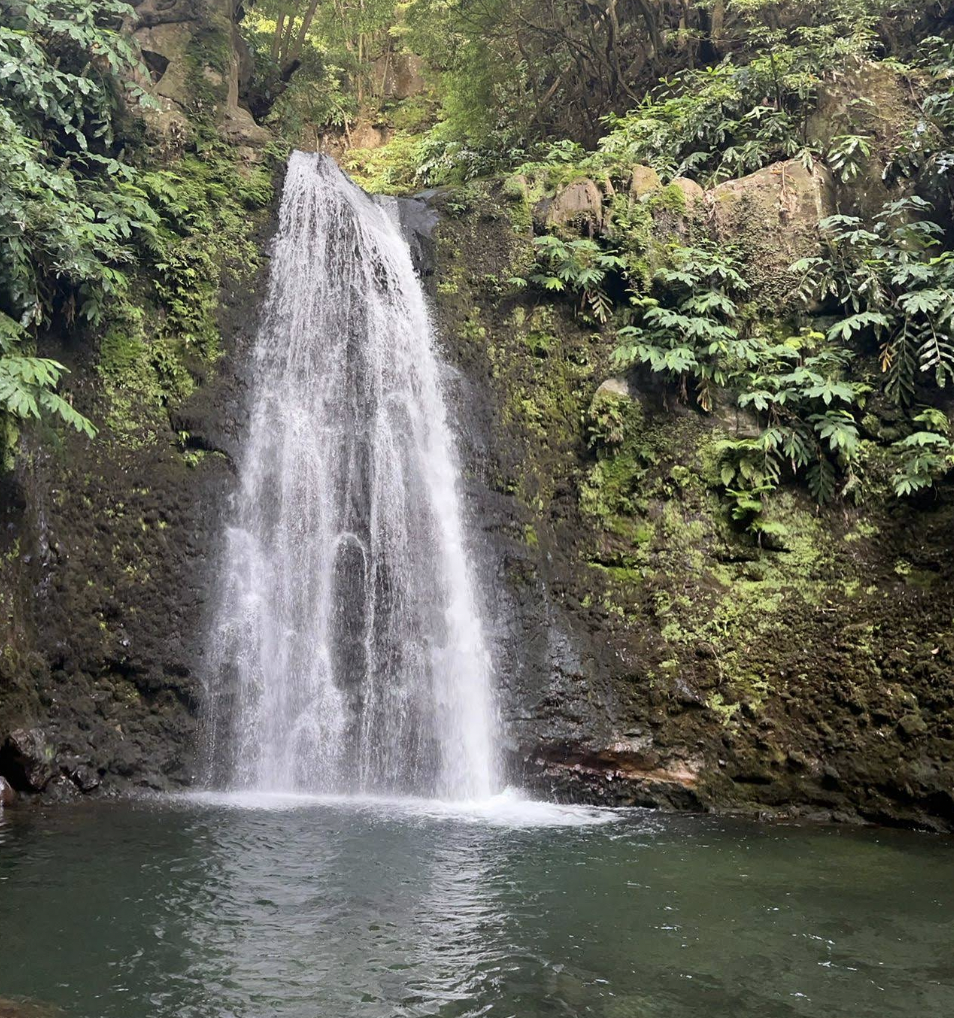
This 10-day São Miguel itinerary is designed for travelers who love hiking but also want variety—think whale watching in the Atlantic, wandering through botanical gardens, relaxing in thermal pools, and enjoying family-friendly parks and coastal towns. São Miguel is perfect for couples, solo traveler, or families. Here you will find a perfect balance of nature, relax and culture.
Day 1: Ponta Delgada, the Heart of São Miguel
Ponta Delgada is the capital of São Miguel and the main gateway to the Azores. At first glance, it feels like a quiet Atlantic town, but as you wander its streets, you’ll notice its distinct character shaped by volcanic stone architecture and centuries of maritime history. It is really a charming coastal city where you will find historical architecture, modern amenities and of course, excellent hiking trails. The must visit landmarks include Portas da Cidade: a set of imposing arches facing the marina. Ponta Delgada is also home to numerous beautiful churches, each telling a story of the island’s history. For example Igreja do Santo Cristo where you will witness a mesmerizing collection of ex-votos and experience the religious fervor of the locals.
Spend your morning or afternoon exploring the historic center, where black basalt details contrast with whitewashed facades. The iconic city gates open onto a lively square, and just beyond, the Igreja Matriz de São Sebastião reveals intricate Manueline-style details. Along the marina, the ocean breeze and views of moored sailboats set the tone for the days ahead.
For a softer introduction to the island’s natural beauty, step into Jardim António Borges, a peaceful botanical garden filled with winding paths, towering trees, and hidden corners.
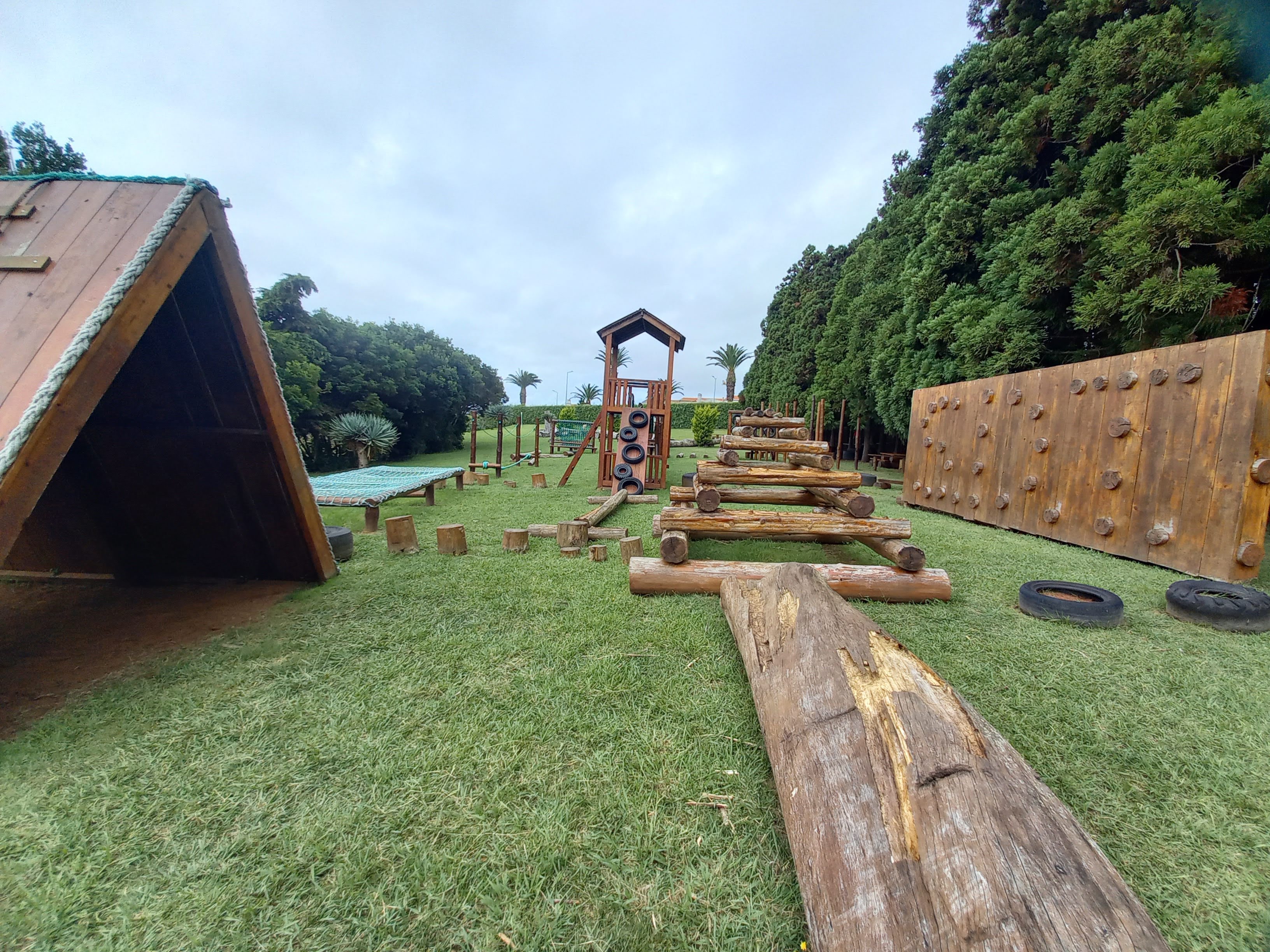
Families will immediately notice how welcoming and kids friendly the city is: parks like Parque Urbano or Super heroes outdoor playground offer wide green spaces, modern playgrounds, and safe walking paths where children can roam freely while adults relax or enjoy a little walk.
Day 2: Sete Cidades – Hiking the Edge of a Volcano
Few places in Europe are as visually striking as Sete Cidades. This enormous volcanic crater holds two lakes—one shimmering blue, the other green—surrounded by steep, forested walls and rolling hills.
Arriving at Vista do Rei viewpoint feels like stepping into a postcard. The twin lakes stretch below, often partially veiled by drifting clouds, creating an ever-changing landscape. But the real magic begins when you leave the viewpoint behind and start hiking.
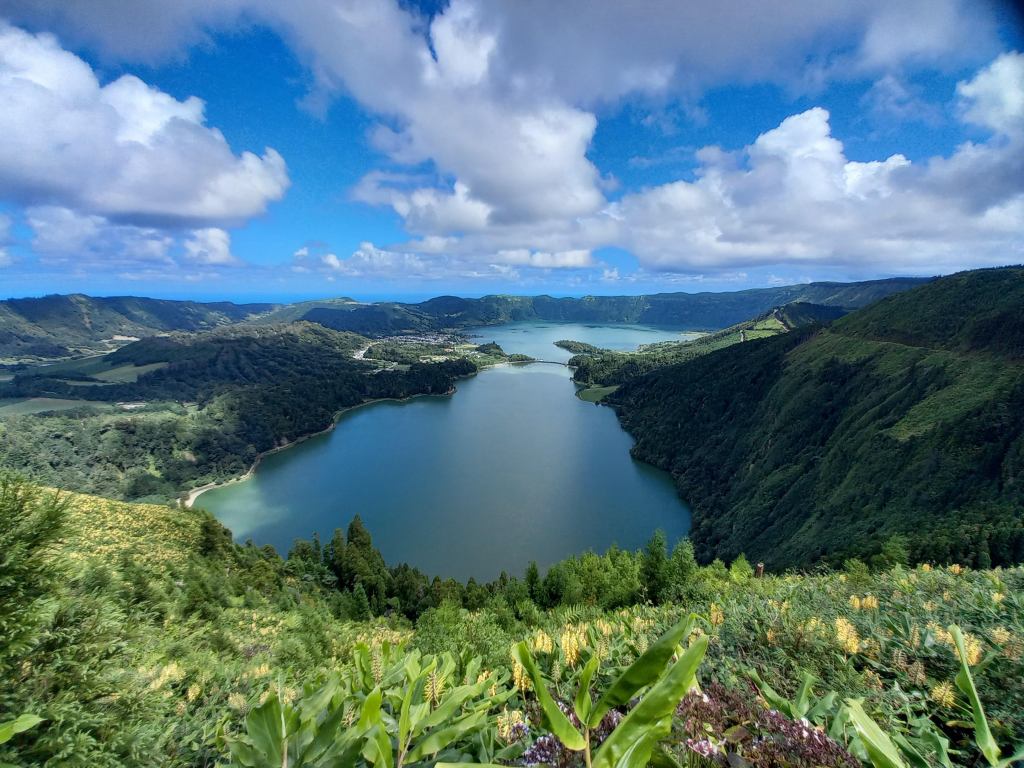
The crater rim trail is one of the best hikes in São Miguel, offering a relatively gentle route with constant panoramic views. As you walk, the scenery shifts from open ridges to quiet paths lined with hydrangeas, with glimpses of the Atlantic appearing beyond the crater walls.
Down by the lake shore, the village of Sete Cidades feels calm and remote. Here, you can rent a kayak or a bike and continue your exploration. The lakeside walks and cycling paths are easy and safe and don’t require any specific physical preparation. If you don’t feel like moving, you can also sit by the water, take in the silence and enjoy your picnic.
Day 3: Lagoa do Fogo – Untouched Wilderness
Lagoa do Fogo, or “Lake of Fire,” offers a completely different experience. Unlike Sete Cidades, this crater lake remains largely untouched, protected from development and surrounded by raw, wild nature. From above, the lake appears often framed by mist so choose a clear moment to come here. I visited it one hour after landing on the island because the weather changes quickly and if you see a clear sky, you must take advantage of it.
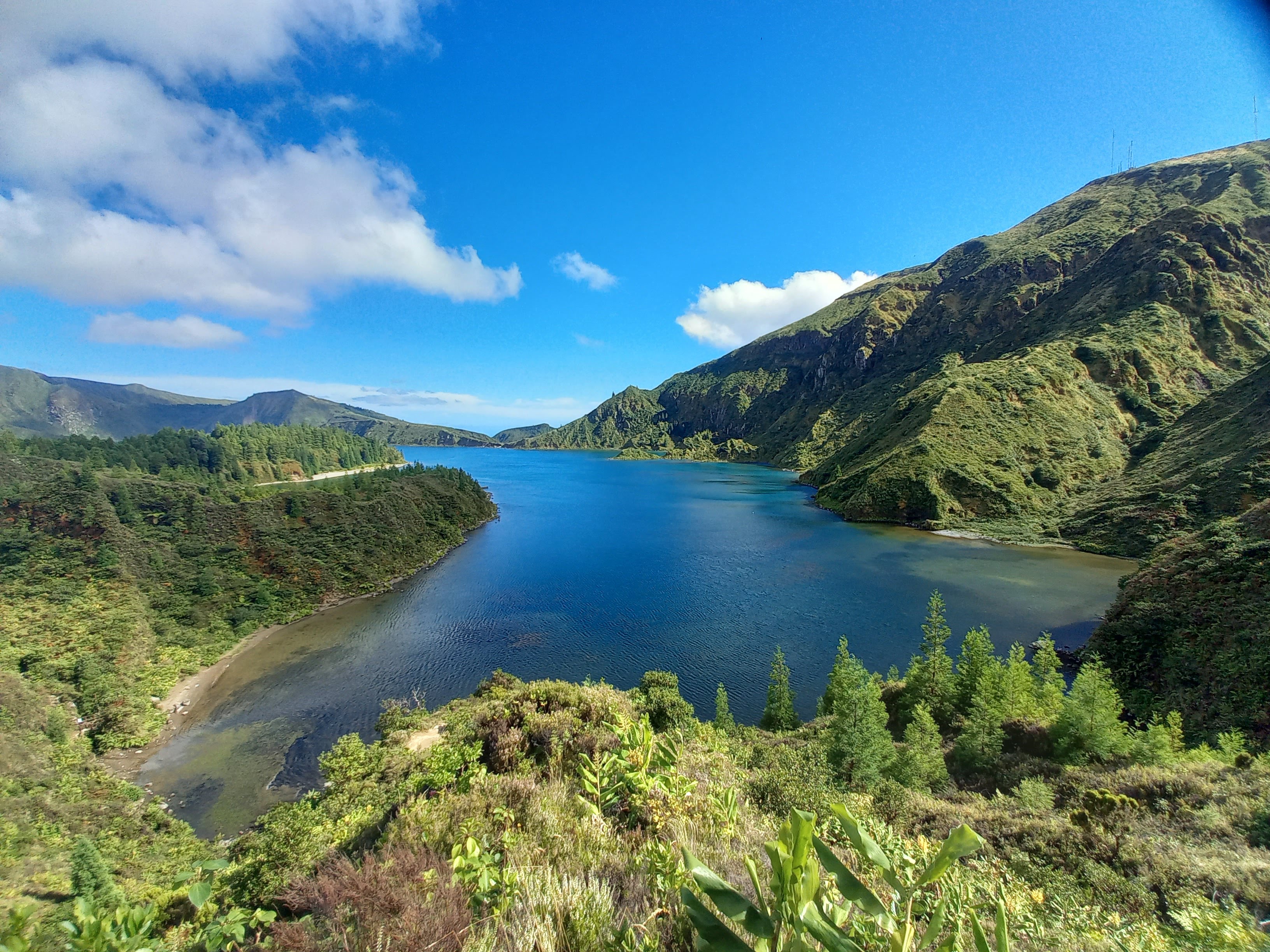
Many visitors arrive to the view point, take a picture and go back. I advise to hike down and spend some time by the lake. The trail to the lakeshore leads through dense vegetation and volcanic terrain before opening onto a secluded white sand beach—an unexpected sight in the middle of a crater.
The descent is relatively demanding, and the climb back up requires effort, but it’s feasible if you are used to walk in the mountains. There are no cafés, no boats, no buildings—just the sound of wind, water, and distant birds. And often it’s just you on the trail.
This is one of the most memorable hikes in the Azores and a real highlight if you are looking for unspoiled nature.
Transport Tip:
You can drive up to the nearest parking lot if you arrive here early in the morning (6.00 AM). At 9.00 AM this parking lot closes and visitors can park further down in Caldeira Velha Parking Lot. From there a shuttle bus is available. The bus stops in various view points and eventually gets you to the last stop. It costs 5 EUR and you can buy tickets online here or directly from the driver. Normally the bus departure every 30 minutes but check the website before planing your trip as the schedule is always subject to change.
Day 4: Furnas Valley
Geothermal Wonders and Thermal Baths
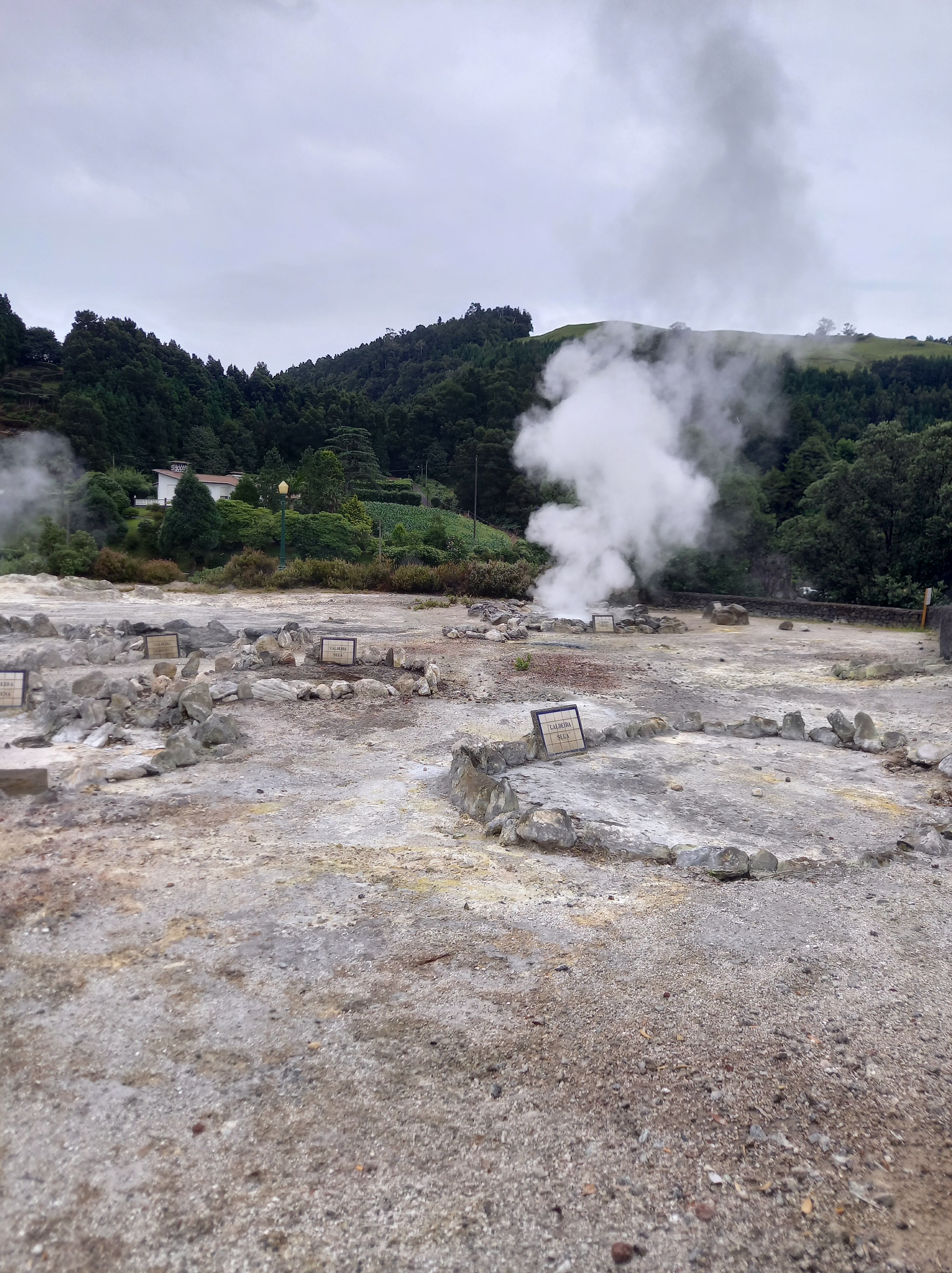
Furnas Valley is one of São Miguel’s most extraordinary natural areas, where volcanic activity shapes the landscape in real time. From the crater lake to its famous thermal baths and gardens, Furnas is a place where nature is powerful and calming. Steam rises from the the scent of sulfur lingers in the air, and bubbling hot springs remind you that this island is still very much alive.
Walk around the Lagoa das Furnas, where locals use geothermal heat to cook the traditional “Cozido das Furnas,” a rich stew buried underground for hours. Watching the pots being lifted from the ground is a unique cultural experience. Nearby, walking trails circle the lake, offering peaceful views and shaded paths.
Another highlight in Furnas are the thermal baths. Most people go to Terra Nostra Park but it can get really crowded. I advice you to head to Pocadadonabeija. This small complex of iron-rich hot springs is surrounded by dense tropical vegetation, almost jungle-like atmosphere. The pools are naturally heated to a soothing temperature, making them perfect for a relaxing soak—especially in the evening, when soft lighting and rising steam add to the experience. The water’s high mineral content gives it a distinctive amber color and is believed to have therapeutic properties for the skin and circulation.
If you have time, you can also drive up to Pico do Ferro view point.
Day 5: Whale Watching and Beach Time
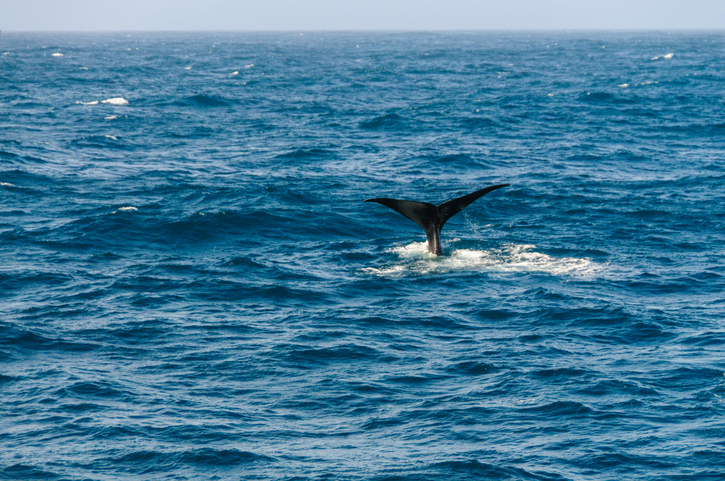
São Miguel is one of the best places in Europe for whale watching, thanks to its deep surrounding waters and rich marine ecosystem. Setting out on a boat in the morning, you’ll scan the horizon for signs of movement—perhaps a pod of dolphins leaping through the waves or the powerful blow of a sperm whale. There are many sustainable companies offering a whale watching trip with prices starting from 70EUR/half a day. Generally they departure either from Ponta Delgada or Villa Franca Do Campo and it’s always better to book online in advance. Check the Whale Watching section on Visit Azores website to know more about the boat tour experiences.
If you are not up to a boat tour, you still can still look for whales from the land. In fact, on São Miguel, whale watching from land has a long history and is centered around the old vigias—elevated lookout points once used during the whaling era and now repurposed for observing these majestic animals in a more respectful way. Along the north coast, Capelas reflects its whaling heritage through scenic trails and viewpoints overlooking a natural harbor, where the ocean stretches wide and uninterrupted. On the south coast, Vigia da Furada stands as a strategic observation post still used today by companies like Terra Azul to track migrating whales. A nearby Ponta Garça offers high ground that has long served as a natural vantage point for spotting marine life. To the west, Mosteiros provides incredible coastal views where the open Atlantic often reveals signs of whale activity.
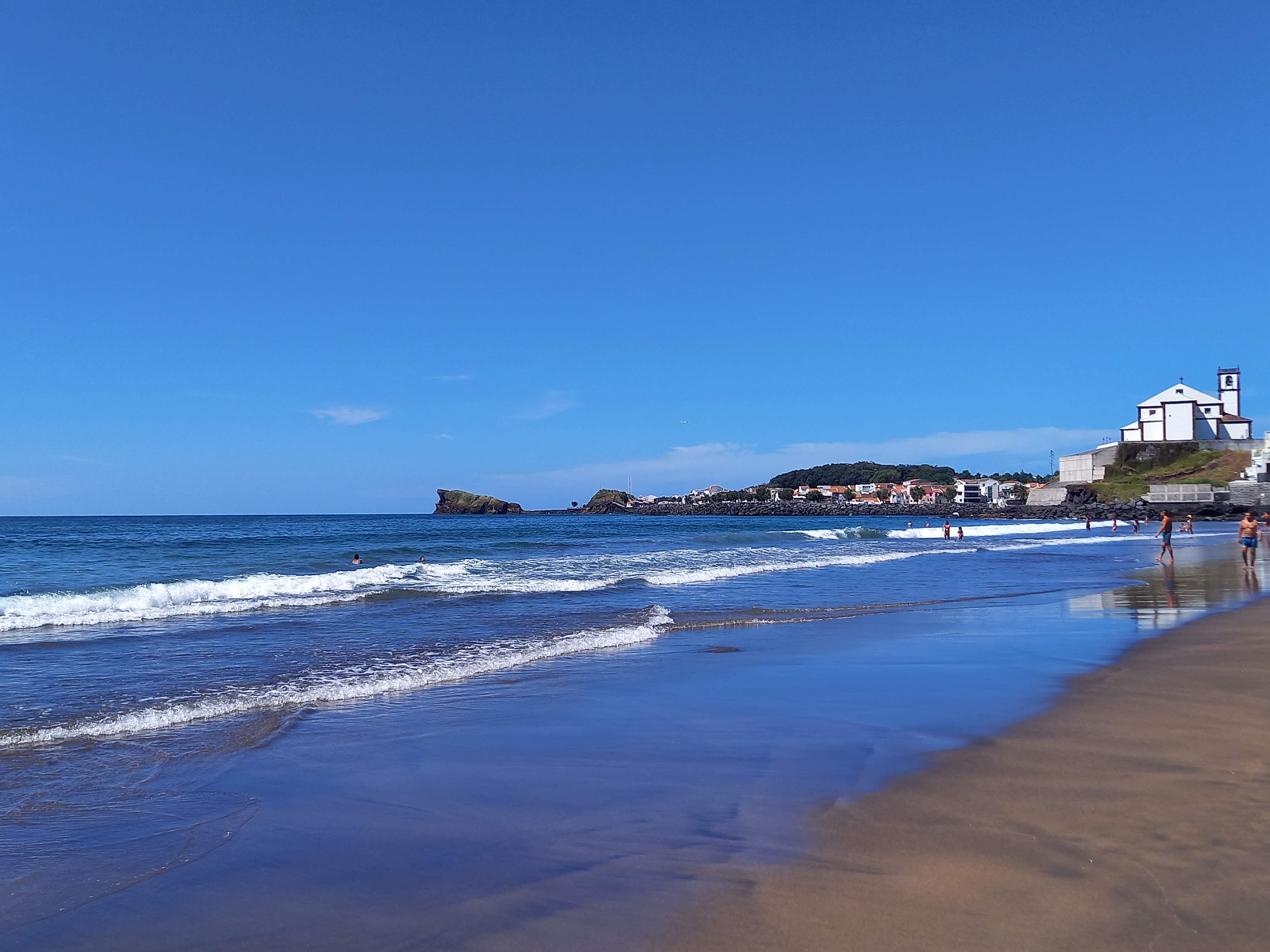
In the afternoon, shift gears and head to one of the island’s black sand beaches, such as Praia do Pópulo. The volcanic, rolling waves, and open views create a wild yet relaxing setting.
In alternative, check other excellent beaches in Ribeira Quente or Praia do Santa Barbara (just 20 minutes drive from Ponta Delgada). Spoiler: these are also surf spots so expect some waves.
Day 6: Serra Devassa area PRC05SMI
Hidden in the wild, green heart of São Miguel, the Serra Devassa trail is one of those walks that quietly reveals just how rich and varied the island’s landscape can be. It all begins near the Muro do Carvão, a striking remnant of the old Muro das Nove Janelas aqueduct. Stretching for about 150 meters, its elegant sequence of semicircular arches once carried water from the lakes of Canário and Empadadas all the way to Ponta Delgada—an impressive feat considering the journey spanned more than 10 kilometers.
From here, the trail leads you into a region of remarkable ecological importance. This is a land shaped by water: crater lakes, peat bogs, and wetlands unfold one after another, creating a landscape that feels serene and untamed. Along the way, you’ll encounter Lagoa do Carvão, the larger Caldeirão Grande—now adapted for agricultural use—and the twin Lagoas do Caldeirão Pequeno. Further on, the peaceful Lagoas Empadadas appear, often shrouded in mist and surrounded by dense vegetation.
One of the highlights of the trail is the climb up Pico das Éguas. At around 873 meters above sea level, it’s one of the highest points in the area, and the effort to reach it is rewarded with sweeping views across the island’s interior. Nearby lie the North and South Éguas lakes, the highest-altitude lakes on São Miguel, offering a sense of quiet isolation that’s hard to find elsewhere.
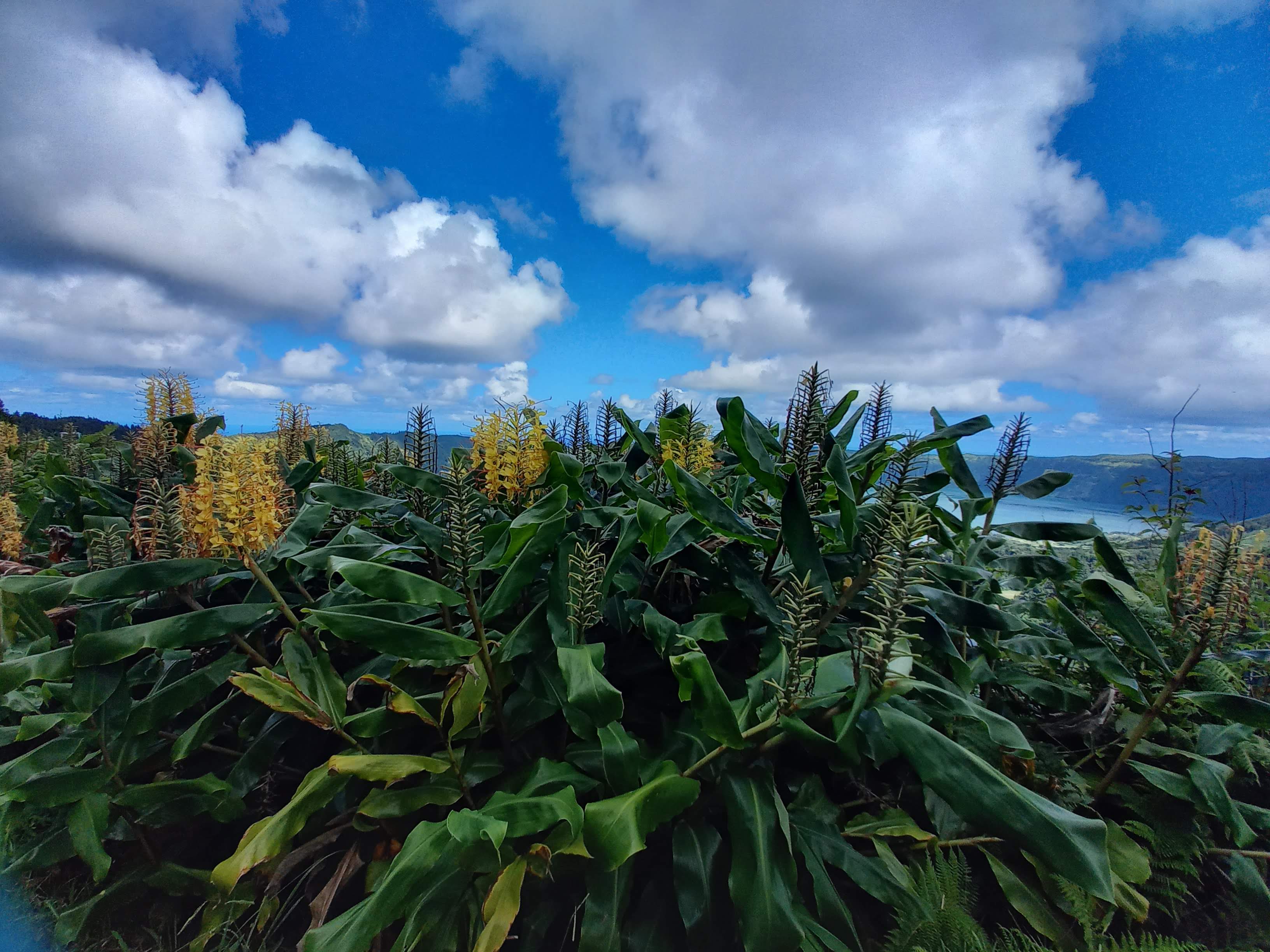
As the trail continues toward Mata do Canário, you’ll enter an area known for its abundance of natural springs—an important source of water for the island. Here, you’ll come across Lagoa do Canário. Despite its name, it has nothing to do with birds; instead, it’s a nod to the Canary Islanders who once used this land for grazing.
Not far from here is one of the most breathtaking viewpoints on the island: the Miradouro da Grota do Inferno. From this view point, the landscape opens up, revealing the vast caldera of Sete Cidades and its iconic lakes—blue and green hues shimmering side by side. You can also admire impressive natural wonders like Canto dos Carneiros, Caldeira do Alferes, and Pico da Cruz.
Beyond its beauty, Serra Devassa plays a vital role in São Miguel’s ecosystem. The region is rich in freshwater springs and is essential to the island’s water supply, which makes its preservation especially important. As you walk, you’re not just passing through a scenic trail—you’re moving through a protected and carefully managed environment.
Remember to be respectful, don’t litter and stay on marked paths, minimizing impact. Appreciating the fragile balance of nature here, ensures that this extraordinary landscape can be enjoyed for generations to come.
This day is ideal for families or anyone needing a gentler pace, with plenty of picnic areas and short walks.
Day 7: Nordeste – Waterfalls, Cliffs, and Quiet Beauty
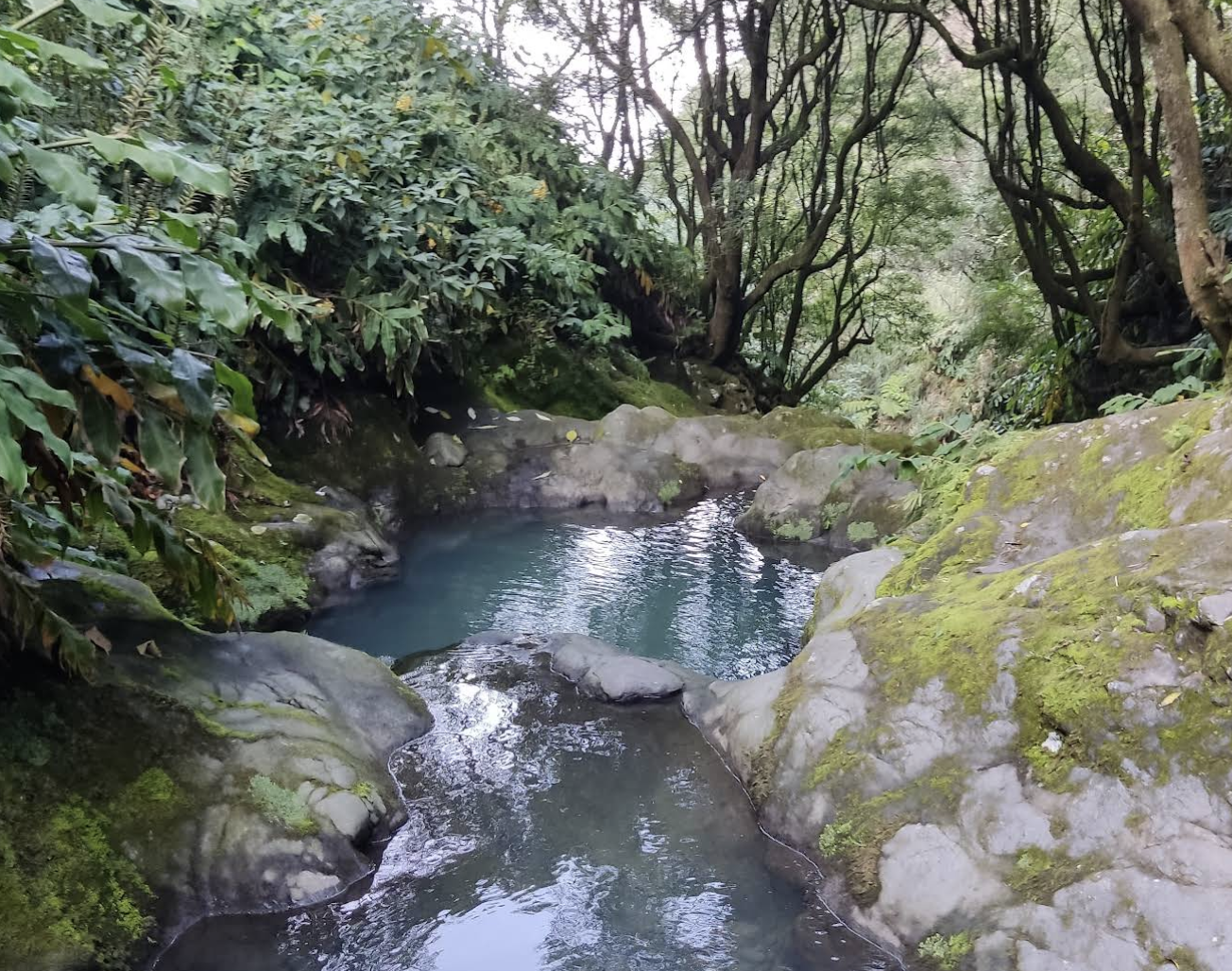
The northeastern part of São Miguel is often overlooked, but it’s one of the most rewarding areas to visit. Nordeste is defined by rugged coastlines, cascading waterfalls, and meticulously maintained gardens. Ribeira dos Caldeirões Natural Park is a must visit highlight. Here wooden walkways lead you past waterfalls and historic watermills. The sound of rushing water and dense greenery creates an almost tropical atmosphere. There are plenty of picnic and recreational areas so make sure to prepare your picnic lunch.
On the way you can also stop at the viewpoints, such as Ponta do Sossego or Boca do Ribeira. You will admire the ocean cliffs and beautifully landscaped gardens.
It’s also worth to walk from Achadinha to Poço Azul. You can leave your car here in a small parking and follow the path – at the beginning a little country road where you will probably meet some cows. Once you crossed the fields the path leads you into a dense green forest where you hear sound of some waterfalls. In less than 30 minutes you will arrive to Poço Azul – a little blue natural lake. Use the all trails map to stay on the marked path. This trail is easy and not steep, just 2km long it’s really perfect and rewarding for any visitor.
Day 8: Vila Franca do Campo and Its Volcanic Islet
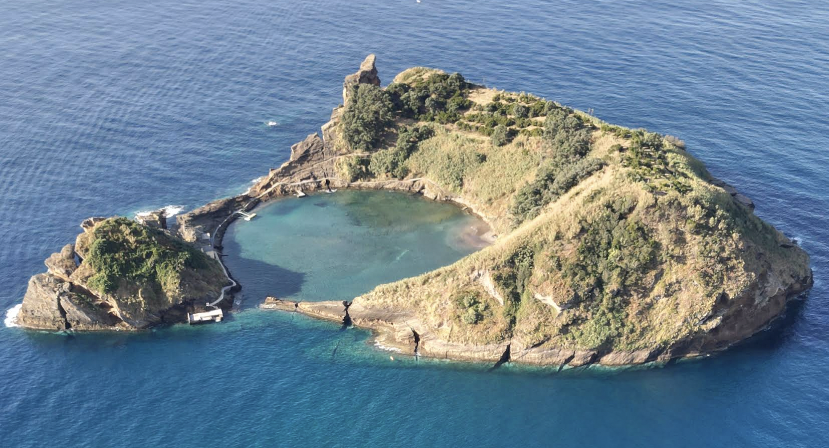
Once the island’s capital, Vila Franca do Campo is a charming seaside town with a relaxed, lived-in feel that makes it easy to enjoy the coastal scenery. Colorful houses line the waterfront, fishing boats bob gently in the marina, and small cafés invite you to linger over coffee while looking out at the Atlantic.
Just offshore lies its most iconic sight: a perfectly circular volcanic islet, formed from an ancient crater and now one of São Miguel’s most unique natural attractions. From a distance, it looks like a green ring rising from the sea—but up close, it reveals a sheltered lagoon at its center, protected from the open ocean by the crater walls.
During the summer months (typically June through September), small motorboats shuttle visitors from the marina across the short stretch of water—just about a 10-minute ride, but enough to give you that “island escape” feeling. There is a limit of max 400 visitors daily to preserve the environment, so it’s worth arriving early or booking in advance, especially in peak season. You can check the official website for the schedule and online ticket info. There is a limit of 50 online tickets/day. Once these are sold out, you will have to arrive early in the morning and buy them at the ticket office.
As you approach the islet, you’ll notice a narrow opening in the crater wall—this is the natural entrance to the lagoon. Boats pass through this gap, and once inside, the atmosphere changes completely. The water becomes calmer, clearer, and warmer, making it ideal for swimming and snorkeling. The sandy bottom and gentle conditions also make it a great spot for less confident swimmers.
There are no shops or restaurants on the islet, so it’s best to bring everything you need with you—water, snacks, sunscreen, and maybe a towel for relaxing on the rocks. Facilities are minimal, which is part of what keeps the place so unspoiled. You’ll find a few designated areas for sunbathing and access points into the water, but the real highlight is the feeling of being inside a natural volcanic pool in the middle of the ocean.
Back on land, Vila Franca do Campo continues to charm with its easygoing vibe. You can stroll along the seafront promenade, stop for a fresh seafood lunch, or visit local bakeries to try the town’s famous queijadas (a traditional sweet treat). Nearby, Praia de Água d’Alto offers a long stretch of sand and gentle waves, making it especially popular with families. However, it’s also a surfing beach and the swell can be really strong so check the weather and water conditions before swimming.
Day 9: Salto do Cabrito Trail
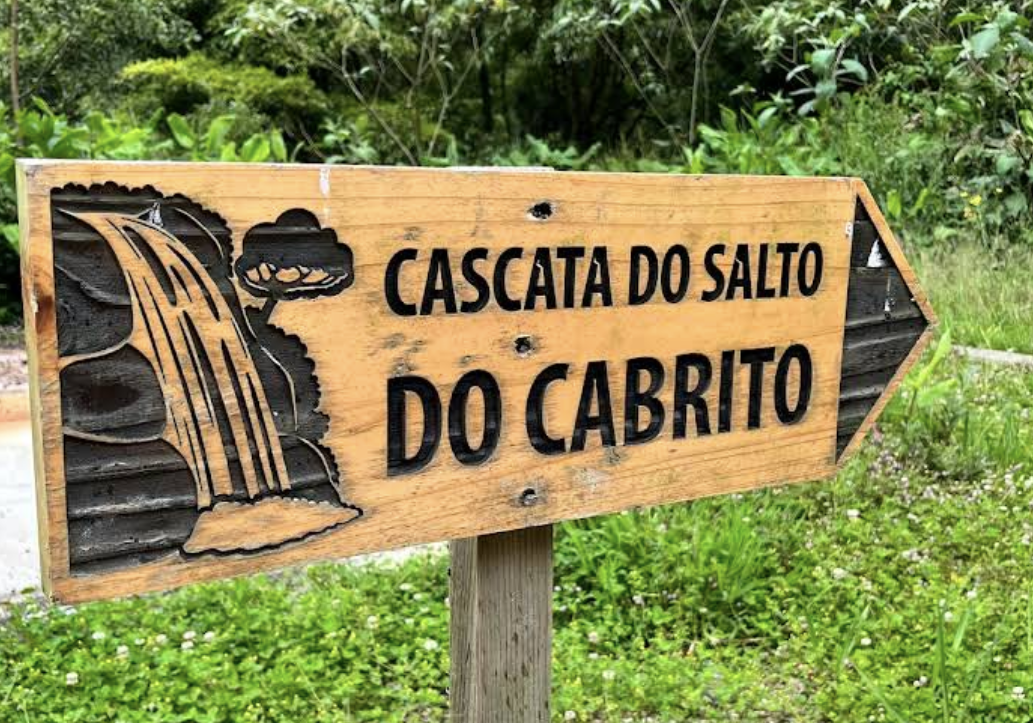
If you’re looking for a short but adventurous hike, the Salto do Cabrito trail is one of those routes that packs a lot into just a few kilometers. This circular 9km walk begins and ends in the Caldeiras of Ribeira Grande, an area already worth visiting for its steaming hot springs, picnic spots, and even a place to grab a bite before or after your hike. As many other places in the Azores, also here you will find a little playground and a clean toilet so it is perfect for families.
The trail kicks off along a quiet asphalt road that gently leads you downhill and it is well signaled- just follow the signs PRC29SMI. At the first junction, keep left toward Lombadas/Monte Escuro. Not long after, you’ll spot a pipeline—your first landmark. Stay on the road for about 100 meters more until you see a chain on your right. Step past it, and you’ll find yourself heading toward the Fajã do Redondo Dam, where the landscape starts to feel wilder.
From here, double back to the pipeline and follow it until the route dips downhill through a beautiful stretch of Japanese cedar trees. This section feels almost enchanted, with tall trunks and filtered light guiding your way. Eventually, you’ll arrive at the old Fajã do Redondo Hydroelectric Power Plant – the historic power plant from 1927 no longer in use.
The path continues as you cross a stream and climb up to a narrow walkway. Follow it along the mountainside until you reach a steep staircase. It’s a bit of a climb, but the reward is worth it. Just around the building lies the highlight of the trail—the waterfall. Take your time to enjoy it before heading back.
With the waterfall behind you, the trail climbs steadily back up until you reach another paved road. Turn right and follow the sidewalk, passing by the Lagoa do Fogo bar and the Pico Vermelho geothermal power station—two reminders of how closely nature and energy production coexist on the island.
Before reaching the next junction, keep an eye out for a dirt path on your right. This quieter stretch takes you through more rugged terrain, where you’ll cross two streams.
As the trail nears its end, you’ll come to a fork—stick to the right, then take the first left shortly after. Follow the signs, and soon enough you’ll reconnect with a paved road. One final right turn brings you full circle, back to the Caldeiras of Ribeira Grande, where you can reward yourself with a relaxing soak or a well-earned meal.
Day 10: Last Day in Ponta Delgada
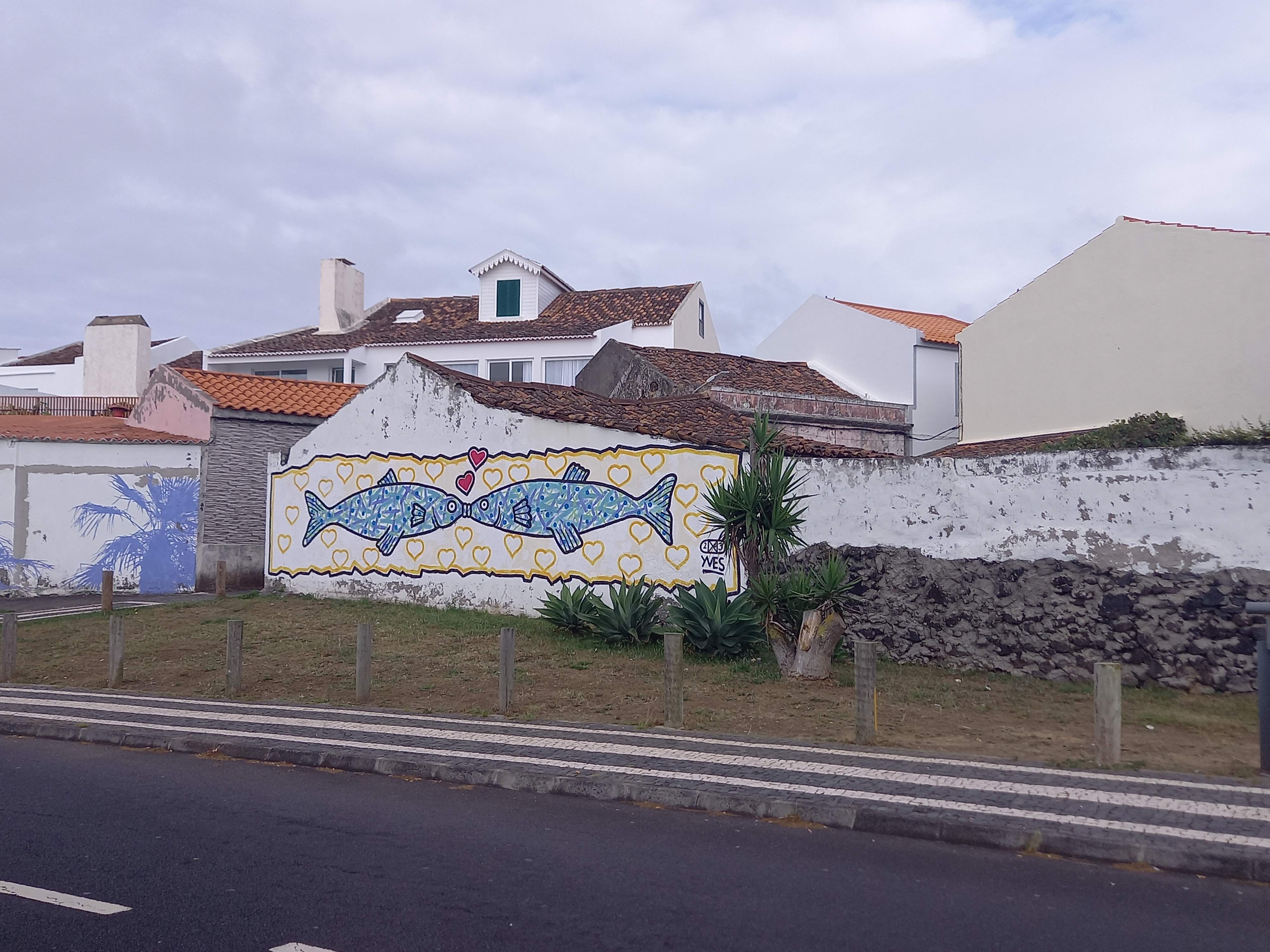
As your journey comes to an end, spend your last day wandering through local markets in Ponta Delgada and enjoy one last stroll along the marina.
In alternative you can pick up one last hike or surf. Check Visit Azores website where you will find all the details about hiking trails and suggestions of many experiences available on the island. All hiking trails are well marked and you can download details descriptions, maps and GPS coordination from Visit Azores.
São Miguel stands out not just for its beauty, but for its balance. It offers some of the best hiking in the Azores, yet it’s equally suited to relaxation, family travel, and cultural experiences. You can hike along a volcanic crater, soak in a thermal pool, and watch whales —all on the same trip, without ever feeling rushed.


Leave a comment