
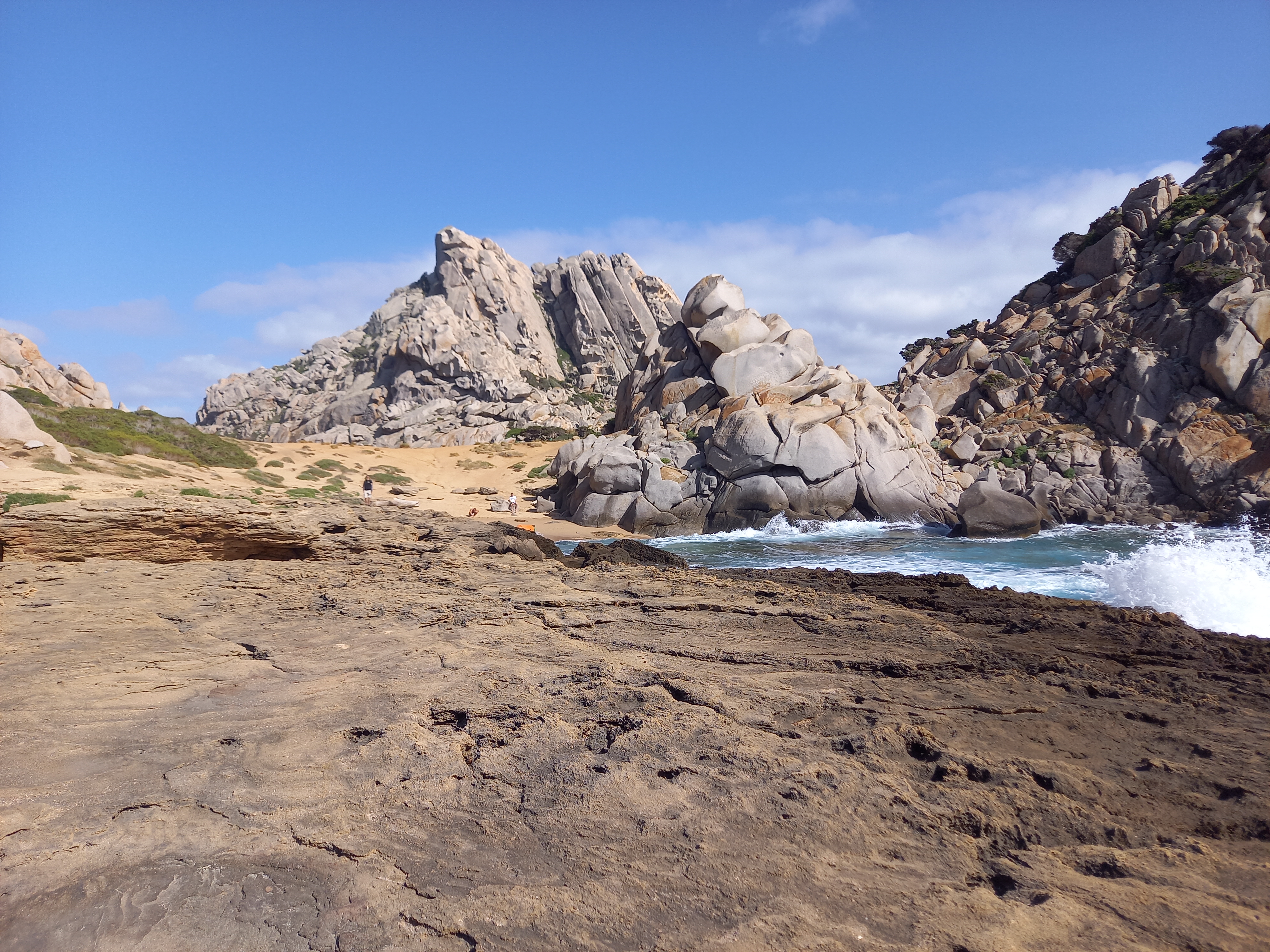
There are places in Sardinia where the landscape feels almost too beautiful to be real. Capo Testa, just a few kilometres from Santa Teresa di Gallura in the north of the island, is one of them.
The peninsula is not particularly high, and its trails are not the kind of mountain routes that demand huge elevation gains or technical equipment. But that is exactly what makes it such a rewarding destination for an active traveler: you can spend an entire day walking, scrambling over granite, following the coastline, stopping for a swim, exploring old Roman quarries and watching the sunset.
I suggest you to dedicate three full days to Capo Testa. Base yourself in Santa Teresa di Gallura, leave the car behind whenever possible, and treat the peninsula as a giant outdoor playground.
The landscape is constantly changing. One moment you are walking through low Mediterranean vegetation; the next you are standing on a huge granite slab above the sea. Around another corner, the rocks form arches, caves, strange animal-like shapes and enormous rounded boulders. Then the trail disappears towards a tiny cove where the water is so clear that you will probably regret not having brought a mask and snorkel.
Discovering the Granite of Capo Testa
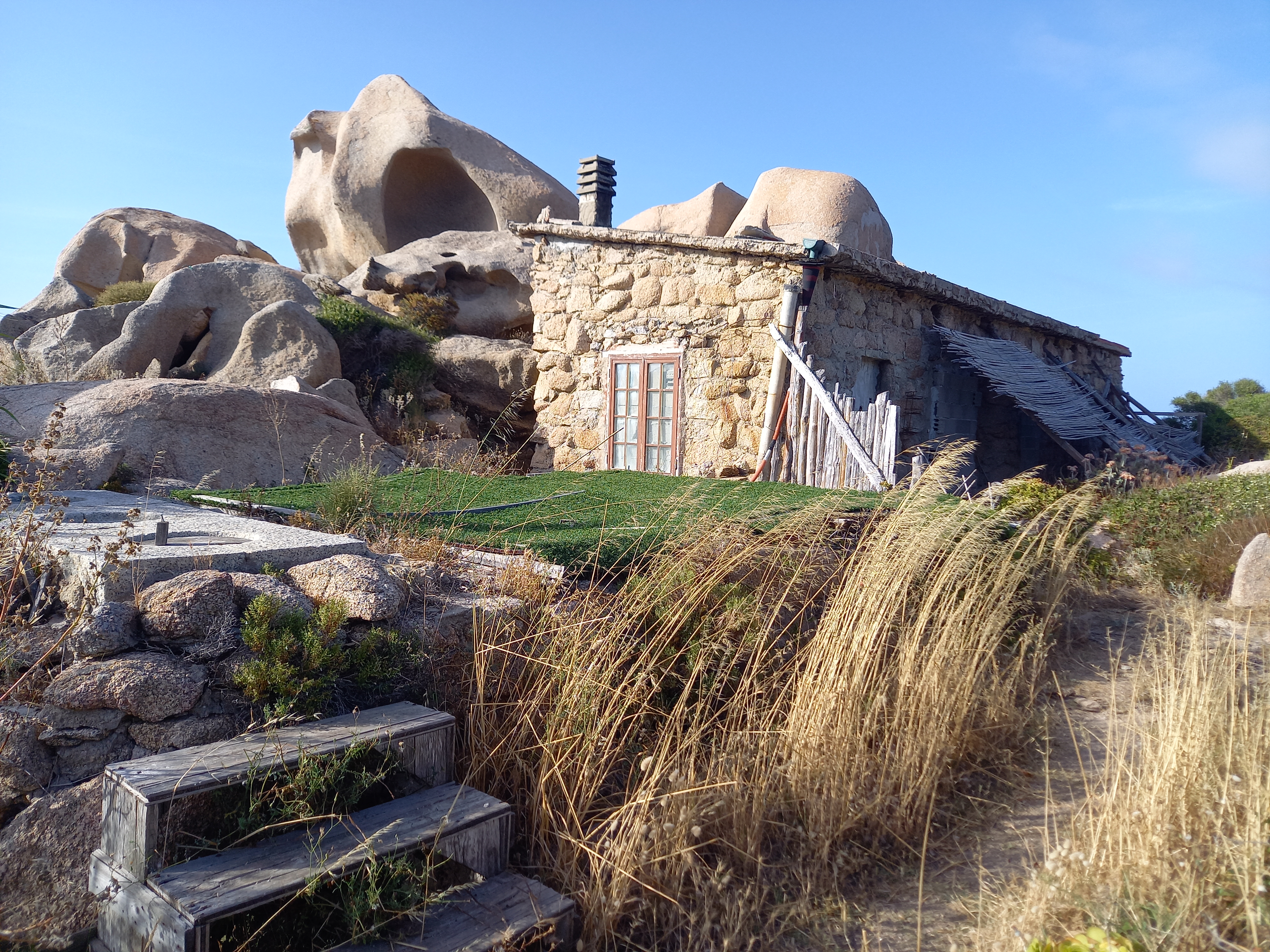
Start your first morning by heading towards the heart of the peninsula and walking towards the Faro di Capo Testa.
Faro di Capo Testa
The lighthouse sits at the northern end of the promontory and is one of the easiest landmarks to use as a reference point. From the surrounding rocks, you get wonderful views across the Strait of Bonifacio towards Corsica. But the lighthouse is almost secondary to what surrounds it. In fact, the real attraction is the granite.
Capo Testa is famous for its extraordinary rock formations, and the first thing you notice is that they do not look like conventional mountains or cliffs. They are rounded, twisted and strangely organic. Some resemble animals; others look like giant sculptures. The municipality of Santa Teresa itself notes the resemblance of some formations to animal shapes, while the name Capo Testa is traditionally associated with the appearance of a human head.
It is tempting to think that somebody carved these rocks. In reality, you are looking at the result of an incredibly long geological process.
The granite formed deep within the Earth’s crust millions of years ago. Much later, erosion gradually exposed it, while water, wind and salt continued to work on the exposed rock. Cracks and natural fractures were enlarged over time, producing the rounded surfaces, grooves, hollows and enormous boulders that make Capo Testa look almost sculpted.
And then there is the Mediterranean wind.
The Mistral is one of the great forces shaping northern Sardinia. At Capo Testa, it is easy to understand how wind and weather have contributed to the atmosphere of the place. The vegetation stays low, the rocks are polished and the coastline feels wonderfully exposed.
Take your time here. Don’t think of the trail simply as something connecting point A with point B. The rocks are the trail.
You will frequently find yourself leaving the obvious path for a few metres to climb onto a granite slab, squeeze between two boulders or find a viewpoint over the sea. This is where good hiking shoes become much more useful than fashionable beach footwear: the terrain is generally manageable, but smooth granite can be uneven and slippery. In alternative to a good pair of hiking shoes you can use the water shoes – the same that you will need to explore the local reef formations.
Follow the coast and look for the caves
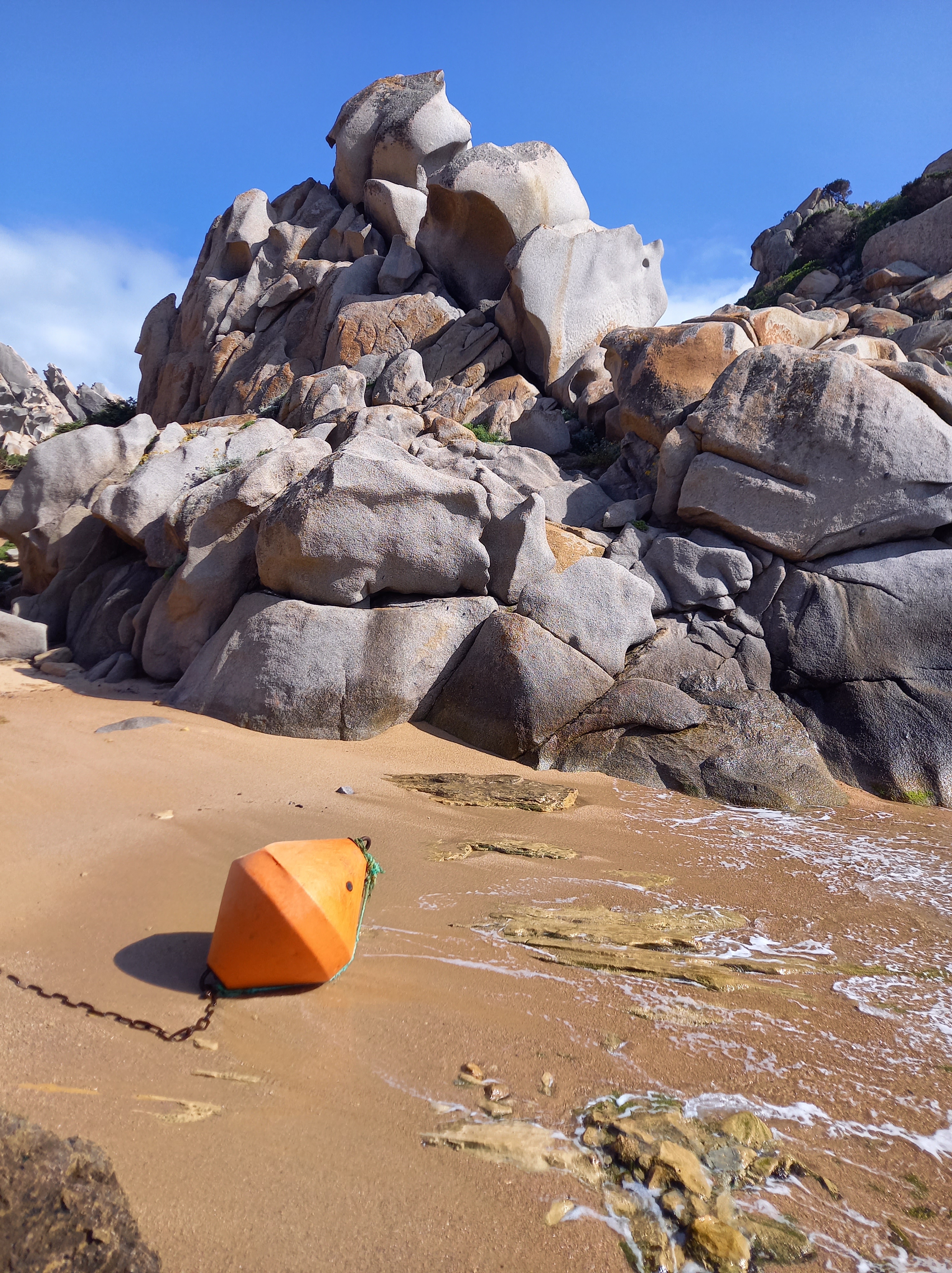
One of the most fascinating things about Capo Testa is that its geological history overlaps with human history.
The peninsula was an important granite-extraction area during Roman times. The proximity of the quarries to the sea made it possible to transport worked granite by ship towards Ostia and ultimately Rome. Archaeological evidence shows that granite extraction was a significant economic activity in the area, and traces of the quarries are still visible today.
Walking among the rocks, you can therefore find something that looks completely natural beside something unmistakably human-made.
Look for straight cuts, abandoned sections of stone and the marks left by ancient extraction techniques. The Romans worked the granite using cuts and natural fracture lines, and some areas still reveal the geometry of the quarrying process.
It is a wonderful contrast: the wind has spent thousands of years making the rocks soft and rounded, while humans left behind remarkably precise lines.
For an active traveller, this makes the walk much more interesting than a simple coastal hike. You are constantly moving between geology, archaeology and the sea. And when the temperature rises, there is an obvious solution. Go swimming.
The sea is part of the hike
Capo Testa is surrounded by exceptionally clear Mediterranean water, and you should absolutely pack a snorkeling mask. This is not one of those hikes where swimming is an optional extra. It makes sense to build it into your day.
The coastline is full of little coves and rocky entrances where you can stop, cool down and look beneath the surface. On a calm day, the contrast between the pale granite and deep blue water is spectacular. The area around Capo Testa also benefits from different exposures to the wind: when one side of the peninsula is rougher, the other can offer more sheltered conditions.
That makes the two sides of the isthmus particularly useful when planning a swimming stop.
Just remember that conditions can change quickly. The same wind that makes Capo Testa so fascinating can also make the sea unsuitable for swimming in exposed spots.
A towel, plenty of water and a mask and snorkel are therefore as useful in your backpack as your hiking shoes.
Valle della Luna and the Wild Side of Capo Testa
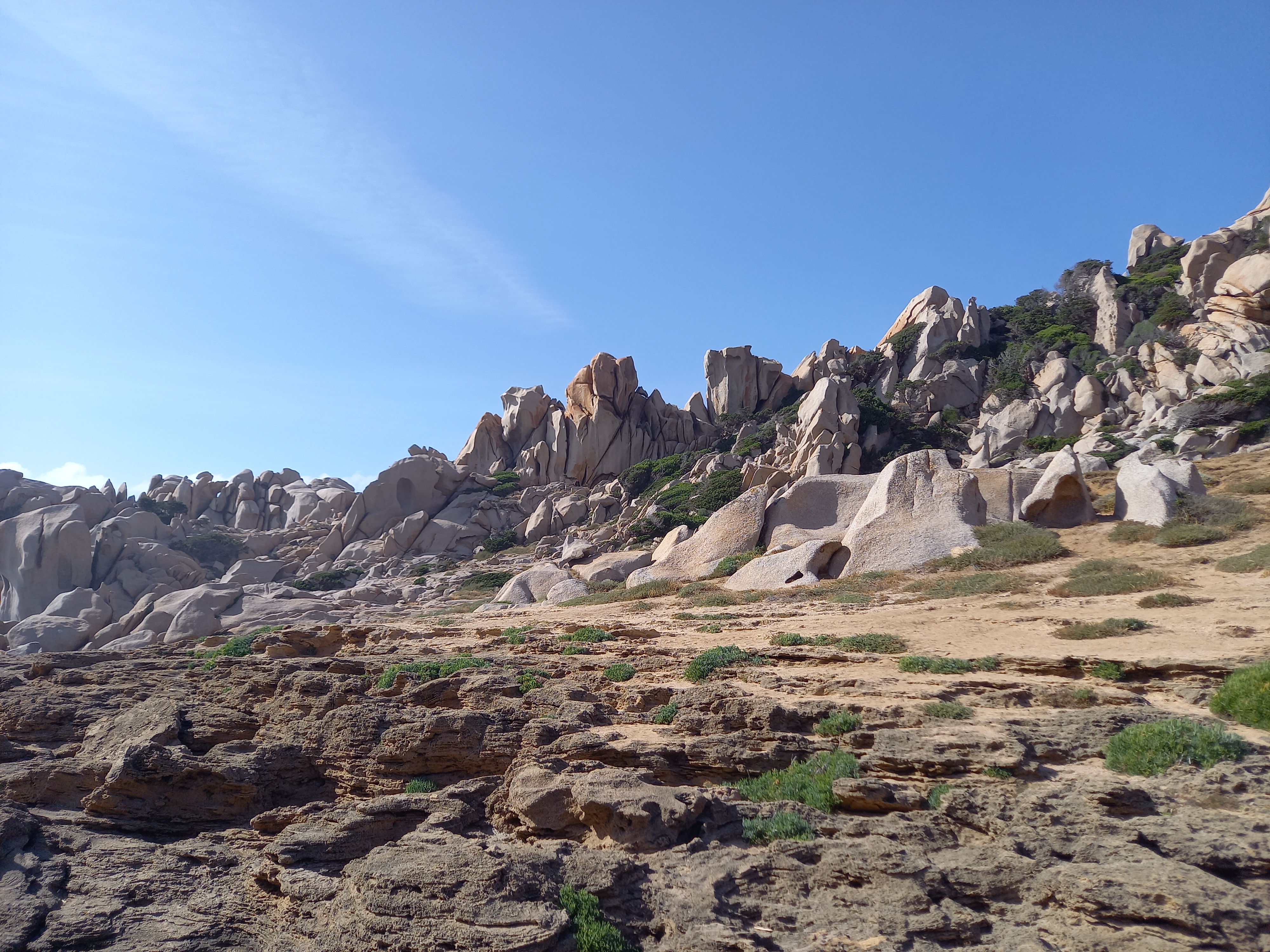
On your second day, head towards Cala Grande and the extraordinary landscape known as Valle della Luna.
Cala Grande
The name alone sounds like a hiking destination, and once you enter the valley it becomes obvious why. The landscape is dominated by pale granite formations that seem to have been dropped randomly across the peninsula. Huge slabs lean against each other, narrow passages disappear between rocks and smooth surfaces catch the changing light.
The name Valle della Luna, or Moon Valley, became particularly associated with the area in the 1960s, when alternative communities and hippies began living here in a search for a simpler life close to nature. The landscape’s almost lunar appearance helped give the valley its now-famous name.
Today, walking through the valley is a much quieter experience than its history might suggest. The trails are relatively short compared with some of Sardinia’s famous mountain hikes, but don’t underestimate them. They are rocky, sometimes informal and often require you to choose your own line between the granite formations. The official cultural listing describes the Capo Testa area as having marked trails and medium difficulty, while local hiking information recommends allowing roughly two hours for a walk through the Valle della Luna area.
For me, the best approach is to slow down.
Walk for a while. Climb a boulder. Stop. Look at the rock. Follow another path towards the coast. Then do it again.
There is no need to rush through Valle della Luna.
A landscape made for exploring
What makes these trails special is their sense of discovery.
In many hiking destinations, the landscape is spectacular because you reach a summit or viewpoint. At Capo Testa, the landscape is spectacular every few minutes.
A rock that looked ordinary from ten metres away suddenly becomes an arch when you approach it. A narrow crack becomes a passage. A rounded boulder resembles the back of an enormous animal. A gap between rocks opens onto the sea.
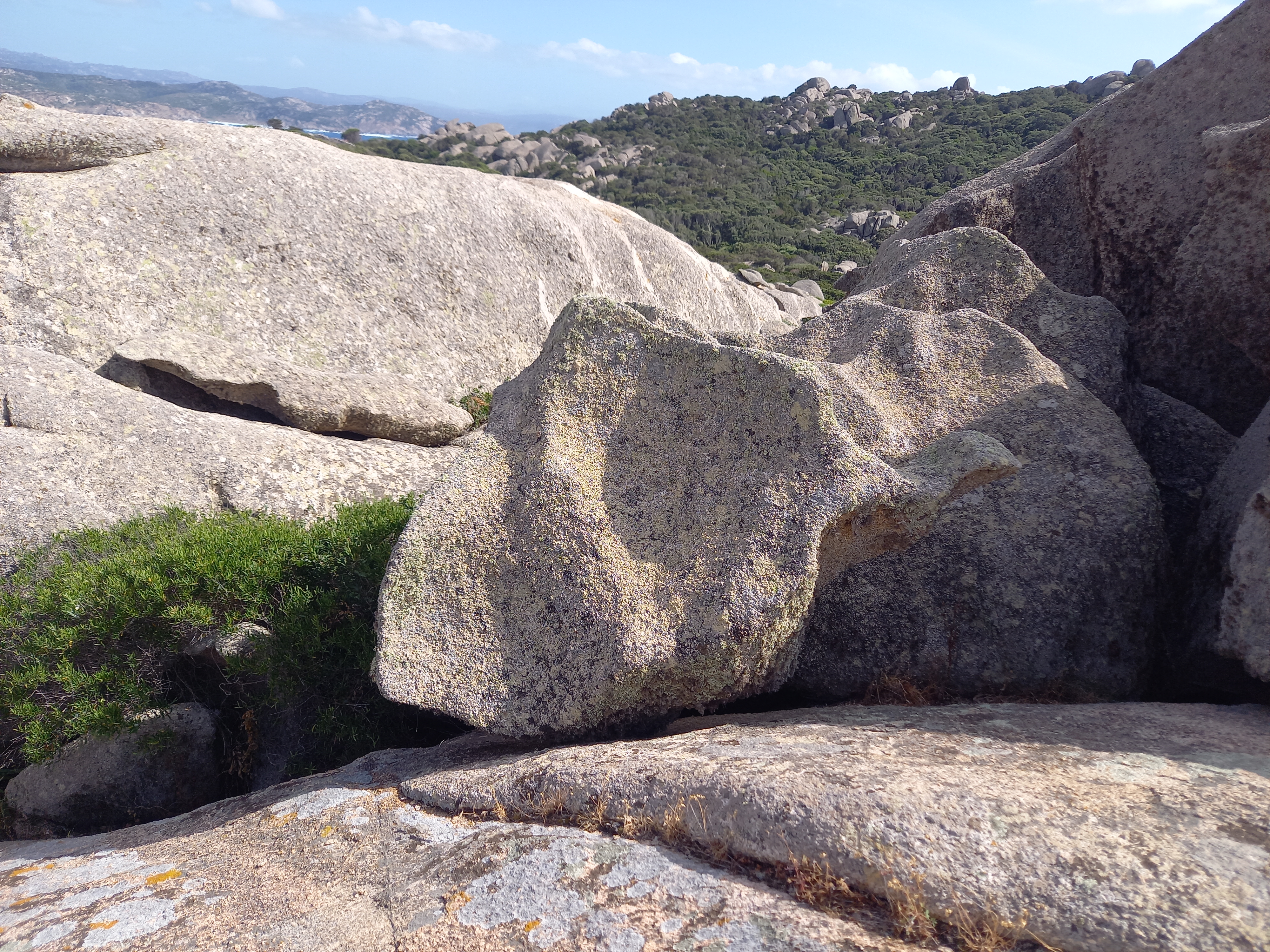
The shapes are constantly changing depending on where you stand.
This is also why Capo Testa rewards photographers, although you don’t need to be a photographer to appreciate it. Early and late in the day, the low sun brings out the texture of the granite, making the shadows between the curves and cracks much more dramatic.
And then, of course, there is the sea. From the higher rocks around Valle della Luna, the Mediterranean appears almost impossibly blue. Walk down towards Cala Grande and you can combine the hike with a long swim.
That combination—three hours of walking followed by a swim in transparent water—is difficult to improve upon.
Slow Hiking, Swimming and Sunset
You could start your third days on the side facing the calmer water, follow the coast towards the Roman quarry remains, then continue towards the lighthouse. Alternatively, make your day mostly about the southern beaches and rocky shoreline before finishing at the far end of the peninsula.
One particularly beautiful option is to include Cala Spinosa in your day.
Spiaggia di Cala Spinosa
The approach down towards the water gives you another perspective on the granite landscape. Here the rocks become high cliffs and platforms above the sea, and the reward at the bottom is a small, beautifully positioned cove. Don’t make the mistake of spending the entire day walking. Capo Testa is at its best when hiking and swimming become part of the same rhythm. Walk for an hour. Swim for half an hour. Dry off on the rocks. Walk again. Stop for lunch. Explore another cove. Then find a good granite platform for sunset.
Finish at the lighthouse
Save the Faro di Capo Testa for the end of the day if you can. There is something particularly satisfying about watching the sun disappear from this exposed northern tip of Sardinia. The granite changes colour as the light gets lower, and the landscape that looked pale and harsh in the middle of the day becomes warm and almost golden.
The lighthouse itself has a long connection with navigation through the Strait of Bonifacio. The present lighthouse stands beside the former one, and the site remains one of the defining landmarks of the peninsula.
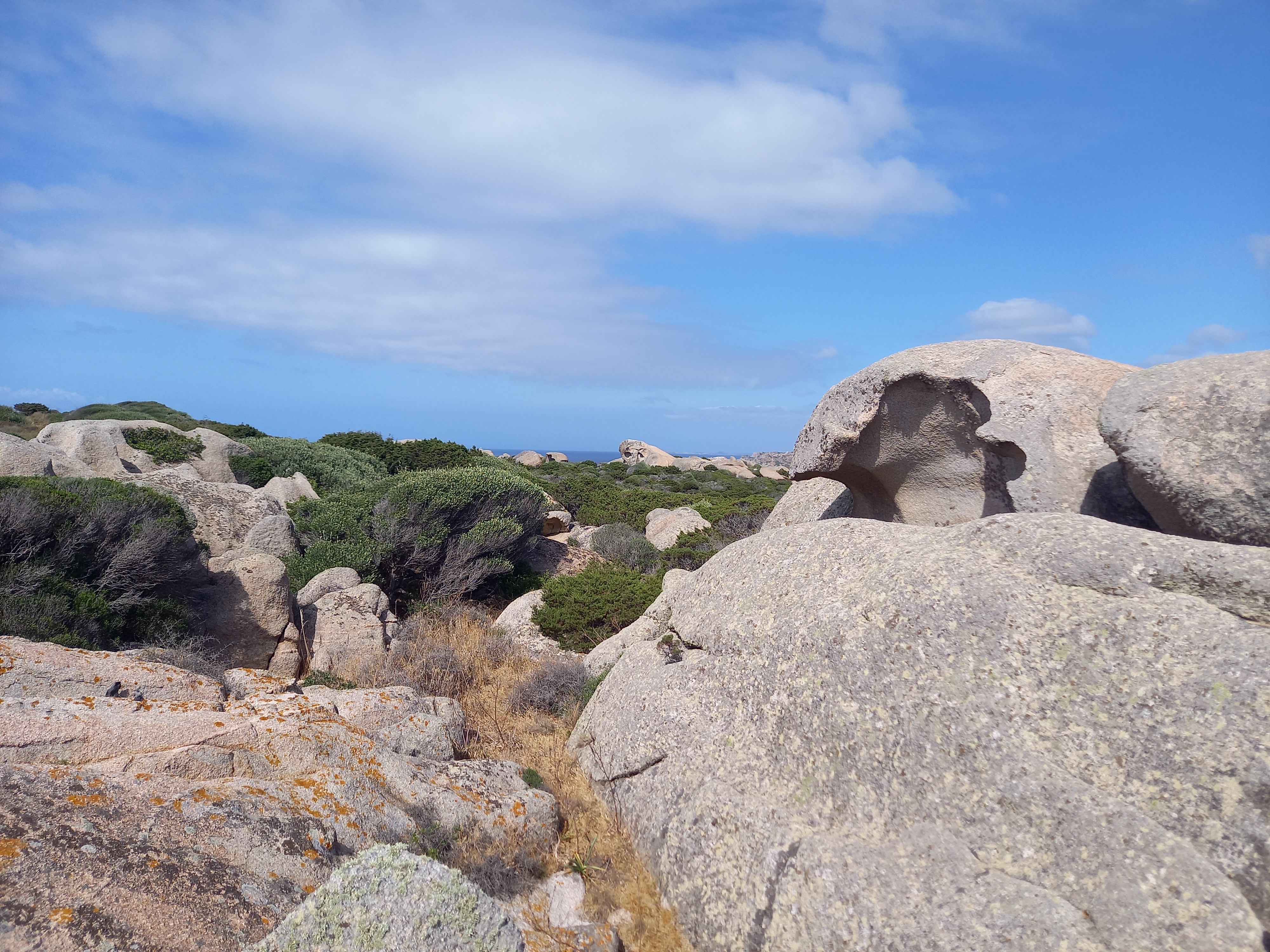
From here, look across the water and remember how much history is concentrated in this relatively small piece of land. Roman quarry workers were extracting granite here. Ships carried the stone away. Centuries of wind and rain continued sculpting the landscape. Much later, the hippie communities of Valle della Luna arrived. And today, hikers arrive with backpacks and snorkeling masks. The rocks have seen all of it.
Why three days works so well?
You could certainly see Capo Testa in a day. But three days changes the experience completely. One day gives you the highlights. Three days allows you to understand the landscape.
You begin to notice how different the granite formations are from one side of the peninsula to the other. You start recognising the natural fractures in the rock. You become aware of the wind and how it affects which beach you want to visit. You stop checking the time.
Most importantly, three days give you enough space to enjoy the sea without feeling that you are wasting hiking time. Because at Capo Testa, swimming is not a break from the adventure. It is part of it.
Base yourself in Santa Teresa di Gallura, have a good breakfast, fill your water bottles and head out each morning. In the evening, return to town for dinner and a walk through the centre or around the harbour. Then do it all again the next day. For an active trip to northern Sardinia, it is a wonderfully simple formula.
An extra tip: explore northern Sardinia by bicycle
If you have more time after Capo Testa, consider bringing—or renting—a bicycle. Northern Sardinia is particularly enjoyable when you slow the journey down enough to notice the landscape between destinations. The roads around Gallura can be hilly and exposed, and the wind can be strong, so this is much better suited to reasonably fit cyclists than to a completely casual ride.
But that is also what makes it appealing. From Santa Teresa di Gallura, cycling lets you turn the journey itself into part of the adventure rather than simply driving from one beach to another. Start early to avoid the strongest heat, carry plenty of water, and check the wind before committing to a longer route.
And don’t underestimate the distances just because northern Sardinia looks compact on a map. A bicycle also fits perfectly with the spirit of Capo Testa: move slowly, take the scenic route, stop whenever something catches your eye and let the landscape set the pace.
Three days, one peninsula, countless reasons to stop
Capo Testa is easy to underestimate. It doesn’t have the altitude of Sardinia’s great mountain hikes, and many of its trails are relatively short. But what it lacks in elevation it makes up for in character.
There is ancient granite and Roman archaeology. There are bizarre rocks shaped by wind and water. There are trails that disappear into valleys and emerge above the sea. There is the strange, fascinating history of Valle della Luna. There are tiny coves where a snorkeling mask suddenly becomes the most important thing in your backpack. And there is that incredible northern Sardinian light. Spend three days here and you don’t simply visit Capo Testa—you get time to explore it. Walk until you find a rock formation that looks impossible. Swim when you get hot. Follow the coast without worrying too much about the clock. Watch the sunset from the granite.
Then go back to Santa Teresa di Gallura, have dinner and start planning which trail you want to walk tomorrow. That, to me, is exactly what an active Sardinian escape should feel like.
 Nomadlytics
Leave a comment